Library of Congress Discovers Long-Lost Piece of Cinema History in Family’s Dusty Trunk
A routine archival submission turned into a major film discovery after the Library of Congress uncovered a long-lost silent film inside a deteriorating family trunk.
In just 24 hours, the film was identified as a missing work from early cinema pioneer Georges Méliès.
The film, believed to date back to around 1897, contains roughly 45 seconds of footage and is now recognized as featuring the earliest known depiction of a robotic character on screen — decades before the word “robot” even existed.
A Discovery Hidden in Plain Sight
The reel was part of a collection submitted by Bill McFarland, a retired educator from Grand Rapids, Michigan, who inherited a trunk of aging nitrate film from his great-grandfather.
The contents — roughly 10 reels — were in poor condition, with many warped, rusted or fused together.
McFarland had no way to view the films himself but ultimately decided to turn them over to the Library of Congress’ National Audio-Visual Conservation Center rather than discard them.
That decision proved critical.
How the Library of Congress Uncovered It
Once inside the Library’s nitrate film vault, archive technician Courtney Holschuh and vault supervisor George Willeman began examining the reels.
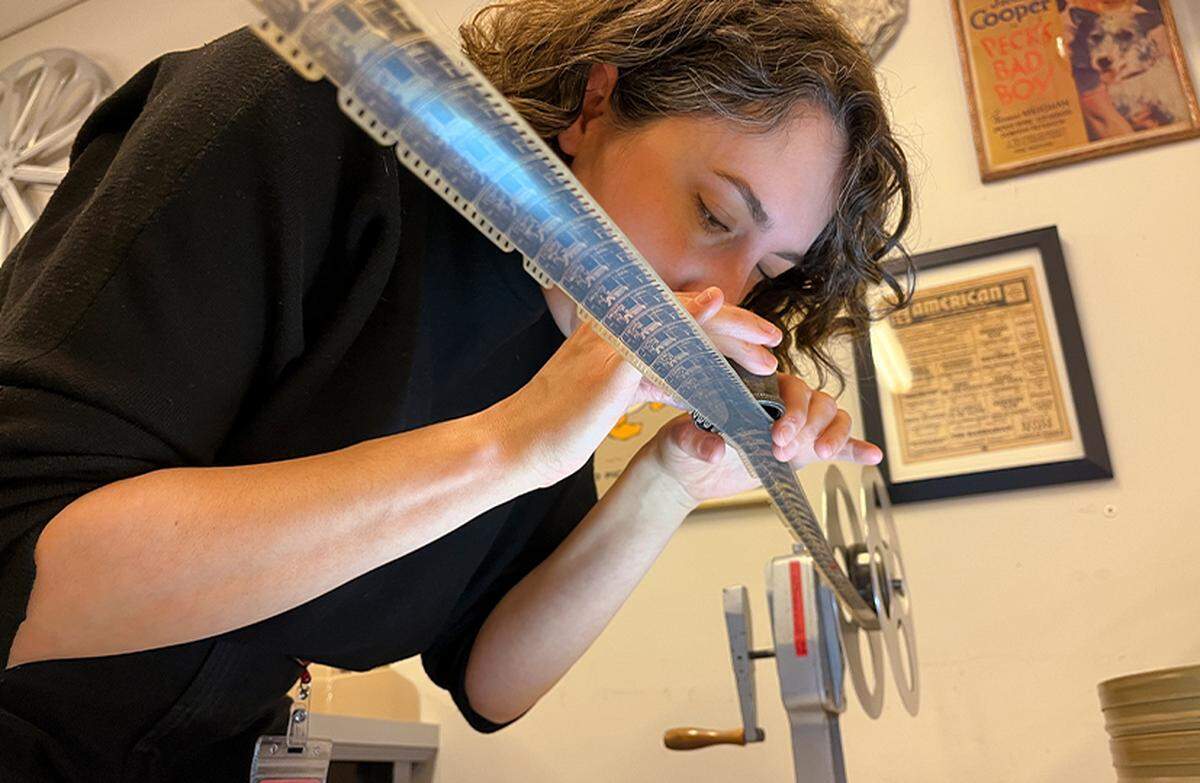
Willeman quickly noticed something familiar: a magician appearing on screen who resembled Méliès, a filmmaker known for starring in his own productions. To confirm the suspicion, he contacted a specialist in Méliès’ work.
Within 24 hours, the expert verified the film as Gugusse and the Automaton, a long-lost Méliès title that, until now, had no known surviving, screenable copies.
Why Georges Méliès’ Film Matters
Though brief — just 45 seconds — the film carries significant historical weight.
It features a stage magician interacting with a mechanical, human-like figure known as Pierrot Automate. That figure is now considered the earliest robotic character ever captured on film, predating the term “robot” by more than 20 years.
It wasn’t until 1921 that the word “robot” entered our vernacular. It derives from the Czech word “robota,” meaning “forced labor,” and first appeared in Karel Čapek‘s play R.U.R., per the MIT Press Room.
The discovery adds a new piece to the early timeline of both cinema and science fiction, reinforcing Méliès’ reputation as one of the medium’s earliest innovators.
No Other Copies Are Known to Exist Today
The version uncovered is not an original print but a reproduction several generations removed, likely the result of early film duplication practices.
Unauthorized copying of popular films was common during the late 19th century, and Méliès’ work was frequently reproduced without permission.
Many original prints were later lost, particularly during World War I, when film materials were melted down for their silver and celluloid content.
That makes the survival of this copy — even in degraded form — especially significant.
How Georges Méliès’ Film Ended Up in a Dusty Trunk
The films originally belonged to William Delisle Frisbee, a traveling projectionist who exhibited motion pictures across Pennsylvania in the early 1900s.
Frisbee transported films, projection equipment and a phonograph by horse-drawn carriage, hosting screenings in churches, schools and public halls.
After his death in 1937, his collection — including reels, journals and equipment — was passed down through generations, eventually ending up in McFarland’s possession.
Alongside the Méliès film, the collection also included other early cinema materials, including partial footage from a Thomas Edison production.
Now Georges Méliès’ Film Can Be Seen By Everyone
Archivists spent more than a week carefully scanning and converting the fragile nitrate film into a digital format.
The restored version of Gugusse and the Automaton is now available to stream in 4K resolution, part of ongoing preservation efforts by the Library of Congress.
The find underscores the importance of archival work — and the role that private collections can play in preserving cultural history.
In this case, a deteriorating reel in a long-forgotten trunk turned out to be a missing link in the early evolution of film.
This article was created by content specialists using various tools, including AI.