
Sugarcane, a wedding and a frog: Decoding Bad Bunny’s Super Bowl halftime show
Bad Bunny, the Puerto Rican reggaeton superstar who needs little introduction, packed a century’s worth of history, culture and references into his 13-minute Super Bowl halftime show performance Sunday night.
As Bad Bunny made history performing the first Spanish-language Super Bowl halftime show (just a week after his “Debí Tirar Más Fotos” became the first Spanish-language Album of the Year at the Grammys), fans sat in their living rooms and local bars pointing at the screen every time they noticed an iconic Puerto Rican reference, celebrity cameo or their own country’s flag.
It’s a lot to keep up with. Here’s a list of El Conejo Malo’s Easter eggs that you might have missed.
The onstage wedding was real
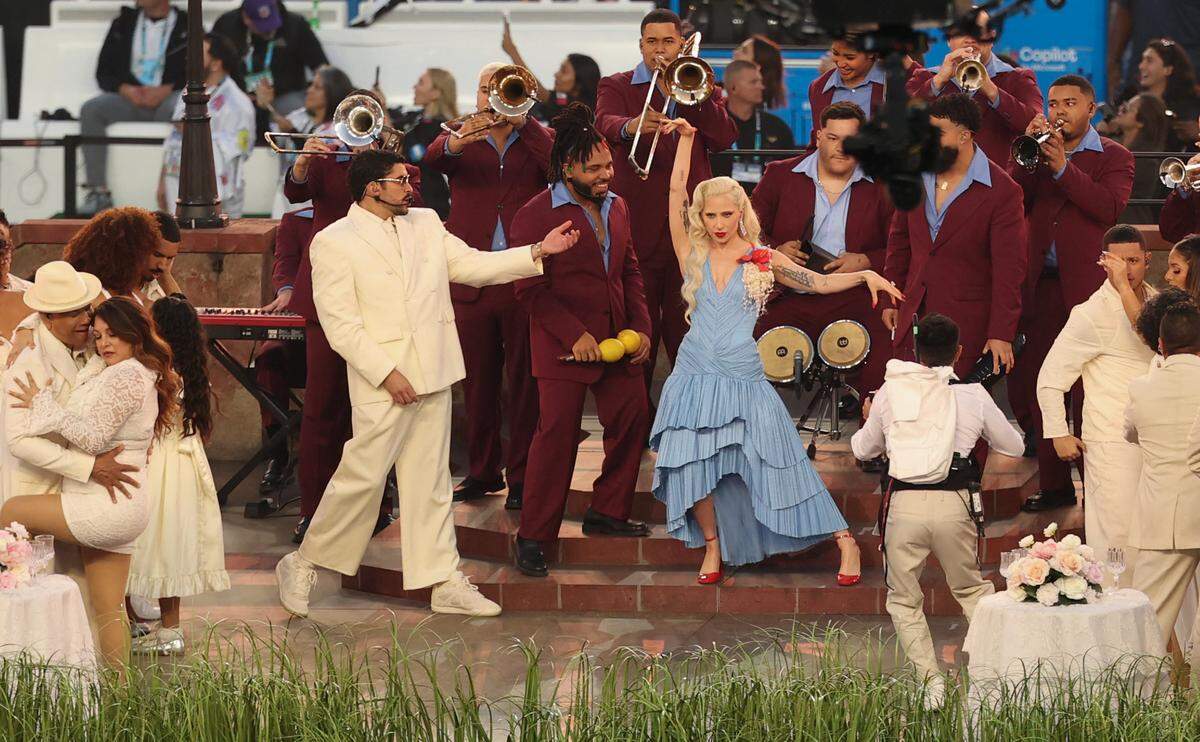
About five minutes into the halftime show, a couple surrounded by back-up dancers and musicians gets married and seals the union with a kiss. The husband and wife aren’t actors, that’s a real couple.
After the show, a Bad Bunny representative confirmed that the onstage wedding ceremony was real, according to the Associated Press. The couple had invited Bad Bunny to their wedding, so he invited them to the halftime show instead. Bad Bunny also reportedly served as a witness and signed their marriage certificate.
Immediately after the newlyweds kissed, everyone on stage moved out of the way to reveal Lady Gaga as a wedding singer. She sang a salsa-rendition of her single “Die With A Smile,” the only part of the halftime show performed in English.
Bad Bunny then appeared to sing his salsa song “Baile Inolvidable,” as the couple cuts the wedding cake and family members of all ages dance on stage. Bad Bunny takes a moment to wake up a little boy sleeping on a bunch of chairs, a common occurrence when kids get sleepy at Latino family functions.
Bad Bunny may have hinted at the wedding earlier in the halftime show when he handed a male back-up dancer an engagement ring, which he then used to “propose” to a female back-up dancer.
Dominos, frogs, boxers and shaved ice
As Bad Bunny made his way through the sugar cane field set, several iconic aspects of Puerto Rican daily life and culture were on display.
He passed by a table of tios and abuelos playing dominos. He ducked underneath two professional boxers, Mexico’s Emiliano Vargas and Puerto Rico’s Xander Zayas, trading punches. He grabbed a cup of piragua, or flavored shaved ice, from a vendor. And he said hello to a nail technician, who confirmed on TikTok that she is a real nail tech.
Later in the show, the camera panned to a screen that showed a cameo from Bad Bunny’s animated sidekick Sapo Concho, who is a Puerto Rican crested toad. Sapo Concho appears at Bad Bunny’s concerts and music videos.
The sugar cane field
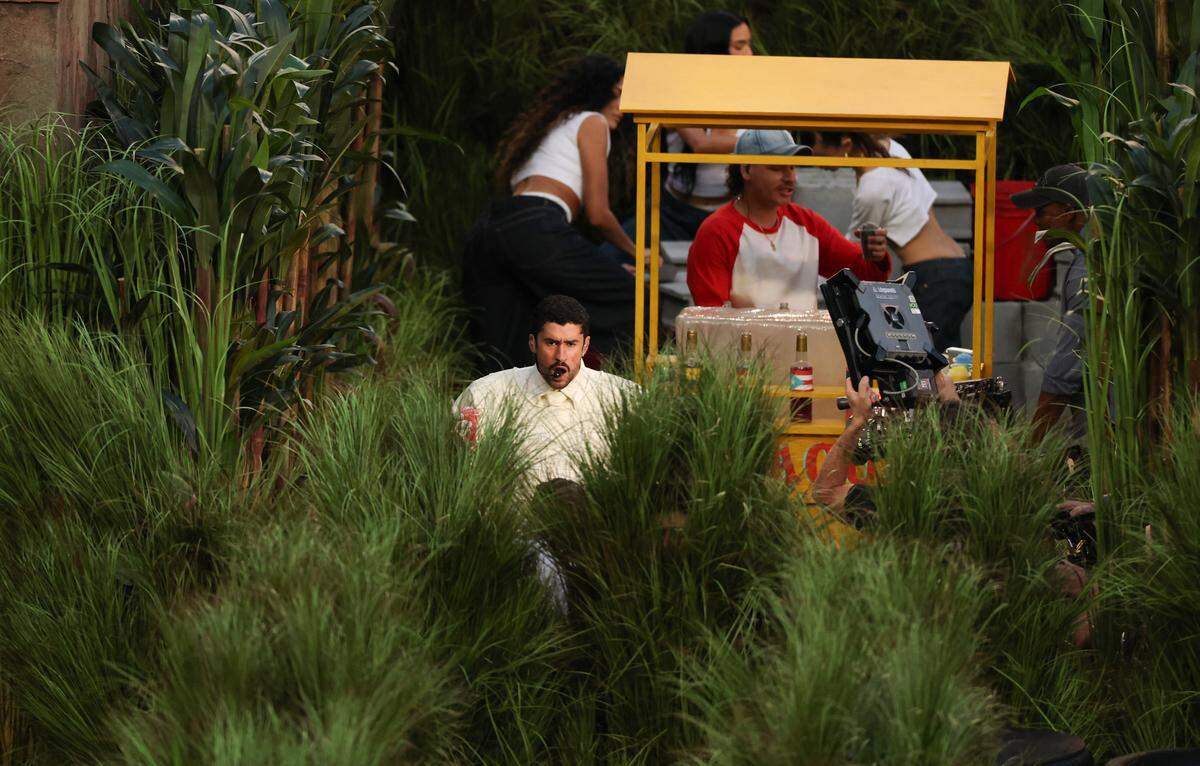
The halftime show immediately made a reference to Puerto Rico’s agriculture and history of colonialism with its setting: a sugar cane field.
In the 1500s, the Spanish established sugar cane plantations in Puerto Rico, using slavery for the back-breaking labor. Puerto Rico was a Spanish colony until 1898, when the United States gained control of the archipelago at the end of the Spanish-American War. The government granted Puerto Rican residents citizenship in 1917. U.S. sugar companies took over the sugar industry in Puerto Rico.
Ricky Martin sings pro-independence song
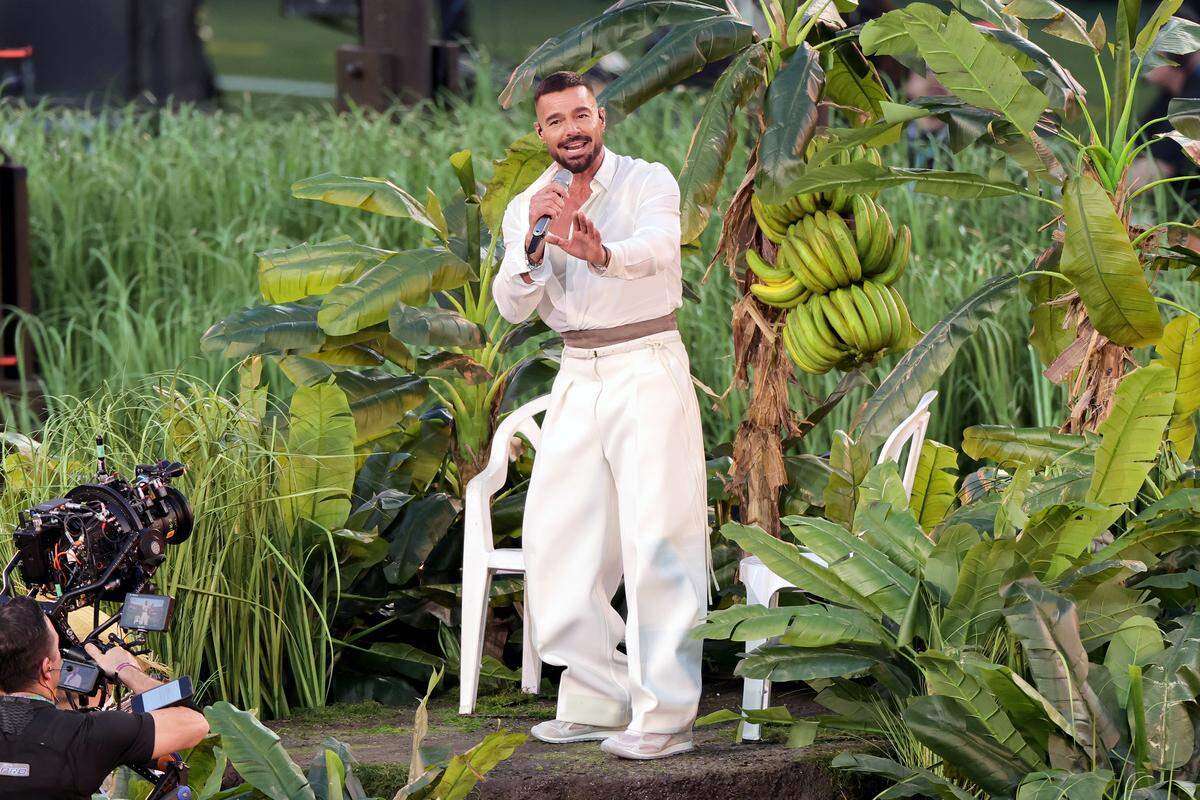
What makes Bad Bunny unique among world-famous Latino pop stars is that he isn’t a “crossover” artist. He only performs in Spanish instead of translating his songs into English, a common practice for his predecessors who paved the way for him. Ricky Martin, a fellow Puerto Rican, made it big in the late ‘90s as he performed in English. (Perhaps “Livin’ La Vida Loca” rings a bell.)
In Spanish, Martin sang the chorus to “Lo Que Le Pasó a Hawaii,” an overtly political song in which Bad Bunny criticizes the ongoing gentrification that is pushing native Puerto Ricans out of their homes.
Here’s the chorus translated from Spanish into English:
They want to take my river and my beach too. They want my neighborhood and grandma to leave. No, don’t let go of the flag nor forget the lelolai . ‘Cause I don’t want them to do to you what happened to Hawaii.
Power outages and electricity issues in Puerto Rico
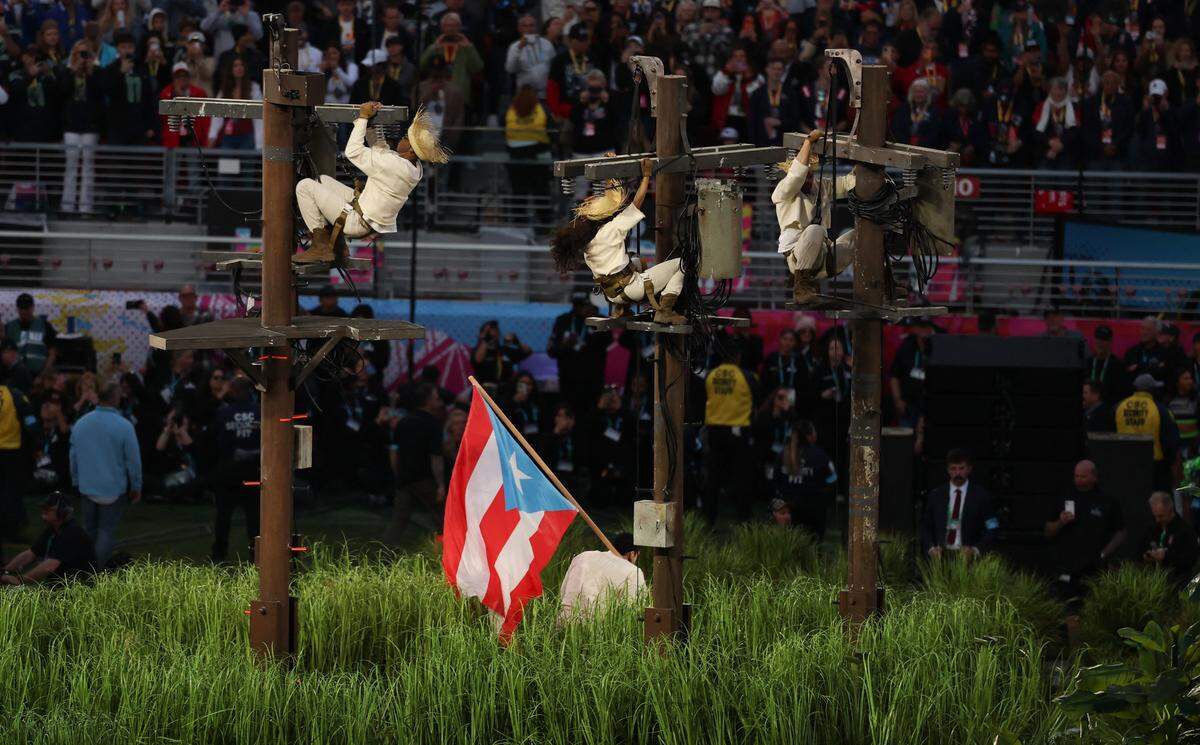
Martin’s performance immediately cut to exploding powerlines behind him. Dancers dressed as electricians swung from the busted poles as lights flickered and Bad Bunny reappeared carrying a Puerto Rican flag to perform “El Apagon,” or “The Blackout.”
In 2017, Hurricane Maria destroyed Puerto Rico’s power grid, knocking out 80% of Puerto Rico’s utility poles and transmission lines, resulting in the longest power outage in U.S. history. To this day, Puerto Ricans deal with consistent power outages, even when without major storms.
Last year, the Puerto Rican government sued Luma Energy, the Canadian-American private company responsible for the island’s power grid, to cancel its multimillion-dollar contract.
The light blue Puerto Rico flag
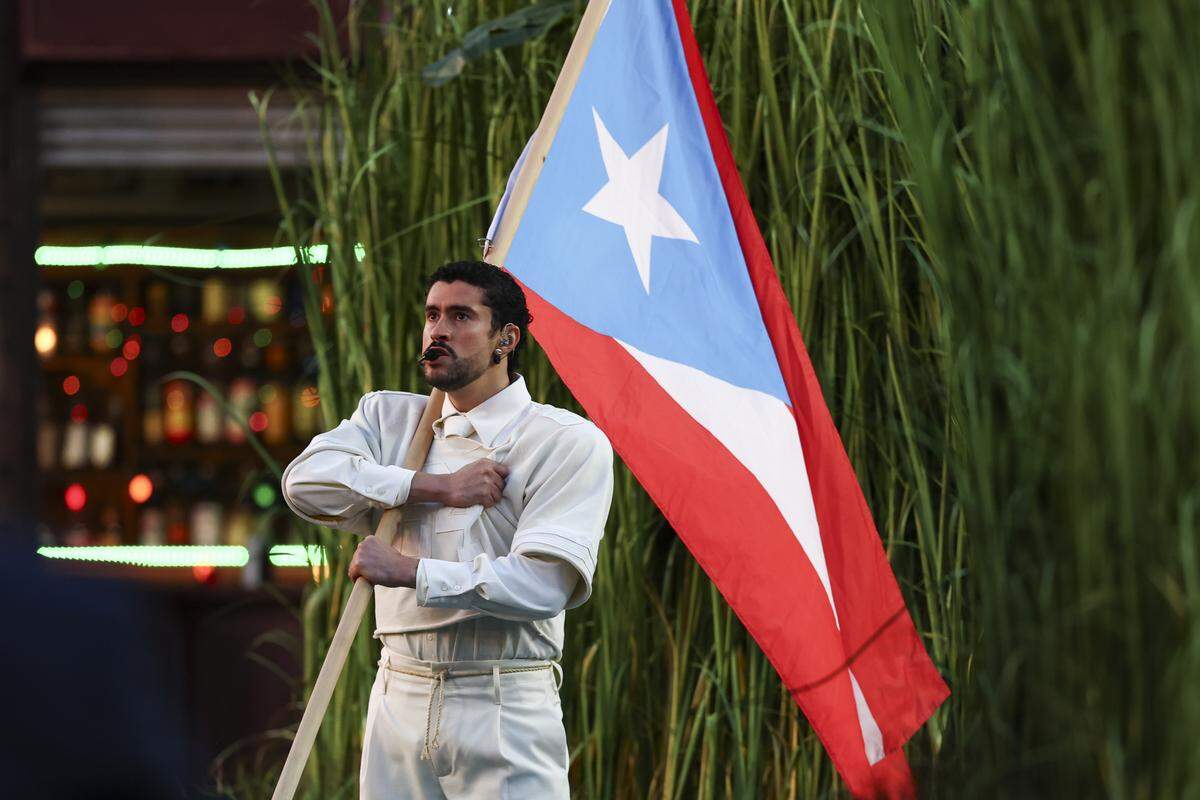
Most people are familiar with the standard, government-approved Puerto Rican flag which features a navy blue triangle, but Bad Bunny appeared carrying the azul celeste (sky blue) flag instead. The light blue flag is heavily associated with Puerto Rico’s pro-independence movement, which is in favor of establishing Puerto Rico as an independent country as opposed to an American state or territory,
The light blue version of the flag is believed to have been taken from the revolutionary flag of the town of Lares in 1868 during a revolt against Spain.
In 1948, the Puerto Rican Senate criminalized the ownership and display of the Puerto Rican flag, pro-independence writings and associating with anyone who held pro-independence views. The law was repealed nine years later. In the song “La Mudanza,” Bad Bunny sings, “They killed people for waving the flag, that’s why now I take her everywhere.”
Shoutout to Toñita and other real Latino-owned businesses
As he performed “NuevaYol,” a Nuyorican anthem, Bad Bunny sings, “Un shot de cañita en casa de Toñita,” as he grabbed a shot of rum from Toñita herself.
New York Puerto Ricans immediately recognized Toñita, or Maria Antonia Cay, the woman who owns the Caribbean Social Club in Brooklyn, one of the last Puerto Rican establishments of its kind in New York City. As her Brooklyn neighborhood became gentrified, Cay famously refused to sell her building, even when she was offered millions of dollars.
Bad Bunny also featured a taco cart with the name Villa’s Tacos, a real Los Angeles taqueria he’s a fan of.
Celebrities dance at La Casita
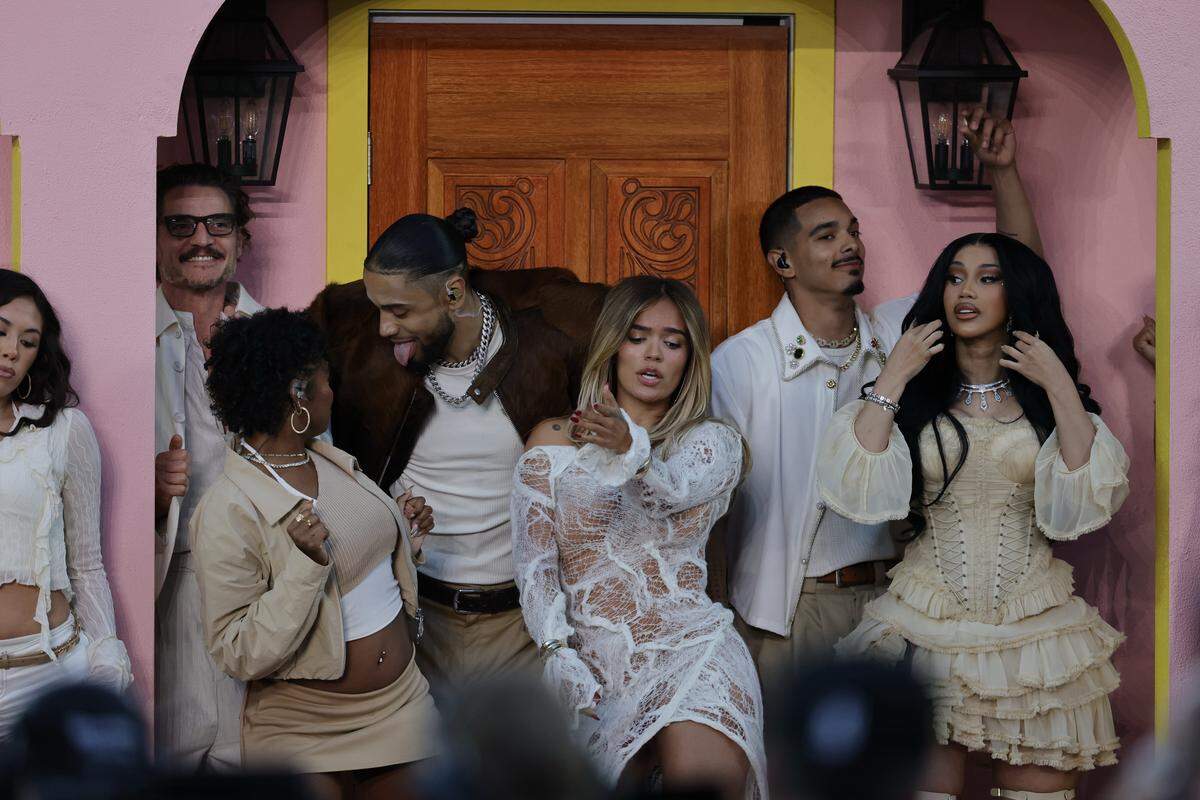
Celebrities popped up to hang out and dance at La Casita, a model of a typical Puerto Rican home, throughout his monthslong residency in Puerto Rico last year.
Latino stars like Chilean-American actor Pedro Pascal, Colombian singer Karol G, Dominican-American rapper Cardi B appeared on the La Casita patio.
Reggaeton bops
Right after Bad Bunny fell through the La Casita ceiling, his dancers started dancing to a quick medley of iconic reggaeton hits: “Pa’ Que Se Lo Gozen” by Tego Calderon, “Dale Con Dale” by Don Omar and “Gasolina” by Daddy Yankee.
That was immediately followed by Bad Bunny’s own perreo song, “EoO.” (The lyrics to that song are a bit too spicy to translate here.)
References to his Grammys win
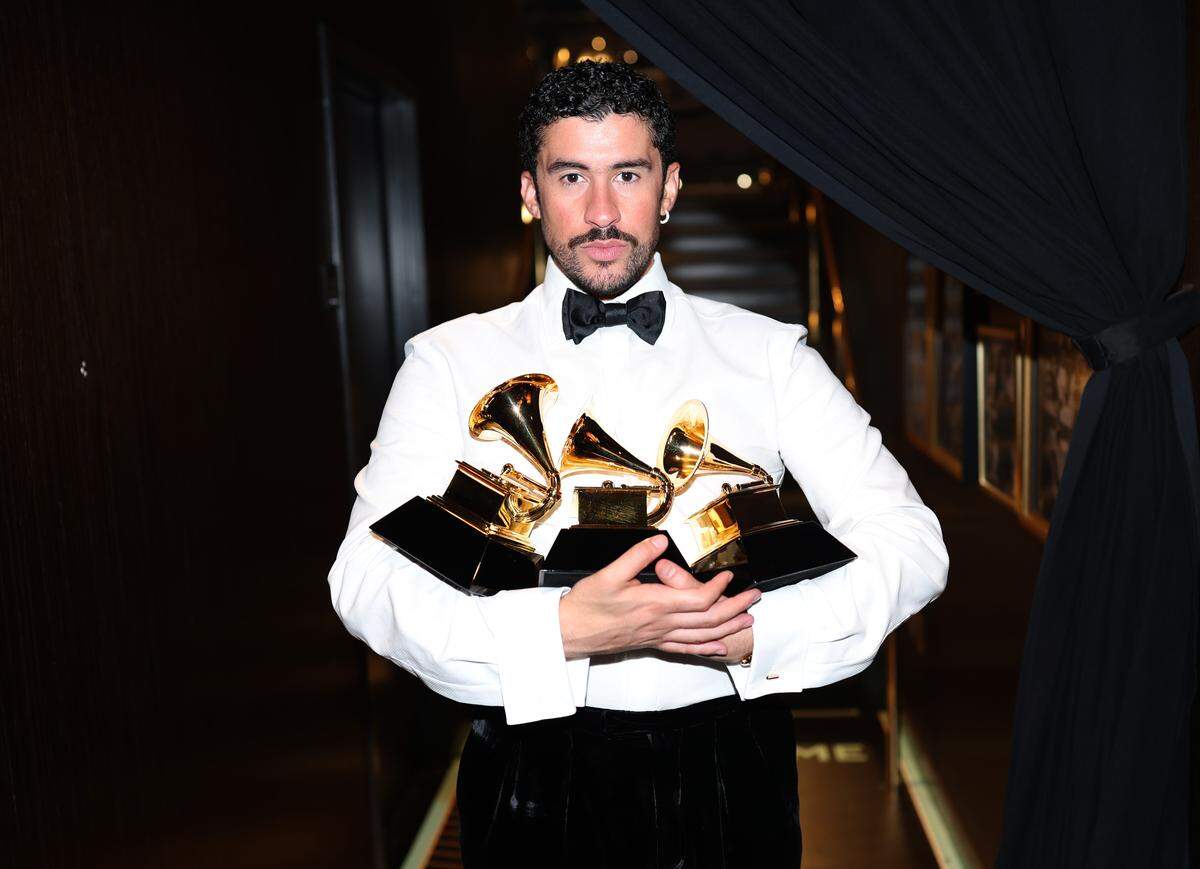
Bad Bunny has had a crazy February so far. Just last week at the Grammys, he won three awards, including the coveted Album of the Year.
During his final acceptance speech that night, he said that the only thing more powerful than hate is love. At the final moments of the halftime show, a billboard in the stadium shared those same words.
Another sweet moment at the halftime show caught fans’ attention. The camera cut to a family watching Bad Bunny accept his Grammy Award on TV. Bad Bunny then walked up the little boy, likely meant to represent his younger self, and handed him the Grammy.
Rumors quickly swirled online that the little boy was Liam Conejo Ramos, the 5-year-old boy from Minnesota who was detained by U.S. Immigration and Customs Enforcement. It has since been confirmed that the boy is not Liam.
Bad Bunny’s motivational pep talk
As a group of violinists played the lush intro to the song “Monaco,” Bad Bunny took a moment to tell you (yes, you!) to never stop believing in yourself.
Here’s what he said in Spanish translated into English:
“My name is Benito Antonio Martinez Ocasio. And if I’m here today at the Super Bowl LX, it’s because I never, never stopped believing in myself. And you too should believe in yourself. You’re worth more than you think. Believe me.”
This story was originally published February 9, 2026 at 2:53 PM.