
If you’ve been looking for a career where you can actually help people without spending the next four years in school, becoming an RBT might be worth considering.
And there’s a real need for people doing this kind of work. The BLS projects 16% job growth for psychiatric technicians and aides, a category that includes similar behavioral health roles.
The good news is that getting started doesn’t require a college degree or a long list of credentials. You’ll need to complete the required training, work with a qualified supervisor, and pass the RBT certification exam.
If you’re wondering how to become an RBT, I’ll walk you through the process step by step and, just as importantly, what you can actually expect once you start doing the job.
Key Takeaways
- No Degree Required: A high school diploma or GED is enough to qualify.
- Training Comes First: You must complete a 40-hour RBT training course.
- Supervision Matters: A BCBA supervisor will evaluate your skills before certification.
- The Exam Is Beginner-Friendly: Most candidates pass with preparation and practice.
- RBTs Are In Demand: The role is growing quickly in behavioral health and autism services.
What Does an RBT Actually Do?
RBTs work directly with clients, usually children with autism spectrum disorder or developmental disabilities. They help implement behavior plans designed by a Board Certified Behavior Analyst (BCBA).
That can include:
- Teaching communication skills
- Helping with emotional regulation
- Reinforcing positive behaviors
- Tracking progress and collecting data
- Supporting social and everyday life skills
The job is very hands-on and people-focused. Some RBTs work in schools, clinics, therapy centers, or even clients’ homes.
From what I’ve seen, it’s also a great first step into careers like psychology, counseling, education, speech therapy, or applied behavior analysis.
Why Becoming an RBT Is Easier Than Most People Think
One thing I noticed while researching this career path is that a lot of healthcare or therapy-related careers require years of college.
Becoming an RBT is different.
The certification process is designed for beginners, including people changing careers or entering the workforce for the first time. Instead of needing a degree, you mainly need training, supervision, and certification.
That makes it one of the faster ways to start working in behavioral health while still building meaningful experience.
Step 1: Meet the Basic Requirements
Before starting the certification process, you need to meet a few basic eligibility requirements.
You must:
- Be at least 18 years old
- Have a high school diploma or GED
- Pass a criminal background check
That’s it. You do not need previous experience in therapy, psychology, or education to begin.
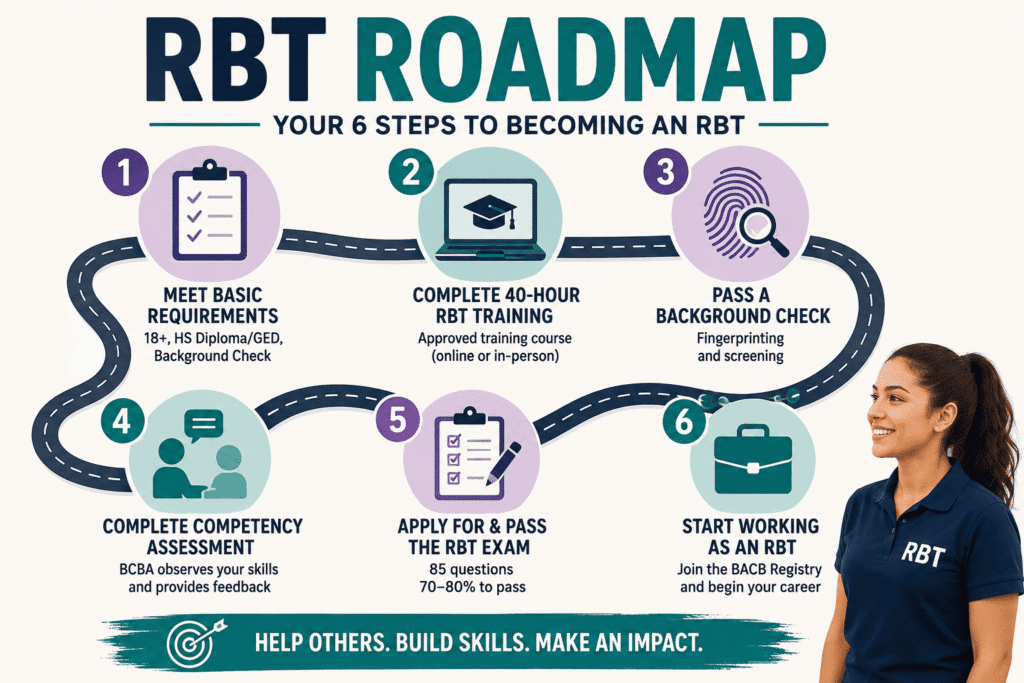
Step 2: Complete a 40-Hour RBT Training Program
The 40-hour training course is the main educational requirement for RBT certification.
During training, you’ll learn:
- Behavior analysis basics
- Ethics and professional conduct
- Data collection methods
- Teaching strategies
- Reinforcement techniques
- Behavior reduction strategies
Most people complete this training online, although some employers and organizations also offer in-person options.
What To Look For In An RBT Training Program
Not all programs feel the same, so it helps to choose one with:
When I was researching RBT training options, I noticed that some beginners prefer structured programs like ATCC because they offer RBT-focused training resources designed to help students prepare for certification and better understand real-world behavioral health work.
- BACB-approved curriculum
- Practice quizzes or mock exams
- Video examples and demonstrations
- Access to instructors or supervisors
- Positive student reviews
The cost usually ranges from around $100 to $400, although some employers may pay for your training if you agree to work with them afterward.
Step 3: Pass a Background Check
After training, you’ll complete a criminal background check.
Most employers or training organizations help guide you through this process. You’ll usually provide fingerprints and authorization for screening.
This step mainly exists to protect vulnerable populations, especially children receiving behavioral services.
Step 4: Complete the RBT Competency Assessment
This is the step that makes many beginners nervous, but it’s usually much less intimidating than people expect.
A BCBA or qualified supervisor will observe you demonstrating various RBT skills.
That may include:
- Roleplaying client interactions
- Demonstrating reinforcement strategies
- Practicing data collection
- Showing communication techniques
- Following ethical procedures
Some assessments happen in person, while others may happen virtually.
The supervisor is not there to “trick” you. Most provide guidance, feedback, and support throughout the process.
Step 5: Apply for and Pass the RBT Exam
Once your competency assessment is complete, you can submit your official application through the BACB.
After approval, you’ll schedule your RBT exam through Pearson VUE.
What The RBT Exam Looks Like
The exam includes:
- 85 multiple-choice questions
- Questions based on the RBT Task List
- Topics covering ethics, measurement, skill acquisition, and behavior reduction
Most candidates need around 70-80% to pass.
The good news?
The exam is designed for entry-level professionals, not experts.
Many people pass after reviewing practice questions and studying the core terminology from training.
Step 6: Start Working As An RBT
Once you pass the exam, your name is added to the BACB RBT Registry.
At that point, you’re officially certified and eligible to work as an RBT under BCBA supervision.
Many new RBTs work in:
- Autism therapy clinics
- Schools
- Behavioral health centers
- Home-based therapy programs
- Community support organizations
Schedules can vary from full-time to flexible part-time hours depending on the employer.
Is Becoming an RBT Worth It?
For people who enjoy helping others and want meaningful work without spending years in school, becoming an RBT can absolutely be worth it.
The role gives you:
- Real healthcare and therapy experience
- Flexible work opportunities
- A pathway into higher-level behavioral careers
- Direct impact on clients and families
It can also help you decide whether you eventually want to become a BCBA, therapist, teacher, counselor, or psychologist later on.
Final Thoughts
Becoming an RBT is one of the fastest ways to enter a meaningful healthcare-related career without needing a college degree.
The process is beginner-friendly, the training is manageable, and the certification path is much more straightforward than many people expect.
If you enjoy working with people, helping children learn new skills, and making a direct impact on someone’s life, becoming an RBT can be an incredibly rewarding career path.
And for many people, it’s only the beginning.
FAQs
How long does it take to become an RBT?
It typically takes one to three months to become an RBT, depending on how quickly you complete the required training, competency assessment, application, and exam.
Do you need a college degree to become an RBT?
You do not need a college degree to become an RBT. A high school diploma or GED is enough to meet the education requirement.
Is the RBT exam difficult?
The RBT exam is designed for entry-level candidates, so it is manageable with the right preparation. Reviewing key concepts and using practice questions can help you prepare.
Can you become an RBT with no experience?
Yes, you can become an RBT with no previous experience in therapy, healthcare, psychology, or education. The required training is designed to teach beginners the skills they need.
Do RBT certifications expire?
Yes, RBT certification has ongoing maintenance requirements. RBTs must meet the BACB’s current requirements to keep their certification active.

![Aceable Promo Code [Verified October 2026 Discounts]](https://www.miamiherald.com/careers-education/wp-content/uploads/sites/2/2026/10/aceable-promo-code-mh-1024x768.jpg)

![National Council on Strength and Fitness (NCSF) Coupon Codes [Verified Discounts]](https://www.miamiherald.com/careers-education/wp-content/uploads/sites/2/2026/10/ncsf-promo-code-mh-1024x768.jpg)
![Course Hero Promo Code [Verified Discounts]](https://www.miamiherald.com/careers-education/wp-content/uploads/sites/2/2026/10/course-hero-promo-code-mh-1024x768.jpg)
![Learn Laugh Speak Promo Code [Verified Coupons]](https://www.miamiherald.com/careers-education/wp-content/uploads/sites/2/2026/10/learn-laugh-speak-promo-code-mh-1024x768.jpg)
![Education.com Coupon Code [Verified Discounts]](https://www.miamiherald.com/careers-education/wp-content/uploads/sites/2/2026/10/education-com-promo-code-mh-1024x768.jpg)