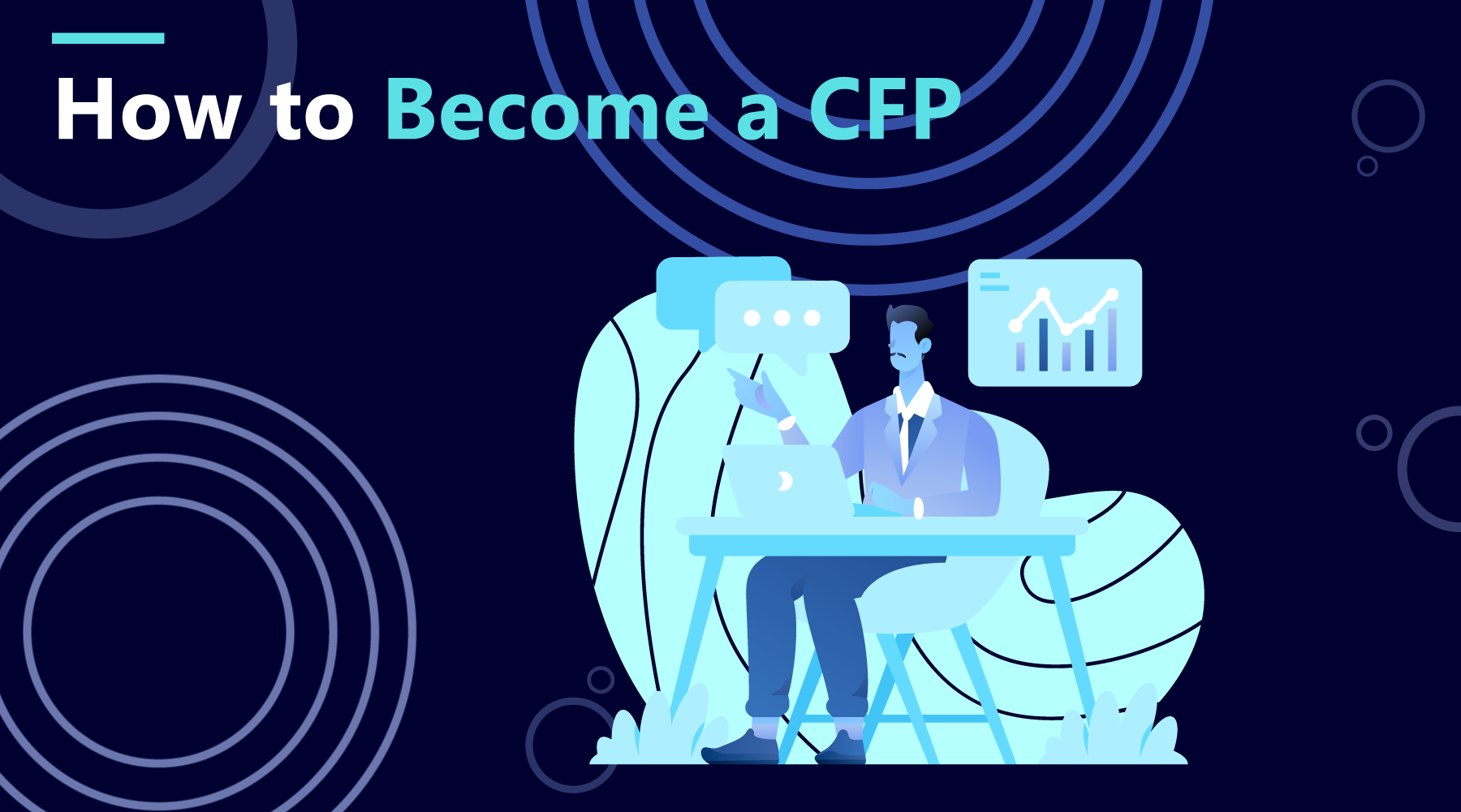
Are you a whiz with math and money? Do you enjoy talking about investment planning, retirement strategies, and personal financial planning? Do you love the idea of providing financial advice to help your clients follow their dreams?
If so, becoming a Certified Financial Planner™ (CFP®) could be the perfect career for you.
Together, we’re going to walk through the entire process of becoming a Certified Financial Planner™, breaking down the steps and explaining the essential qualifications, exams, and experience you’ll need.
Let’s get started.
Key Takeaways
- Education Requirement: You’ll need a bachelor’s degree and specific coursework in financial planning to meet the education requirement for becoming a CFP®.
- Professional Experience: Gaining 4,000 to 6,000 hours of experience in financial planning is required before you can apply for certification.
- Passing the CFP® Exam: The CFP® exam tests your knowledge on a wide range of financial topics, including retirement planning, tax strategies, and investment analysis.
- Ethics Standard: Every CFP® must adhere to a fiduciary duty and pass an ethics background check, ensuring they always act in their clients’ best interests.
- Continuing Education: To maintain your CFP® certification, you’ll need to complete 30 hours of continuing education every two years, including ethics training.
What Is a Certified Financial Planner™?
A CFP® is a financial advisor who has completed the rigorous educational, ethical, and professional benchmarks required by the Certified Financial Planner™ Board of Standards.
Certified Financial Planners™ specialize in personal financial planning, helping individuals and businesses create comprehensive financial plans. A CFP® designation demonstrates expertise in areas like investment planning, retirement planning, insurance planning, and tax planning.
Why Become a CFP®?
Becoming a CFP® is a great choice if you’re serious about a career in financial planning. Here’s why:
- Six-figure salaries: The median salary for financial planners with fewer than five years of experience was a whopping $103,000 in 2023, according to the CFP Board Compensation Study.
- High job satisfaction: 85% of financial professionals with a CFP® certification reported high satisfaction levels in their careers, particularly in areas like stability, compensation, work/life balance, and compensation.
- Make a difference: A Certified Financial Planner™ makes good money, but they also make a difference in the lives of their clients. If you’re an extrovert, you may enjoy the relationship-driven side of this career.
- High ethical standards: CFPs® must adhere to a fiduciary duty, which means they’re legally required to act in the best interests of their clients.
- Comprehensive knowledge: CFPs® undergo rigorous education and training, equipping them with the in-depth knowledge needed to provide expert advice on various financial topics.
Now that we’ve established what a CFP® is and why it’s a great career choice let’s explore the steps you need to follow to become a Certified Financial Planner™.
Step 1: Meet the Education Requirements
The first step to becoming a CFP® is meeting the education requirement set by the CFP Board. To qualify, you need to hold a bachelor’s degree or higher from an accredited college or university. However, you don’t need to have a degree in finance. Degrees in fields like business, economics, or even communications can suffice.
Additionally, you’ll need to complete specific coursework requirements in personal financial planning, covering topics such as:
- Risk management
- Investment planning
- Tax planning
- Retirement planning
- Estate planning
This educational component is critical because it provides the foundational financial planning knowledge needed to study and pass the CFP® exam.
Pro Tip:
Some people choose to pursue additional certifications like Chartered Financial Consultant (ChFC) or Chartered Financial Analyst (CFA) before or after obtaining their CFP® certification. These designations can further boost your expertise and marketability.
Step 2: Gain Professional Experience
Once you’ve met the educational component, it’s time to gain some hands-on experience. The CFP Board requires that you accumulate professional experience related to financial planning. This can be achieved in one of two ways:
- 6,000 hours of professional experience: This can include a broad range of activities related to financial planning, not just direct client advising.
- 4,000 hours of apprenticeship experience: These must be part of a structured apprenticeship program under the direct supervision of a CFP® professional and focus on tasks that directly involve personal financial planning. This apprenticeship must meet specific criteria for depth and complexity to be valid.
During this time, you’ll develop your skills in creating comprehensive financial plans, conducting investment analysis, and working with individual clients. This experience is vital for understanding the real-world application of financial planning principles.
Pro Tip:
Start networking early in your career to find mentors or apprenticeships. This will help you build professional relationships and find opportunities to gain experience.
Step 3: Pass the CFP® Exam
Next comes the CFP® exam, which is considered one of the most challenging parts of the certification process. The CFP® exam requires in-depth knowledge of the entire financial planning process, testing your ability to create a comprehensive financial plan for clients.
The exam covers a wide range of financial topics, including:
- Investment analysis and portfolio management
- Tax and estate planning
- Risk management and insurance planning
- Retirement planning
- Education planning
The exam consists of 170 multiple-choice questions that you’ll need to complete in two 3-hour sections in a single day. While this might sound intimidating, preparation is key. Many first-time exam takers successfully complete the test by using study guides, practice exams, and CFP® exam review courses.
Pro Tip:
Make sure you leave enough time for exam prep, especially if you’re juggling work or other responsibilities. Reviewing past exams and focusing on areas where you feel less confident can make a big difference.
Step 4: Satisfy the Ethics Requirement
Ethics is a crucial part of the CFP® certification process. After passing the exam, you’ll need to meet the ethics requirement, which includes signing an ethics declaration and agreeing to abide by the CFP Board’s professional standards and fiduciary standards.
This means committing to always acting in your client’s best interests and providing unbiased, trustworthy financial advice. As a CFP®, your fiduciary duty ensures that you’re always working for the benefit of your clients, putting their financial well-being first.
Pro Tip:
A rigorous background check is part of the ethics review. The CFP Board looks at both civil and criminal histories, so make sure you have a clean record before applying.
Step 5: Apply for CFP® Certification
Once you’ve completed all the steps—education, exam, experience, and ethics—it’s time to apply for CFP® certification. The CFP Board will review your qualifications and confirm that you’ve met all CFP® certification requirements. Upon approval, you’ll officially become a Certified Financial Planner™!
Pro Tip:
Double-check all your documentation before submitting your application to avoid any delays. It’s important to ensure everything is accurate and complete.
Step 6: Maintain Your CFP® Certification
Congratulations! You’re now a CFP®. But the journey doesn’t stop here. To maintain your certification, you’ll need to fulfill continuing education requirements. This ensures you stay up-to-date on changes in tax laws, investment strategies, and other areas relevant to your financial planning practice.
Every two years, you’ll need to complete 30 hours of continuing education. Two of those 30 hours must be focused on professional conduct and ethics. This ongoing learning helps you stay sharp and continue to provide relevant and ethical financial advice to your clients.
Pro Tip:
CFP® exam review courses often have continuing education bonuses, like 1-year subscriptions for purchasing the premium package. This is definitely worth spending a little more on!
Conclusion
Becoming a Certified Financial Planner™ isn’t just about passing an exam; it’s about gaining the education, experience, and ethical commitment necessary to provide sound financial advice to your clients. By completing the educational requirements, gaining professional experience, and passing the CFP® exam, you’ll be well on your way to building a successful career in the financial industry.
Not only will you be helping clients achieve their financial goals, but you’ll also be part of a community of wealth management professionals dedicated to upholding the highest ethical standards. So, if you’re ready to embark on this exciting career, start by researching accredited colleges, exploring coursework options, and working toward that CFP® certification.
With the right preparation and commitment, you can turn your passion for money, math, and making a difference into a rewarding profession!
FAQs
It typically takes 3-5 years to become a CFP®, depending on how quickly you meet the education, experience, and exam requirements.
No, you don’t need a finance degree, but you do need a bachelor’s degree from an accredited university and specific financial planning coursework.
Yes, the CFP® exam is challenging, covering a wide range of topics. With proper preparation, including practice exams and study materials, you can improve your chances of passing.
You must sign an ethics declaration and adhere to the CFP Board’s professional standards, including a fiduciary duty to act in your clients’ best interests.
Yes, many CFP® professionals get an additional financial planning certification like Chartered Financial Consultant (ChFC) or Chartered Financial Analyst (CFA) to further enhance their expertise.


![Gleim Promo Codes – Save $1,200 on CPA, CMA, CIA, EA [$50 Amazon Card]](https://www.miamiherald.com/careers-education/wp-content/uploads/sites/2/2025/11/Gleim-Promo-Codes-feature-img.png)