
According to stats released by the Graduate Management Admission Council (GMAC), 20% of GMAT exams are taken by people who have already taken the test once. This shows that many students choose to retake the GMAT in pursuit of a better score.
But just how many times is allowed?
This article explains how many times you can take the GMAT, how the lifetime limit works, and what to expect when retaking the exam.
Key Takeaways
- Lifetime limit: You can take the GMAT up to eight times total, and this includes canceled scores.
- Annual limit: You’re allowed up to five GMAT attempts within any 12-month period.
- Wait time: You must wait at least 16 calendar days between test dates.
- Score reporting: Most business schools consider your highest GMAT score when reviewing applications.
- When to retake: Retaking the GMAT can help if your score is below your target or doesn’t align with your practice test results.
GMAT Retake Policy: Annual and Lifetime Limits
The Graduate Management Admission Council allows up to five GMAT attempts per year, with no more than eight total attempts in your lifetime. This includes all test formats and canceled scores.
Related Guide
Need a closer look at GMAT courses? See the best gmat review courses before you buy.
You must also wait 16 days between appointments. This rule applies to all test takers, whether you’re testing online or at a test center.
The policy is the same regardless of your first GMAT score, meaning you can retake the GMAT even after scoring well, as long as you’re within the allowed limits.
Why Students Retake the GMAT
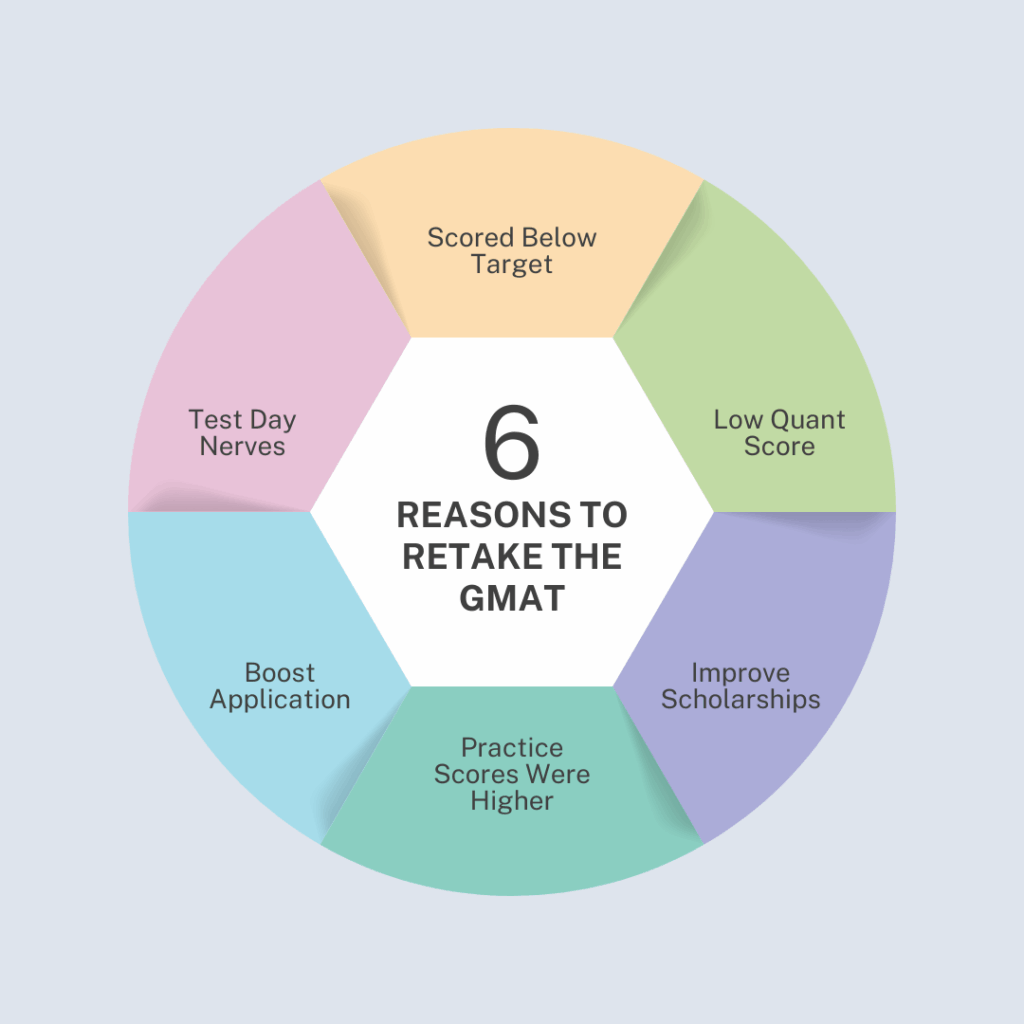
Many students take the GMAT multiple times as part of their application strategy. You might consider retesting if:
- Your GMAT score is below the average at your target schools
- Your practice exams show a higher performance than your official test
- You ran out of time on one section or had test anxiety
- You’re aiming to improve your verbal score or quant section before applying
- You want to send a stronger official score report to competitive MBA programs
Taking the test again can show persistence and growth, especially if your score reporting history shows clear progress between attempts.
Do Schools Care If You Take the GMAT Multiple Times?
Most business schools and admissions committees focus on your highest score. Even if you’ve taken the GMAT three or four times, it’s the top result that matters most.
That said, if your scores fluctuate widely or drop without a clear explanation, some schools may take that into account during review. This is rare and usually not a concern unless performance trends down.
Be strategic. Focus on steady improvement and don’t rush into another test day unless you’re confident in your preparation.
How to Prepare Between Attempts
If you didn’t reach your desired score, use your time between tests to make specific changes. Don’t simply repeat your previous GMAT prep routine.
Tips for your next attempt:
- Analyze your official score breakdown to find weak areas
- Use practice tests that reflect the actual GMAT test format
- Review missed questions and focus on problem-solving and critical thinking
- Drill critical reasoning and data insights topics if they were lower
- Adjust your study schedule and add more timed practice questions
Every retake should have a clear purpose, whether it’s improving pacing, boosting a section score, or fixing strategy errors from the first attempt.
Conclusion: Know the Limits Before You Retake
You can take the GMAT exam up to five times per year and eight times total, but that doesn’t mean you should use every attempt. Your goal is to reach your target score efficiently and present your best foot forward in your business school applications.
Understand the policy, plan carefully, and focus your prep around real test data, not just content review. Each attempt should represent an improvement over your previous performance.
FAQs
You can take the GMAT up to five times within a 12-month period.
You may take the GMAT no more than eight times total in your lifetime.
You will have to wait at least 16 calendar days before retaking the GMAT.
Schools can see all your valid scores, but most consider your highest score.
Yes, especially if your score is below your target or your practice tests show better performance.

![Princeton Review Promo Code [Discount Codes]](https://www.miamiherald.com/careers-education/wp-content/uploads/sites/2/2026/07/princeton-review-promo-code-2-1024x768.jpg)
![Kaplan SAT Promo Code [Coupons & Discounts]](https://www.miamiherald.com/careers-education/wp-content/uploads/sites/2/2026/07/kaplan-sat-promo-code-1-1024x768.jpg)
![Kaplan ACT Promo Code [Verified 2026 Discounts & Coupons]](https://www.miamiherald.com/careers-education/wp-content/uploads/sites/2/2026/07/kaplan-act-promo-code-1-1024x768.jpg)