
Are you unhappy with your ACT score and thinking about retaking the test?
You’re not alone.
After analyzing student score reports, I’ve seen that most students don’t stop after their first attempt. It takes many students two to three test attempts to reach their desired scores.
In this breakdown, I’ll explain how many times you can retake the ACT, why retaking it is common, what you gain from a second attempt, and how to decide if it’s worth it.
Key Takeaways
- Retake Limit: You can take the ACT as many times as you want.
- Most Students Retake Once: Most students retake the ACT at least once to improve their test scores.
- Colleges Use Different Policies: Some superscore using English, Math, and Reading. Others require your highest full test score or all score reports.
- Deadlines Still Matter: Retakes should match your scholarship and admissions deadlines.
- Preparation Between Tests Pays Off: Focused test prep often leads to a higher composite score.
5 Smart Reasons to Retake the ACT
Didn’t get the score you hoped for? Good news: the ACT lets you try again—and many colleges now superscore, meaning they take your best section scores from multiple test dates to calculate your highest possible composite. That means every retake is a new opportunity to boost your score, unlock scholarships, and improve your chances at top schools.
Here are 5 smart reasons to take the ACT more than once:
1. Test Day Anxiety Affected Your Score: Stress can negatively impact your performance, even if you were well-prepared. A calmer second attempt often leads to better test scores.
2. You Didn’t Prepare Enough the First Time: Without solid test prep or a full-length practice test, your initial score may not reflect your actual ability.
3. You Took the ACT Too Early: If you tested before covering key academic concepts in your high school classes, retaking the ACT later can help you score higher.
4. You Know You Can Do Better: Some students leave the test center knowing they didn’t perform at their best. A retake gives you the chance to reach your potential.
5. You Didn’t Reach Your Goal Score: If your first score doesn’t meet your college admissions or scholarship targets, a second test attempt can close that gap.
Advantages vs Disadvantages
Although retaking the ACT has clear benefits, it also comes with trade-offs that are worth considering.
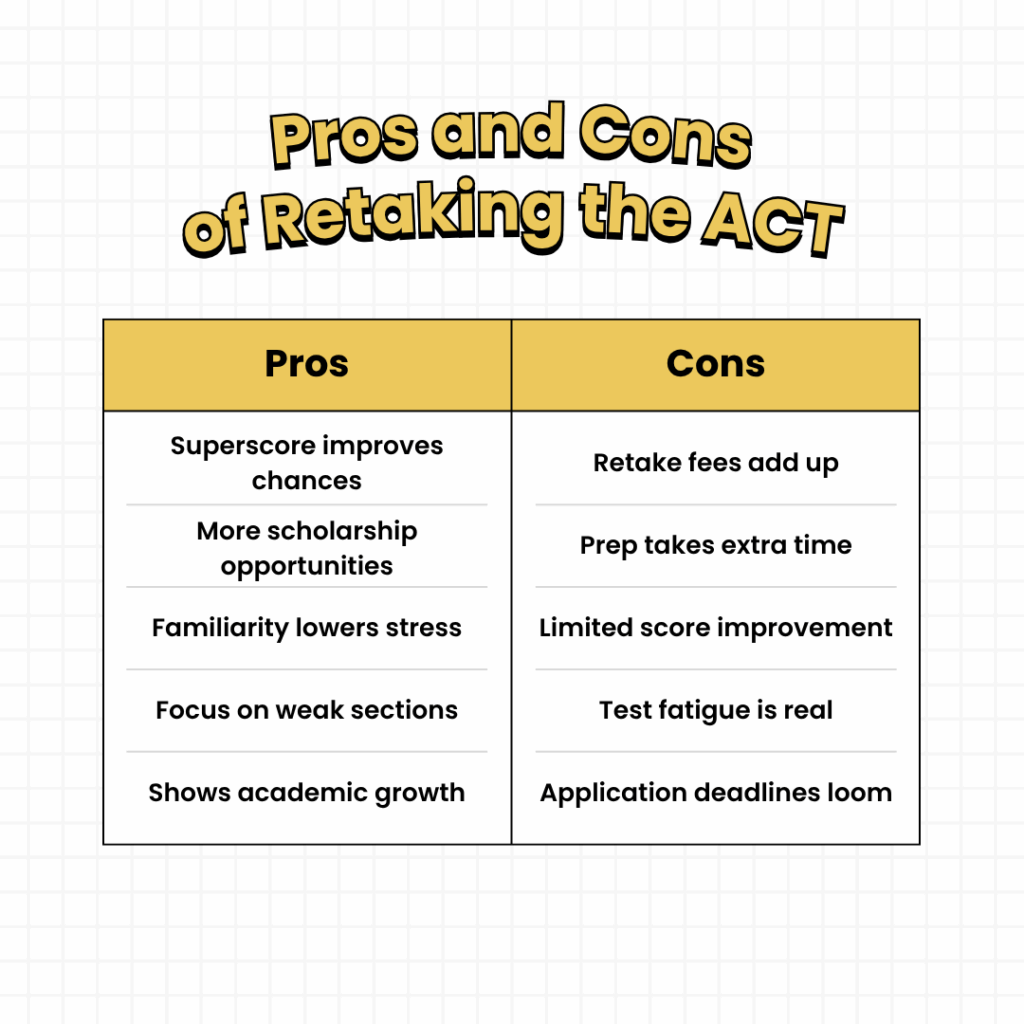
Advantages
- Better Scholarship Chances: Higher ACT scores can help you qualify for financial aid and merit-based scholarships.
- More Confidence on Test Day: Knowing the test format helps reduce anxiety and boost test readiness.
- Superscoring Advantage: If your college superscores, improving just one section can raise your overall score.
- Stronger College Applications: A higher ACT score can enhance your college admissions profile.
Disadvantages
- Registration Fees Add Up: Each ACT test has a cost, especially if you send additional score reports later.
- Time Commitment: Preparing for another ACT takes time away from school, extracurriculars, or college applications.
- Score Might Not Improve: Without adjusting your preparation strategy, your next test attempt may not result in a higher score.
- Test Fatigue: Taking the ACT multiple times can lead to burnout or decreased motivation.
How to Score Higher on the ACT
Retaking the ACT means starting fresh with a smarter approach. Here are five tips to help your next test count:
- Use Your Score Report Like a Study Map: ACT score reports break down how you did by category—so don’t guess what to study. Focus on low-scoring subscores like “Production of Writing” or “Data Interpretation.”
- Master the ACT’s Brutal Timing: The ACT is fast-paced, especially English and Reading. Train with section-specific timers so your brain gets used to the pressure.
- Fix the Gaps, Don’t Start Over: If Geometry tanked your Math score or Natural Science tripped you up in Reading, dig into just those problem areas. Strategic studying beats starting from scratch.
- Prep with Tools That Mirror the Test: Use an ACT prep course with official-style questions, adaptive quizzes, and full-length exams. Look for programs that track your progress by ACT category—not just general topics. UWorld ACT is one of my personal favorites, and it’s one of the more affordable prep picks out there.
- Aim for a Superscore Win: Even if you only improve one section, that could boost your superscore. Focus on raising your lowest section, not just your overall composite.
How Colleges View Your ACT Retakes
Colleges use different policies when reviewing ACT test scores. Some schools superscore, combining your highest scores from different test dates in English, Math, and Reading into a new composite. Others only consider the single highest composite score from one official test. A few schools require all ACT test attempts as part of your score report.
Check with each admissions office to see which policy they follow. It can impact how often you take the ACT and how you prepare for it.
Best Time to Retake the ACT
Timing matters when planning ACT test dates. Many students take the ACT for the first time during junior year, allowing time for a possible retake early in senior year.
This approach helps students:
- Meet scholarship and admissions deadlines
- Get test scores back before college applications are due
- Leave time for subsequent preparation after reviewing their initial score
💡 Pro Tip: Target your weakest section to boost your next ACT result.
Final Thoughts
The ACT has no lifetime limit, and most students take it multiple times. Whether you’re aiming to raise your first score or improve a specific section, what counts is how you retake, not just how many times.
Use each test date to move closer to your goal score and ensure that your final scores support your college admissions process, financial aid timeline, and personal circumstances.
FAQs
There is no official limit.
Yes. Each retake has a registration fee.
Most students take the test in their junior year to allow time for retakes and preparation.
Yes. Higher scores can increase financial aid and eligibility for honors programs.
Colleges usually consider your highest score.