If you’re on the path to securing a career as a real estate agent, it’s natural to wonder: How hard is it to get a real estate license? It’s a fair question, especially if you’ve heard mixed stories from people who have gone through the process.
The truth? It’s not easy, but it’s definitely doable—especially with the right preparation.
With over 220,000 realtors in Florida alone—more than any other state—it’s clear the real estate industry is thriving. However, success starts with earning your license, and that requires effort. The process involves several steps, including pre-licensing education, passing a real estate exam, and meeting state-specific requirements.
Key Takeaways
- State-Specific Challenges: The difficulty of getting a real estate license varies by state, with some requiring significantly more education and tougher exams than others.
- Preparation is Crucial: Completing pre-licensing education, using study tools like PrepAgent, and taking practice tests can boost your confidence for the exam.
- Real Estate Exam Structure: The licensing exam has two parts—the national portion (covering general real estate principles) and the state portion (focused on local laws).
- Time Commitment Varies: Most people complete the licensing process in a few weeks to a few months, depending on their schedule and state requirements.
- Success Is Achievable: With dedication, good study habits, and the right resources, most aspiring agents pass the exam and get licensed.
How Difficult Is It to Get a Real Estate License, Really?
The level of difficulty it comes to real estate education depends on three main factors:
- Your State’s Requirements: Each state has different pre-licensing education requirements and unique exam formats. States like Texas, California, and Colorado have more rigorous standards, which can make the process feel harder. In Texas, for example, you’ll need to complete 180 hours of pre-licensing education, compared to just 63 hours in Florida.
- Your Study Habits: The real estate exam tests a lot of material, including real estate principles, legal concepts, and state-specific laws. If you’re not great at self-motivation or test prep, you might find the process more challenging.
- Your Comfort with Exams: Test-taking skills matter. The exam has a reputation for being tricky, particularly the state-specific portion. Many people find the national portion more straightforward since it focuses on general principles.
What Do Real Estate Professionals Say About Getting Licensed?
When it comes to becoming a real estate agent, professionals in the industry often highlight a clear divide: getting licensed is relatively simple, but building a successful career as an agent is far more challenging.
Here’s what seasoned agents and brokers have to say:
Getting a License is Manageable
Many professionals agree that earning a real estate license in the U.S. isn’t overly difficult. Most states require a pre-licensing course, which can often be completed online in as little as a few weeks, followed by passing a licensing exam. Some agents describe the exam as “ridiculously easy,” while others caution that preparation is still key to success. The real challenge, however, begins after you’re licensed.
It’s Easy to Start, Hard to Succeed
A recurring sentiment is that while it’s simple to become a realtor, staying in the business and making a living is much harder. One agent noted, “It’s about as easy as ‘Do you have a pulse and $200?’” But they went on to explain that sustaining a career requires dedication, grit, and strategy. With up to 90% of new agents leaving the field before their first license renewal, it’s clear that licensing is just the beginning.
Becoming a Realtor Means Building a Business
Several industry veterans emphasize that real estate isn’t a traditional job—it’s more like starting your own small business. Beyond the licensing process, you’ll need to create a realistic business plan, manage startup costs, and be prepared for months of little to no income. “You need 6–12 months of reserves to survive,” shared one experienced realtor. Even after landing clients, the commission structure means it could take another 30–90 days to see payment.
The Market is Competitive
In certain areas, there are more agents than homes for sale, making it difficult for new realtors to break in. One agent in North Carolina said, “In my market, there are more licensed agents than homes on the market.” This saturation means new agents need to work harder than ever to stand out, often through aggressive networking, marketing, and finding a niche.
Advice for Success After Licensing
Industry professionals recommend joining a brokerage with strong mentorship opportunities, as it can significantly ease the transition into the field. “I struggled my first few years because I didn’t have guidance,” one agent reflected. “Now I’m with a brokerage that offers coaching calls and mentorship, and it’s made all the difference.”
In summary, getting a real estate license is relatively straightforward, requiring education, an exam, and some upfront costs. However, the journey from licensee to successful agent demands hard work, resilience, and a long-term commitment to building your career.
As one seasoned realtor put it, “It’s not a job—it’s a business. If you’re not ready to treat it that way, this may not be the right path for you.”
The Steps to Getting a Real Estate License
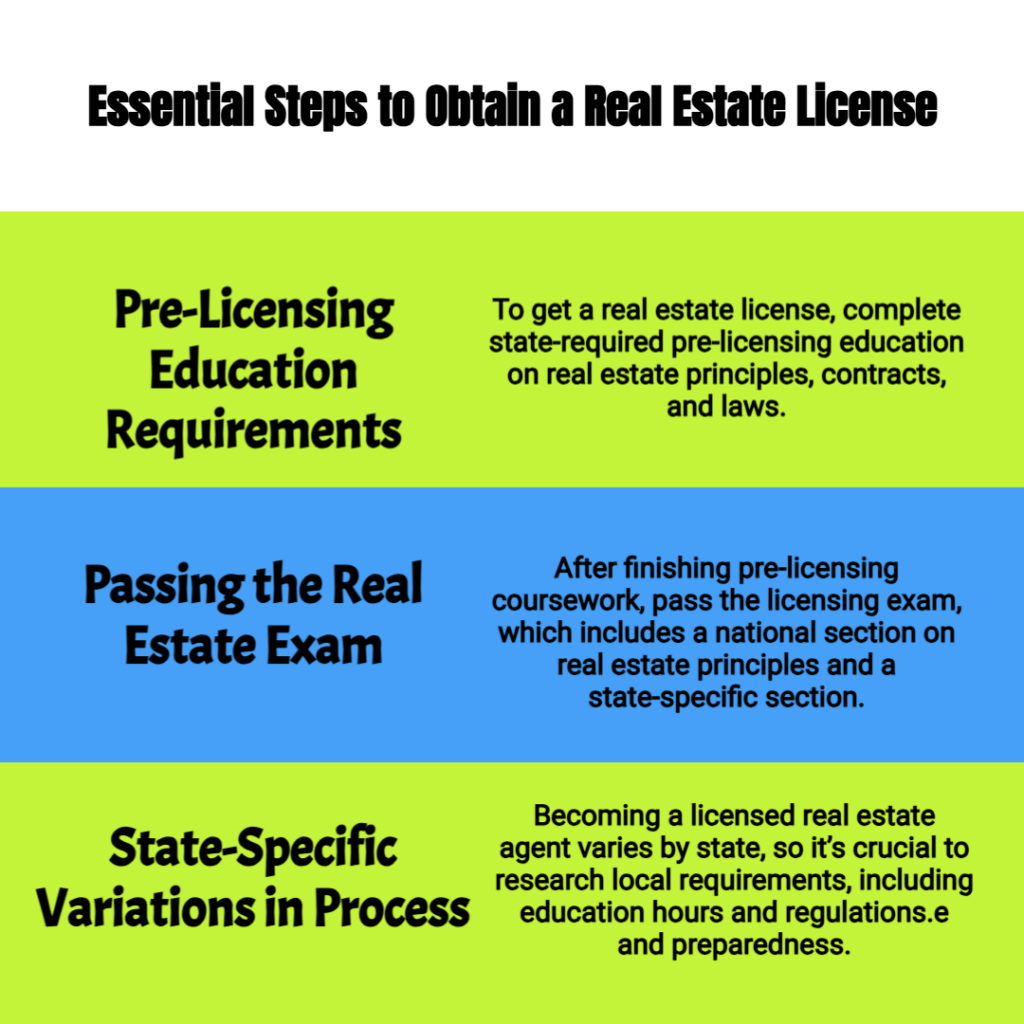
One of the hardest parts of setting out to be a new real estate agent is figuring out the “how.” The process to get your real estate license varies slightly depending on your state, but it typically includes the following steps:
1. Complete Pre-Licensing Education
The first step is to enroll in pre-licensing education through an approved real estate school. These courses teach you the fundamentals of real estate principles, contracts, real estate law, property management, and fair housing regulations.
The number of required hours varies widely. Luckily, numerous accredited real estate schools provide online courses, giving you the flexibility to study at your own pace as you pursue a career in real estate.
2. Pass the Real Estate Exam
After completing your pre-licensing education, you’ll need to pass your state’s real estate exam. It is typically divided into two parts:
- The National Portion: Focuses on general real estate principles, contracts, and fair housing laws.
- The State Portion: Covers state-specific real estate laws and regulations.
The exam’s difficulty depends largely on how well you prepare. “Every state is different in terms of difficulty. Illinois was cake, and I barely studied. Arizona, I studied a ton and passed the national portion the first time, but the state portion took me three tries,” one Reddit commenter shared.
Does It Vary by State?
Yes! The difficulty of getting a real estate license depends heavily on where you live. States with more hours of pre-licensing education and detailed state exams tend to be more challenging.
Here are a few examples:
- Texas: Requires 180 hours of coursework and a detailed licensing exam.
- California: Requires 135 hours of education, covering both real estate principles and practice.
- Colorado: Requires 168 hours of education and is known for a particularly tricky state-specific exam.
On the other hand, states like Alabama and Florida have fewer education hours and simpler exams, which makes them slightly easier to navigate. Some states also require post-licensing education after you’ve passed your exam. For example, new agents in Georgia must complete 25 hours of post-licensing education during their first year.
You’ll also have to decide whether you want to focus on becoming a real estate agent or a real estate broker. In a few states, this is one and the same, but for many, there are two different processes.
Final Thoughts
So, how hard is it to get a real estate license? The difficulty really depends on your state’s requirements, your personal study habits, and how well you prepare. While some states require more extensive education and tougher exams, others have less demanding prerequisites, making the process more accessible.
The good news? It’s absolutely achievable with the right mindset and preparation. Thousands of people secure their real estate licenses every year, so you’re in good company. If you approach the process with focus and a solid plan, you’ll set yourself up for success.
But remember, getting licensed is just the first step. Building a successful real estate career takes perseverance, strategy, and a willingness to treat it as a business. If you’re ready to start, enroll in an approved real estate school, prepare thoroughly, and take the leap.
FAQ
The national portion tests general real estate principles, contracts, and fair housing laws, while the state portion focuses on specific laws and regulations for your state.
The main challenges include completing pre-licensing education, passing the state-specific portion of the exam, and managing time effectively if you have other commitments.
Yes! Many approved real estate schools offer online courses that allow you to complete your education at your own pace, making it easier to fit into your schedule.
Most states allow multiple retakes of the real estate exam, though there may be a waiting period between attempts and a limit on how many times you can try in a given timeframe.
Practice tests, study guides, flashcards, and test prep platforms like PrepAgent are excellent tools for building confidence and improving your chances of passing.