
Each GRE verbal or quantitative reasoning test produces a total score from 130-170 in 1-point increments, where the analytical writing test receives a score between 0 and 6 in half-point increments. And while knowing the scale is important, it doesn’t describe a competitive score.
GRE score percentiles, meanwhile, give a clearer picture.
They compare your performance to other GRE test takers over a rolling three-year period and reveal how competitive you are. As an exam prep expert, I’ll walk you through how GRE percentile scores are calculated and what separates an average score from a score that grabs your dream school’s attention.
Key Takeaways
- GRE score percentiles: Show how your performance compares to other GRE test takers over a three-year period, not just your raw or scaled score.
- Competitive GRE scores: Most graduate programs view the 75th percentile and above as strong; highly selective programs look for 90th percentile+.
- Section differences: Verbal reasoning and quantitative reasoning percentiles move differently, and it’s common to be stronger in one section.
- Analytical writing percentiles: Scored 0.0–6.0 in half-point increments, with its own percentile chart separate from verbal and quantitative.
- Admissions focus: Many graduate programs evaluate percentile ranking when determining applicant competitiveness.
What Are GRE Score Percentiles?
Your GRE percentile is the percentage of test takers whose scores are lower than yours.
If your quantitative reasoning percentile is 80%, it means you performed better than 80% of other GRE test takers.
Percentiles help admissions officers:
- Compare student performance regardless of the scoring scale
- Understand how strong a candidate is relative to the applicant pool
- Normalize differences between individuals, schools, and preparation levels
Percentiles matter because a scaled score alone does not show where you stand. For example, a 165 verbal reasoning score may look similar to a 165 quantitative score, but the percentile rankings can be very different.
GRE Scoring Breakdown
The GRE general test has three sections:
1. Verbal Reasoning
- 130–170, scored in 1-point increments
- Measures reasoning, reading, vocabulary, and logic
2. Quantitative Reasoning
- 130–170, scored in 1-point increments
- Measures math, problem-solving, and data analysis
3. Analytical Writing
- 0.0–6.0, scored in half-point increments
- Measures argument analysis and essay writing
Each of these areas generates both a scaled score and a percentile score.
How GRE Percentile Scores Are Calculated
Percentiles are not based on your test alone. They’re calculated using performance data from ETS (Educational Testing Service) over a rolling three-year period. This means 2025 GRE percentile rankings reflect scores from recent data, not historical results.
- Your raw score = number of correct answers.
- Your scaled score = adjusted score after difficulty calibration.
- Your percentile score = how your scaled score compares to other test takers.
Even if two students earn the same scaled score, their percentile ranking might be different across sections because the distribution of scores for verbal, quantitative, and analytical writing is not the same.
Example: Percentile vs Score
Imagine two students:
- Student A: Quantitative Reasoning Score = 160
- Student B: Verbal Reasoning Score = 160
Student A might fall around the 50th percentile in quantitative reasoning, while Student B might be closer to the 84th percentile in verbal reasoning.
This happens because more test takers score highly on quantitative than verbal, especially students applying to STEM or physical sciences programs. In fact, a perfect score of 170 is the 91st percentile, indicating that around 9% of test takers earn perfect QR points.
GRE Percentiles by Section
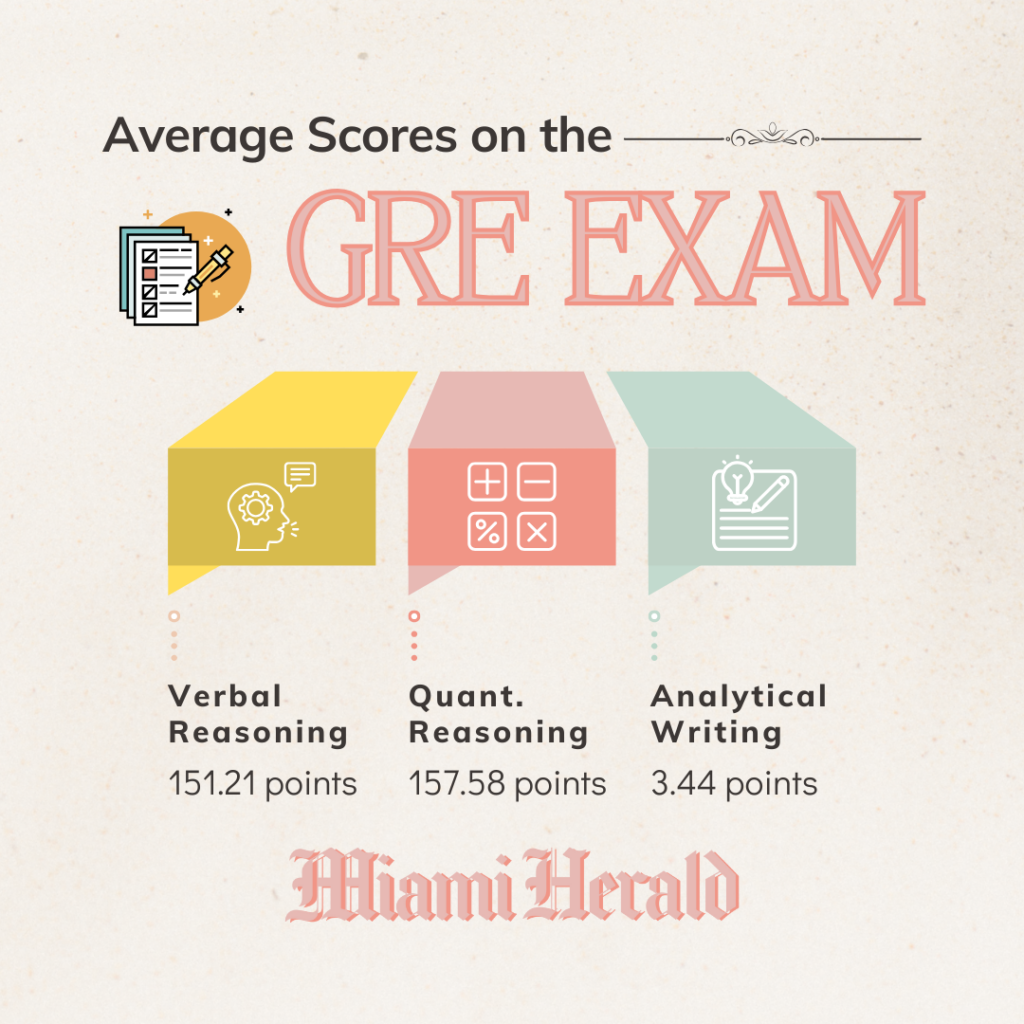
Below are updated percentile trends based on official ETS data for test takers from July 1, 2021 – June 30, 2024:
Verbal Reasoning Section
| Scaled Score | Verbal Percentile Rank |
|---|---|
| 150 | 39th |
| 155 | 65th |
| 160 | 84th |
| 165 | 95th |
| 170 | 99th |
A score of 160 or above makes you stronger than most applicants in psychology, education, and humanities. For top programs in writing and linguistics, students often aim for 165+.
Quantitative Reasoning Section
| Scaled Score | Quant Percentile Rank |
|---|---|
| 150 | 24th |
| 155 | 37th |
| 160 | 50th |
| 165 | 67th |
| 170 | 91st |
Because STEM and engineering students dominate this section, the percentile climbs more slowly. A 160 is average for many competitive technical programs, while 165–170 is expected at top programs.
Analytical Writing Section
| Score | Analytical Writing Percentile |
|---|---|
| 3.0 | 17th |
| 3.5 | 43rd |
| 4.0 | 63rd |
| 4.5 | 85th |
| 5.0 | 93rd |
| 5.5–6.0 | 98th to 99th |
Many graduate programs don’t demand perfection in analytical writing scores, but 4.0–4.5+ shows strong writing ability and argument structure. Humanities and education programs often look for 4.5–5.0.
Comparing GRE Scores Across Programs
Different fields prioritize different sections. Chances are, you’re already somewhat talented at the sections your field favors, so you can stress less about your weaker test topics.
Examples:
- Physical sciences and engineering: Expect high quantitative scores (160–170), verbal scores may be secondary.
- Business analytics or economics: Often require strong quantitative reasoning percentiles + solid verbal.
- Psychology, humanities, or law-adjacent graduate programs: Expect strong verbal reasoning and analytical writing scores.
- Top MBA or selective doctoral programs: Balanced high scores in both the verbal reasoning and quantitative scores.
GRE Total Score: Why It Can Mislead Applicants
Some applicants focus on the GRE total score (combined verbal + quantitative).
This can be useful, but most programs do not evaluate GRE test scores only in total form, which can range between 260 and 340.
Two reasons:
- GRE total score hides weaknesses.
- 155 verbal + 165 quantitative (strong STEM candidate)
- 165 verbal + 155 quantitative (strong humanities candidate)
Both have the same total (320), but the percentile rankings across sections differ.
- Graduate programs prioritize section strengths.
- A physical sciences Ph.D. committee cares more about quantitative reasoning percentile than verbal reasoning percentile.
- A literature or communication program does the opposite.
How to Read Your GRE Score Report
Your GRE score report includes:
- Section scores (Verbal, Quantitative, Analytical Writing)
- Percentile scores for each section
This report is designed to help graduate programs compare applicants from different backgrounds, schools, and countries.
Why Percentiles Matter More Than Scaled Scores
Graduate school admissions want to know how you stack up in real competition.
Percentiles tell schools:
- Whether you stand above-average GRE scores
- Whether your reasoning and analytical skills are stronger than those of the applicant pool
- How you compare to applicants from different countries, colleges, and majors
You don’t need a perfect score. You need a higher percentile than the competition.
How to Improve Your GRE Percentiles
If you want to reach a target score, focus on consistent skill-building rather than memorizing shortcuts.
Practical strategies:
- Use full-length practice test tools that simulate adaptive testing
- Improve vocabulary and reading comprehension for verbal reasoning
- Drill algebra, geometry, and statistical reasoning for quantitative reasoning section mastery
- Write sample essays to strengthen analytical writing section percentiles
- Track your weak question types and revisit them
Test performance tends to rise when students understand why wrong choices are wrong rather than just chasing a higher raw score.
How Long Should You Study?
Most competitive applicants study 6–12 weeks, depending on baseline performance.
If you’re aiming for top programs, expect 100–150+ hours of studying. A structured platform like Target Test Prep, PrepScholar, or Achievable is especially effective for building quantitative reasoning skills when you’re pushing toward high-percentile math scores.
If your goal is a solid above-average score, 40–80 targeted hours is often enough. Achievable works well here; its spaced-repetition approach helps reinforce verbal and analytical concepts without burnout.
The key isn’t speed, it’s steady, focused study that strengthens weak areas week by week.
GRE Score Percentiles and Admissions Officers
Admissions officers don’t expect perfection. They just want evidence that you’ll succeed in graduate school.
Your percentile ranking tells them:
- Whether you’re prepared for graduate-level reading
- Whether you can interpret data and perform quantitative reasoning
- Whether you can articulate complex arguments in writing
GRE percentiles are simply one lens, but they are a meaningful one.
Final Thoughts
GRE score percentiles tell a more complete story than raw numbers. They reveal where you stand in a competitive pool and help graduate programs evaluate your potential more fairly.
Whether you’re aiming for the average GRE or shooting for a perfect score, remember that every point you add can move you ahead of thousands of test takers. If you treat your prep seriously, track weaknesses, and practice intentionally, you’ll see your percentile climb, and with it, your admission chances.
FAQs
The 95th percentile usually corresponds to a Verbal Reasoning score of 165 and a Quantitative Reasoning score of 170 (the top 9% of takers earn a perfect QR score).
A 312 total score is generally considered above average, often in the 65–70th percentile range, depending on section performance.
Top 1% performance typically requires a 170 on Quantitative, 169–170 on Verbal, and 5.5–6.0 on Analytical Writing. These scores place you ahead of 99% of other test takers.
Yes, but it’s closer to an average score than a competitive one. Many graduate programs consider this acceptable, though top programs expect higher.
The 60th percentile typically corresponds to around 154–155 in Verbal and 155–156 in Quantitative. Exact numbers vary depending on the testing year.