Facing the dilemma of choosing between a career as a tax attorney and a Certified Public Accountant (CPA)? It’s a common predicament for those at the intersection of law, business, and accounting who need to figure out which kind of tax professional they want to be. Each profession carries a distinct path through the maze of tax law and financial planning, offering its own challenges and rewards.
Wondering about the job outlook for each position?
Both positions have positive growth, with CPAs expected to grow 6% and demand for tax attorneys up 10% by 2028.
Since the demand is there, I’ll dive into the specifics of each path, providing insights into the unique roles and values these professions bring to the finance and taxation fields. Whether you’re drawn to the legal mastery of tax attorneys or the comprehensive financial expertise of CPAs, this guide aims to illuminate the path that aligns with your professional aspirations.
Key Takeawaysla
- Specialization: Tax attorneys focus on the legal aspects of tax issues, including tax liability disputes and litigation, while CPAs offer a broader range of financial services like auditing, tax preparation, and financial planning.
- Education and Certification: Becoming a tax attorney requires law school and passing the bar exam. CPAs need a bachelor’s degree, 150 hours of education, passing the CPA exam, and relevant experience.
- Career Opportunities: Tax attorneys work in legal settings or government agencies, dealing with tax law. CPAs have diverse opportunities in public accounting, corporate finance, and consultancy.
- Salary and Advancement: CPAs and tax attorneys often have similar average salary ranges, with both careers offering good advancement potential.
What is a Tax Attorney?
A tax attorney stands at the confluence of law and taxation, wielding expertise in legal statutes and tax law to navigate and resolve complex tax-related matters. This specialized legal professional is not only versed in the intricacies of tax codes but also possesses the authority to represent clients in tax court, offering a shield against the daunting aspects of tax disputes and liabilities.
Key Attributes of a Tax Attorney
- Legal Expertise: Tax attorneys specialize in a deep understanding of tax law and legal statutes, equipping them to tackle complex tax situations and provide expert advice on tax-related issues. Their proficiency extends to interpreting the evolving landscape of tax laws, ensuring compliance, and optimizing tax strategies for their clients.
- Representation Rights: Unlike other tax professionals, tax attorneys can represent clients in tax court. This encompasses various legal disputes related to taxes, from audits and appeals to wage garnishments and back taxes. Their representation rights offer clients a significant advantage in navigating the legal complexities of the tax system.
- Educational and Licensing Requirements: The journey to becoming a tax attorney begins with completing law school, underscored by the rigorous Law School Admission Test (LSAT). Following law school, aspiring tax attorneys must pass the bar exam to practice law. Many then choose to further specialize in tax law, often through obtaining a Master’s degree in taxation, to hone their expertise in this niche field.
- Certification Process: While the bar exam is the primary licensure requirement, tax attorneys may pursue additional certifications or specializations in taxation. These can include certifications from the American Bar Association or specialized tax law certifications, enhancing their credentials and expertise in handling specific tax-related matters.
What is a Certified Public Accountant?
A CPA embodies the pinnacle of professionalism in accounting and finance, having successfully navigated a rigorous path of educational achievements and practical experience, culminating in passing the Uniform CPA Examination. In the United States, CPAs gain licensure through state boards of accountancy, a testament to their comprehensive expertise in accounting, auditing, taxation, and financial planning.
Key Attributes of a CPA
- Comprehensive Financial Expertise: The expertise of CPAs is not confined to simply preparing tax returns; it spans a broad spectrum of financial domains, including accounting principles, financial management, auditing procedures, and an in-depth understanding of tax laws. This extensive knowledge base enables CPAs to offer various services, from financial reporting and compliance to strategic financial planning for individuals and organizations.
- Auditing and Assurance Services: CPAs are uniquely qualified to audit financial statements. This critical service involves thoroughly examining an organization’s financial records to ensure accuracy and adherence to established accounting standards. This function is crucial for maintaining investor confidence and regulatory compliance, highlighting CPAs’ pivotal role in the financial ecosystem.
- Educational Requirements: The journey to becoming a CPA is marked by a significant educational commitment, often called the “150-hour requirement.” This entails completing a bachelor’s degree in accounting or a related discipline, supplemented by an additional 30 hours of coursework, ensuring a well-rounded and comprehensive educational foundation in accounting, business, and ethics.
- Licensing and Regulation: Achieving CPA licensure is a multifaceted process beyond passing the Uniform CPA Exam. Candidates must accumulate a specific amount of practical experience under the mentorship of a licensed CPA and adhere to a strict code of professional ethics. The exact requirements for licensure, including the duration of work experience and ethical standards, can vary by state, underscoring the importance of understanding local regulations.
Find out which CPA prep course is right for you in our Miami Herald CPA course guide.
Tax Attorney vs CPA: Career Path Options
Choosing between a tax attorney and a CPA depends on your interest in legal vs. financial aspects of tax matters. Here’s a concise comparison:
- Tax Attorneys
- Specialize in tax law, handling disputes, liability, and complex planning.
- Work in law firms, corporate legal departments, and government tax agencies.
- Ideal for legal representation in tax court and advising on tax-related legal issues.
- CPAs
- Focus on financial planning, tax preparation, auditing, and compliance.
- Careers span public accounting firms, corporate finance, and consulting.
- Suited for financial oversight, reporting, and day-to-day accounting services.
CPA vs Tax Attorney Salaries and Professional Advancement
Salaries vary by experience, location, and job complexity, highlighting the rewarding financial prospects of these careers. This overview examines starting salaries, average earnings, and salary ranges for CPAs and Tax Attorneys, shedding light on the financial benefits of these professions.
CPAs Salaries
Certified Public Accountants enter the field with a starting salary of around $59,000 on average, according to PayScale, with their earnings reflecting the breadth of roles they can occupy, from auditing to financial analysis. With experience, CPA salaries can range from $54,000 to $123,000 and higher with bonuses and experience, showcasing growth through roles of increasing responsibility and specialization.
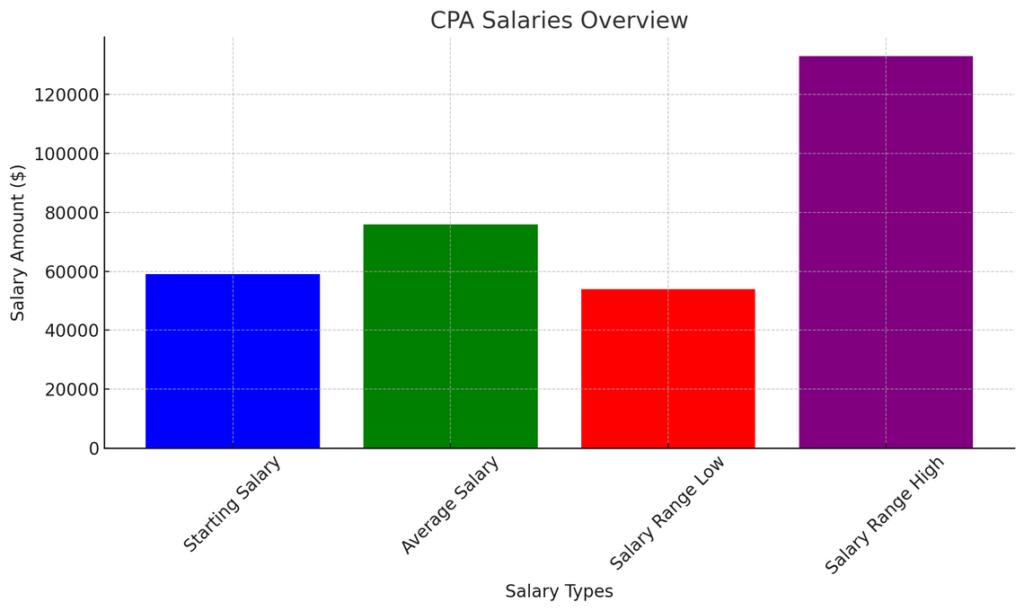
- Starting Salary: Around $59,000 for entry-level positions
- Average Salary: Approximately $76,000 per year
- Salary Range: $54,000 to $123,000, with total compensation over $133,000 with experience and bonuses
The CPA salary range can vary, influenced by specialization within the field, the size of the firm or company they work for, and their role’s complexity. CPAs have the potential for significant professional advancement, with paths leading to roles such as Chief Financial Officer (CFO) or partner in accounting firms, which can further increase their earning potential to well over $200,000.
Tax Attorney Salaries
Tax Attorneys, on the other hand, start at about $92,000 on average, according to PayScale, moving into roles that require intricate knowledge of tax law, potentially earning between $68,000 and $200,000 as they advance in their careers. This progression underscores the importance of specialized knowledge and experience in both fields, affecting salary scales significantly.

- Starting Salary: About $92,000 for entry-level positions
- Average Salary: Roughly $111,000 per year
- Salary Range: $68,000 to $200,000, with total pay ranging from $72,000 to $221,000
These figures can fluctuate based on the attorney’s experience level, the complexity of the tax issues they handle, and their geographical location. Tax attorneys have significant opportunities for advancement, especially if they work in large law firms or advance to senior positions within corporate legal departments or the government.
Insights from Professionals: Tax Attorney vs CPA
Accounting and legal professionals often debate the roles and advantages of tax attorneys versus CPAs, each bringing unique expertise. Here’s a synthesis of insights from a Reddit discussion on the differences between the two.
- Scope of Practice: “An attorney is someone who studied law and passed the state bar exam, specializing from there… Similarly, a CPA studied accounting and passed the state CPA exam, then specialized further.” Both can represent clients before the IRS, but tax attorneys can also take cases to various courts for compliance issues. A specialized designation, United States Tax Court Practitioner, allows CPAs to practice before the United States Tax Court exclusively.
- Privileged Communication: A critical difference highlighted is privileged communication. “Attorneys have privileged communication, while accountants do not.” This means that in legal proceedings, accountants must disclose discussions with clients if ordered by the court, whereas attorneys do not, offering a layer of protection for sensitive matters.
- Practical Day-to-Day Differences: From a transactional perspective, “tax lawyers do research into legal issues, figure out the structure of the deal, give any required tax opinions, and draft the tax portions of the contract,” whereas CPAs “run the numbers on the amount of tax generated, also do structuring, and do any filings that need to be done.” This delineation showcases the complementary yet distinct roles each profession plays in financial and legal tax matters.
- Collaboration Between Tax Lawyers and CPAs: Despite their differences, there’s a collaborative relationship between a CPA and a tax attorney. “I rely on CPAs to crunch the numbers…CPAs rely on me to be the communicator with the court and the expert on the tax law.” This mutual dependence highlights the synergy between the two professions, ensuring comprehensive tax solutions for clients.
Conclusion
In navigating the crossroads between a career as a CPA or tax attorney, it’s clear that each path offers distinct advantages tailored to different professional inclinations and goals. Tax attorneys delve deep into the complexities of tax codes, providing specialized legal advice and representation in tax-related disputes, making them indispensable for those facing legal tax challenges. On the other hand, CPAs command a broad spectrum of financial expertise, from auditing to strategic financial planning, serving a critical role in a wide array of business and financial contexts.
With tax attorneys typically focusing on legal aspects and CPAs covering a wider range of financial services, the choice ultimately hinges on whether one’s passion lies in navigating the legal intricacies of tax law or in the diverse world of finance and accounting. Both careers not only promise rewarding professional journeys but also offer significant opportunities for advancement, with the potential to significantly impact the fields of finance and taxation.
FAQ
The main difference lies in their areas of expertise and services provided. Tax attorneys specialize in the legal aspects of tax law, offering advice and representation in tax disputes and litigation. CPAs, or Certified Public Accountants, provide a broader range of financial services, including auditing, tax preparation, financial planning, and advising on business finances.
No, CPAs cannot represent clients in tax court. This is a role specific to tax attorneys, who have the legal training and rights to represent clients in court. CPAs can represent clients in front of the IRS for audits, appeals, and collections but not in legal proceedings.
It depends on your specific needs. For most individuals and businesses, a CPA is well-equipped to handle tax planning and preparation, offering advice on how to minimize tax liabilities within the bounds of the law. If you have complex tax issues, are facing legal disputes over taxes, or need representation in tax court, a tax attorney would be necessary.
To become a tax attorney, you must complete law school, pass the bar exam, and often pursue further specialization in tax law through additional education or certification. To become a CPA, you need to complete a bachelor’s degree (meeting the 150-hour education requirement), pass the Uniform CPA Examination, and fulfill specific experience requirements under the guidance of a licensed CPA.
While earning potential varies based on factors like location, experience, and specialization, CPAs generally have a higher average salary of around $122,000 annually compared to tax attorneys, who average around $77,000. However, lawyer salaries can increase significantly for tax attorneys who specialize or advance into senior roles, offering substantial earning potential in both fields.