
Too much waste. Too many mistakes. Slow-moving systems.
That is the kind of problem Lean Six Sigma is built to fix. But actually learning how to use it? That part depends on the course.
A good course should make the concepts easier to use, not turn the training into another chore. And with nearly 100,000 management analyst openings projected each year, now is a good time to get serious about process-improvement training.
Not every Lean Six Sigma course functions the same, though. Some keep it simple, while others go deeper with projects, templates, coaching, exams, or certification support. Teams also weighing project management credentials may compare best PMP prep courses or our best Scrum Master courses separately.
I tested the top Lean Six Sigma courses to see which ones made the training feel clear, useful, and worth finishing. Here’s how they stack up.
Best Lean Six Sigma Courses At A Glance
- Best for Project-Based Lean Six Sigma Training: GoLeanSixSigma
→ Online Lean Six Sigma Yellow, Green, and Black Belt training with a clean, self-paced setup. - Best for Affordable Lifetime Certification: MSI
→ Self-paced Lean Six Sigma belt certifications with exams included and lifetime credentials. - Best for Project-Based Certification: 6Sigma.us
→ White, Yellow, Green, and Black Belt programs with self-paced online certification options. - Best for AI-Enhanced Lean Six Sigma Training: SSGI
→ Both Green Belt and Black Belt options with AI-OPEX bundles. - Best for Industry-Specific Training: Six Sigma Online
→ Six Sigma and Lean Six Sigma certifications with multiple belt levels and industry-specific versions. - Best for Scheduled Live Online Classes: SMU CAPE
→ University continuing education Lean Six Sigma programs with weekly live online classes and self-paced study.
| Best Lean Six Sigma Course Comparison Chart | ||
 |
| CHECK PRICING |
 |
| CHECK PRICING |
 |
| CHECK PRICING |
 |
| CHECK PRICING |
 |
| CHECK PRICING |
 |
| CHECK PRICING |
Best Lean Six Sigma Training
1. GoLeanSixSigma: Best for Project-Based Lean Six Sigma Training
GoLeanSixSigma felt more practical than a lot of the Lean Six Sigma courses I reviewed because the training is built around using the material, not just memorizing it. The course keeps bringing everything back to real process improvement work, which matters because Lean Six Sigma can get very “definition heavy” fast.
I liked that the course did not feel dragged out either. The Yellow, Green, and Black Belt courses are short compared with older-style programs, but they still follow the DMAIC flow and include certification exams. My only hesitation is that students who want a slower, deeper classroom-style course may feel like the training moves fast.
Project-Based Learning
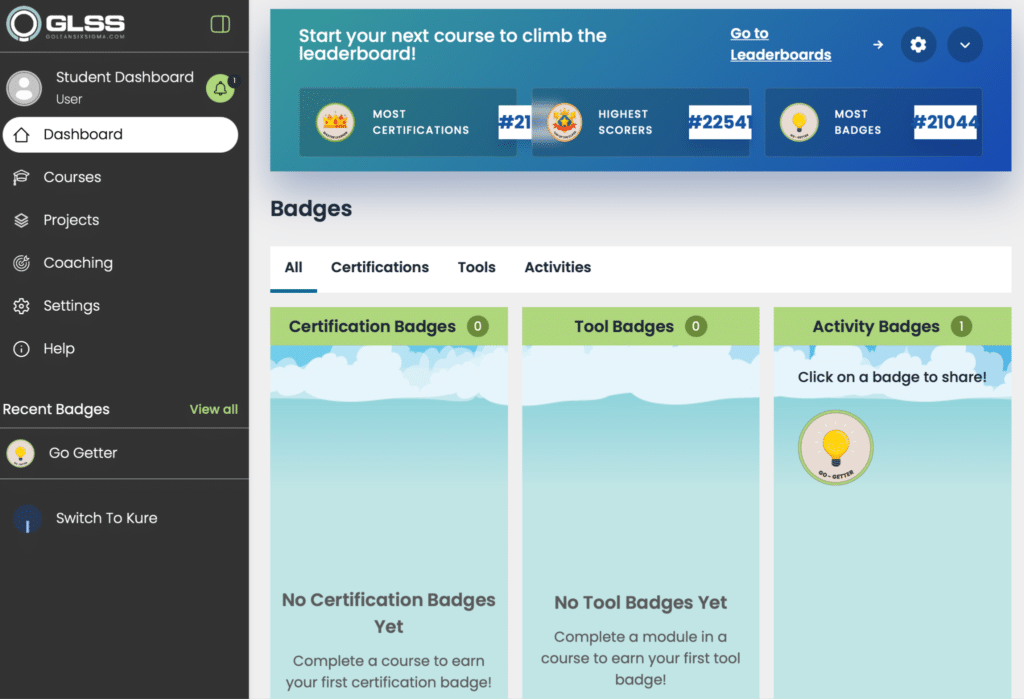
Project-Based Learning was the main thing that stood out to me. The course does not just explain Lean Six Sigma as a bunch of terms. It ties the training to actual improvement projects, so students can see how the tools are supposed to work in real situations.
I liked this because Lean Six Sigma makes way more sense when it is connected to a problem, a process, and a result. The course still feels beginner-friendly, but it does not feel completely surface-level.
Kure Project Tools
Kure was one of the more useful extras because it gives students a place to work through project steps instead of trying to keep everything in their heads. The course connects Kure to project work, data, process improvement, and statistical analysis, depending on the belt level.
I would not say every student needs it, especially if they only want a quick intro. But for Green Belt or Black Belt students, having an actual project tool makes the course feel more applied.
Project Coaching
The optional coaching is another feature that makes the course feel more serious. Students can request project coaching from a Lean Six Sigma Master Black Belt, which is helpful if they are trying to complete a real project and not just pass the exam.
I like that the support is available, but I do wish it were more built into the regular course instead of being something extra. Still, it is useful for students who want feedback while working through an actual improvement project.
GoLeanSixSigma Course Packages
| Package | What’s Included | Best For | Price |
|---|---|---|---|
| Lean Six Sigma White Belt | Free beginner training and certification | Students who want a quick intro before choosing a paid belt | CHECK PRICING |
| Lean Six Sigma Yellow Belt | 2-hour self-paced training, 40-question certification exam, optional project work | Beginners learning DMAIC and basic problem-solving | CHECK PRICING |
| Lean Six Sigma Green Belt | 4-hour self-paced training, 80-question certification exam, optional project work, and Kure support | Students who want a practical Green Belt path | CHECK PRICING |
| Lean Six Sigma Black Belt | Advanced Black Belt training, certification exam, leadership topics, and optional project support | Advanced learners leading larger improvement projects | CHECK PRICING |
Belt pricing can shift by level and bundle, so it is worth checking our Go Lean Six Sigma promo codes for the latest verified discount before you enroll.
GoLeanSixSigma Course Ratings
| Aspect | Rating |
|---|---|
| Content Quality | 9.4 / 10 |
| Practice & Application | 9.5 / 10 |
| Course Structure | 9.3 / 10 |
| Instructor / Support | 8.9 / 10 |
| Pricing & Value | 9.1 / 10 |
| Access & Flexibility | 9.6 / 10 |
| Overall Average | 9.30 / 10 |
GoLeanSixSigma Pros
✅ Project-Based Learning: I liked that the training connects to real improvement work.
✅ Fast Course Times: Yellow, Green, and Black Belt paths are easy to finish.
✅ Exam Included: Certification is built into each belt level.
GoLeanSixSigma Cons
❌ Coaching May Cost Extra: Students who want more guided support may need to pay for it separately.
❌ Shorter Course Length: The training may feel light for students who want longer, slower lessons.
❌ Less Live Class Structure: Students who prefer scheduled classes may not like the self-paced setup.
Is GoLeanSixSigma Your Best Match?
GoLeanSixSigma is a good fit if you want Lean Six Sigma training that feels practical without dragging on forever. I liked that the Yellow, Green, and Black Belt courses were self-paced, exam-based, and built around real process improvement projects. It is not the longest course in the group, but the project-based setup, optional coaching, and clear belt path make it one of the easier programs to understand quickly.
2. MSI: Best Lifetime Certification

MSI was one of the easier courses for me to figure out right away. It is not trying to feel like a huge live class or a full project-coaching program. It is simpler than that. You watch the videos, go through the modules, take the exam, and earn the certification if you pass.
I actually liked that part because the course did not feel confusing to start. The Yellow Belt material stayed focused on the basics, like what Six Sigma is, how DMAIC works, and how someone at the Yellow Belt level helps on improvement projects. I would not call it the most hands-on course I reviewed, but it makes sense for students who want a clean, self-paced certification path.
Course Videos
The videos were one of the better parts of the course for me. They made the training feel easier to move through because I was not just reading a long wall of text the whole time. The lessons felt simple, clear, and pretty easy to follow.
I did not think the videos were super exciting or overly polished, but that also was not really the point. They did what they needed to do. They explained the material in a way that made the course feel manageable, especially for students who are new to Six Sigma.
3 Concise Modules
I liked that the Yellow Belt course was split into three short modules instead of feeling like one huge, messy course. The first module covers the basics, including what Six Sigma is, where it came from, why companies use it, the Yellow Belt role, and a simple DMAIC overview.
The second module gets into the core tools, like variation, defects, VOC, CTQ, process maps, flowcharts, Pareto charts, check sheets, and root-cause analysis. The third module felt more practical because it shows how Yellow Belts support Green Belts and Black Belts, find small improvement opportunities, collect basic data, and help maintain simple process changes.
I liked the structure, but I do wish it had more real project examples or guided practice. The modules are easy to get through, but students who want deeper application may want something more hands-on.
Lifetime Certification
The lifetime certification was the biggest value detail I noticed. After students pass the exam, they do not have to keep renewing the credential or paying maintenance fees just to keep it active.
It is not the most advanced or interactive course in the group, but the lifetime certification makes sense for students who want a straightforward Lean Six Sigma credential without extra renewal steps later.
MSI Course Packages
| Package | What’s Included | Best For | Price |
|---|---|---|---|
| Lean Six Sigma White Belt Certification | Free intro-level Lean Six Sigma training and certification | Beginners who want to try MSI before paying | CHECK PRICING |
| Lean Six Sigma Yellow Belt Certification | Intro-level Lean Six Sigma training and certification | Beginners learning the basics | CHECK PRICING |
| Lean Six Sigma Green Belt Certification | Green Belt Lean Six Sigma training and certification | Students supporting or leading improvement projects | CHECK PRICING |
| Lean Six Sigma Black Belt Certification | Advanced Lean Six Sigma training and certification | Students leading larger improvement projects | CHECK PRICING |
| Lean Six Sigma Master Black Belt Certification | Advanced Lean Six Sigma leadership certification | Senior improvement leaders and mentors | CHECK PRICING |
MSI Course Ratings
| Aspect | Rating |
|---|---|
| Content Quality | 9.1 / 10 |
| Practice & Application | 9.4 / 10 |
| Course Structure | 8.8 / 10 |
| Instructor / Support | 8.7 / 10 |
| Pricing & Value | 9.0 / 10 |
| Access & Flexibility | 9.3 / 10 |
| Overall Average | 9.05 / 10 |
MSI Pros
✅ Simple Course Setup: I could understand the path quickly.
✅ Video Lessons Included: The videos made the course easier to follow.
✅ Lifetime Certification: No renewal cycle after passing the exam.
MSI Cons
❌ Less Hands-On: I wanted more real project examples.
❌ Limited Live Support: Not built like an instructor-led class.
❌ Basic Presentation: The course is clear, but not super polished.
Will MSI Work for You?
MSI is a good fit if you want a simple, self-paced Lean Six Sigma certification without a complicated course setup. I liked that the videos, short modules, exam, and lifetime certification were easy to understand upfront. It is not the most hands-on course I reviewed, but it makes sense for students who want a clear and flexible certification path.
3. 6Sigma.us: Best For Project-Based Certification
When I first landed on 6Sigma.us, I expected another “watch a few videos, take a quiz, download your certificate” kind of course. Instead, I kept seeing projects, instructor feedback, and hands-on exercises woven throughout the program.
That immediately caught my attention because Lean Six Sigma isn’t just about memorizing terms—it’s about solving real process problems. If you learn best by actually doing the work instead of just reading about it, this course stands out from many of the others I reviewed.
Hands-On Exercises
The training setup includes more than passive course content. 6Sigma.us lists interactive video lessons, hands-on exercises, case studies, quizzes, and assessments, so the course has more to work through than a simple video-and-certificate setup.
That was my main takeaway during the review. I focused less on the sales pitch and more on whether the program helped students apply what they learned. The exercises and case studies make 6Sigma.us more hands-on, though it’s not as easy to compare as more straightforward layouts.
Online Quizzes and Exams
The quizzes and exams were the best way to see if the material was actually sticking. The questions were not weirdly tricky, but they were not useless either. Most of them stayed close to the course material and pushed me to separate the main Lean Six Sigma ideas instead of just recognizing terms.
I would call the difficulty fair. Not brutal, not baby-level. The questions worked better as a check-in after each section than as a huge final exam-style QBank. For this course, that was fine because the bigger value is the applied project side, not endless practice questions.
6Sigma.us Course Packages
| Package | What’s Included | Best For | Price |
|---|---|---|---|
| Lean Six Sigma White Belt Training | 4–8 hours of online training and certification | Basic awareness | CHECK PRICING |
| Lean Six Sigma Yellow Belt Training | 16–20 hours of online training and certification | Project team support | CHECK PRICING |
| Lean Six Sigma Green Belt Training | 80–120 hours of online training, with optional project time | Analysts and project leads | CHECK PRICING |
| Lean Six Sigma Black Belt Training | 160+ hours of online training, with optional project time | Advanced project leaders | CHECK PRICING |
6Sigma.us Course Ratings
| Aspect | Rating |
|---|---|
| Content Quality | 8.9 / 10 |
| Practice & Application | 8.7 / 10 |
| Course Structure | 9.1 / 10 |
| Instructor / Support | 8.3 / 10 |
| Pricing & Value | 8.8 / 10 |
| Access & Flexibility | 9.0 / 10 |
| Overall Average | 8.80 / 10 |
6Sigma.us Pros
✅ Project-Based Setup: Some certification paths include applied project work.
✅ Flexible Course Options: Students can choose from different belt levels and formats.
✅ Instructor Review: Some paths include expert review for added structure.
6Sigma.us Cons
❌ Heavier Time Commitment: Some courses take much longer than basic options.
❌ Higher Prices: Advanced paths can cost more than shorter courses.
❌ Not A Quick Certificate: Better for learners who want applied training, not the fastest finish.
Is 6Sigma.us Your Best Match?
6Sigma.us is a good pick for students who want Lean Six Sigma training with more real-world practice built in. The exercises, case studies, and project-review piece give the course a more hands-on feel, so it works well for learners who want more than a basic certificate course.
4. SSGI: Best For AI-Enhanced Lean Six Sigma Training

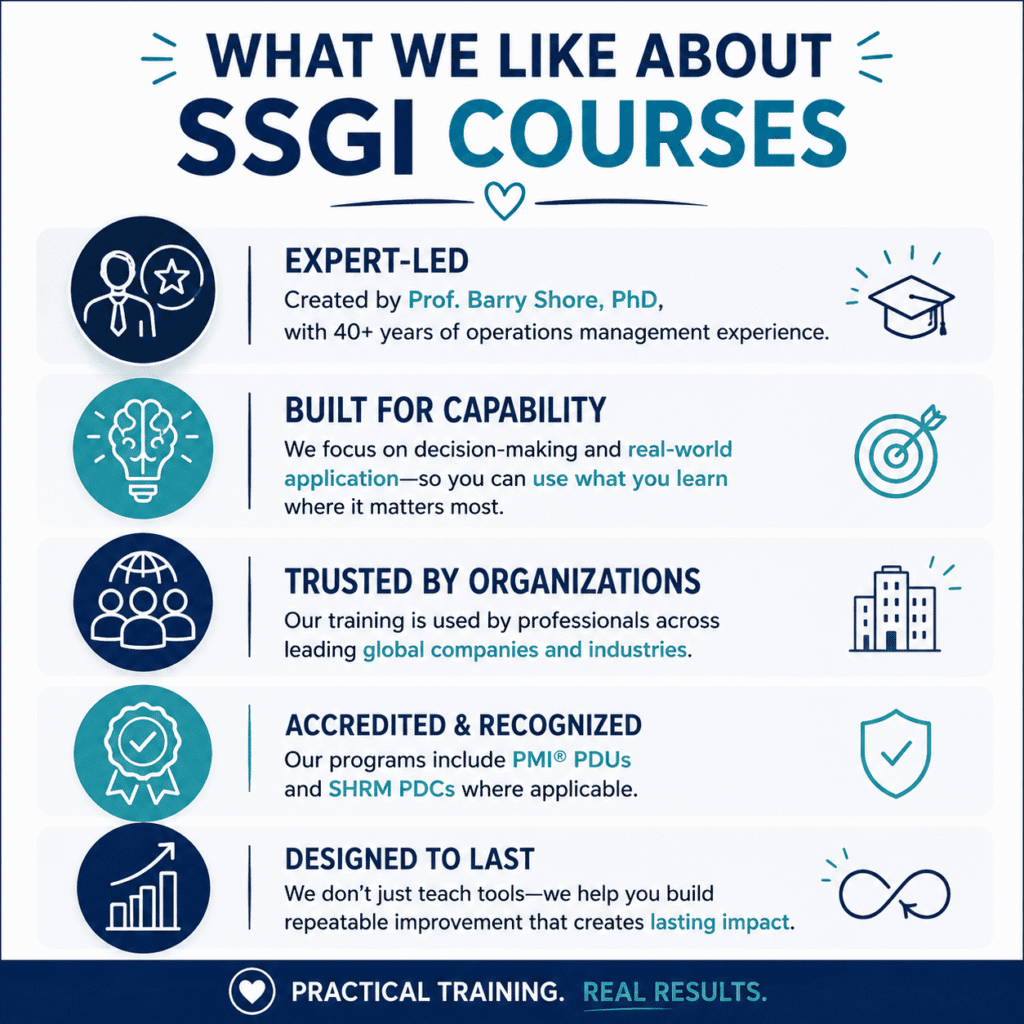
SSGI stands out for its focus on AI and process improvement. The AI content is actually tied to real operations work, not just added for show. SSGI explains how to use AI for process improvement, root-cause analysis, documentation, and decision-making in real business situations. Below, I’ll break down the AI process improvement, Minitab training, and simulated project practice.
AI-Augmented Process Improvement
The AI section caught my eye first because it could have gone cheesy fast. SSGI keeps it tied to process work instead of making it sound like a random tech lesson. The focus is more practical: use AI to move through root-cause analysis, documentation, operations problems, and improvement work with less drag.
I could see why this would matter in a real workplace. Lean Six Sigma already has a lot of steps and documentation, so AI support makes more sense here than in a course where it gets tossed in just to sound new.
Built-In Minitab Training
Minitab was one of the extras that actually matched the course. Once the material got into data, variation, process performance, and statistical analysis, it made sense to have a tool tied to that side of the work instead of only more notes and flash cards.
I would not call it necessary for every learner, especially if someone is only trying to understand the basics. But for a Lean Six Sigma course, the Minitab training gives the data-heavy parts more context and makes SSGI feel a little more practical than a plain read-and-quiz setup.
Simulated Project Practice
The simulated project practice was more useful for connecting the course flow. DMAIC can sound simple when each step is explained separately, but the project-style setup made the process easier to follow as one bigger workflow.
It is not the same as submitting a real workplace project for review, so I would not oversell it. But it gave the course more application than lessons and exams alone, especially when the material started stacking tools, data, and process-improvement steps together.
SSGI Course Packages
| Package | What’s Included | Best For | Price |
|---|---|---|---|
| Lean Six Sigma Yellow Belt | 4 weeks, live online, 4–6 weekly study hours, 2.0 CEUs, 20 PDUs | University continuing education intro | CHECK PRICING |
| Lean Six Sigma Green Belt | 6 weeks, live online, 8–10 weekly study hours, 6.0 CEUs, 60 PDUs | Green Belt project work | CHECK PRICING |
| Lean Six Sigma Black Belt | 8 weeks, live online, 8–10 weekly study hours, 8.0 CEUs, 80 PDUs | Advanced project leadership | CHECK PRICING |
SSGI Course Ratings
| Aspect | Rating |
|---|---|
| Content Quality | 8.7 / 10 |
| Practice & Application | 8.4 / 10 |
| Course Structure | 8.9 / 10 |
| Instructor / Support | 8.2 / 10 |
| Pricing & Value | 8.6 / 10 |
| Access & Flexibility | 8.8 / 10 |
| Overall Average | 8.60 / 10 |
SSGI Pros
✅ AI Training Angle: AI connects back to process improvement work.
✅ Minitab Included: I liked seeing a real data tool included.
✅ Project Practice: Simulated projects add more than basic quizzes.
SSGI Cons
❌ No Required Workplace Project: Simulated projects do not prove job-based results.
❌ AI Costs More: AI-enhanced options appear as higher-priced upgrades.
❌ Minitab May Feel Niche: Not every role needs stats software practice.
Is SSGI Best for You?
SSGI is a good pick for students who want Lean Six Sigma training with a newer AI angle. The Minitab training and simulated projects keep it practical, while the AI piece gives it a more current edge than a standard certificate course.
5. Six Sigma Online: Best For Industry-Specific Training
Most Lean Six Sigma providers take a one-size-fits-all approach. Six Sigma Online went in a completely different direction.
As I clicked through the course options, I kept finding certifications tailored to specific industries—healthcare, finance, construction, government, hospitality, IT, logistics, manufacturing, marketing, and more. It was one of those moments where I thought, “Finally, someone isn’t pretending every student’s job looks the same.”
The website itself isn’t the flashiest or most modern of the bunch, but that’s not what makes this provider stand out. Its biggest strength is giving students training that’s more relevant to the work they actually do. Below, I’ll break down the industry-specific certifications, open-book exams, and overall testing experience.
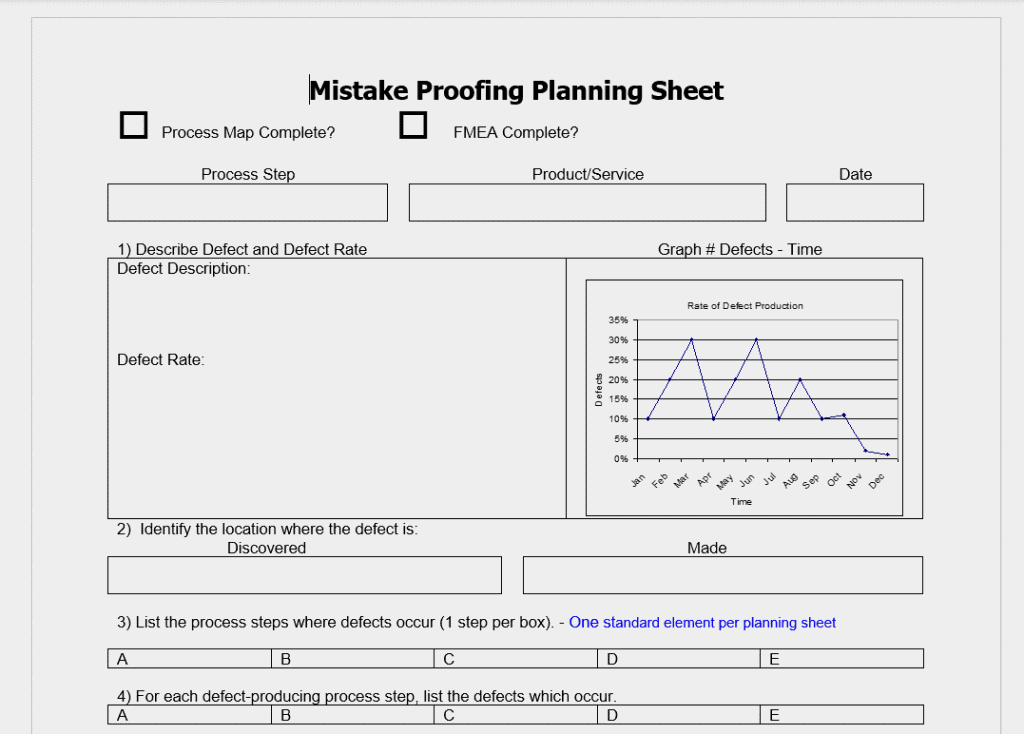
Another thing I appreciated was the free resources section. Even if you’re not enrolled in a paid course, Six Sigma Online offers a library of practical templates and guides that students can actually use. There are project charters, DMAIC and DMADV planning templates, FMEA worksheets, SIPOC templates, control plans, stakeholder analysis tools, glossaries, and even free DMAIC workshop materials.
It’s a nice bonus because these aren’t just marketing downloads—they’re the same kinds of documents you’ll likely use when applying Six Sigma concepts on real projects.
23 Industry-Customized Versions
The industry-specific versions were the first thing I noticed because most Lean Six Sigma providers stay pretty broad. Six Sigma Online lists 23 different industry-customized versions, so the course can connect process improvement to a more specific work setting.
I would not oversell this as fully custom career coaching or anything dramatic. It is still Six Sigma training. But having options for fields like healthcare, finance, construction, logistics, IT, and manufacturing gives the provider a clearer angle than a general certification page.
Open-Book Online Exams
The exam setup is pretty straightforward. The exams are multiple-choice, usually around 10–15 questions, and can be taken online. They are also open-book, non-timed, saveable, resumable, and retakeable.
I liked the flexibility here because it takes some pressure off the certification process. It is not trying to mimic a strict proctored exam. It works more like a course check-in, which fits the self-paced style. The tradeoff is pretty obvious, though: students wanting a tougher exam experience may want something more formal.
Included Testing And Certification
The payment setup was one of the easier parts to understand. Six Sigma Online says the enrollment fee covers all testing and certification, so I was not hunting for separate exam fees or random checkout surprises.
That part is simple, but honestly useful. Some certification pages make pricing feel like a maze. This one keeps the core cost easier to read, even if the overall site has a lot going on.
Six Sigma Online Course Packages
| Package | Training Format | What’s Included | Best For | Price |
|---|---|---|---|---|
| Lean Six Sigma White Belt Training | On-Demand Training | Self-paced White Belt training | Beginners who want the basics | CHECK PRICING |
| Lean Six Sigma Yellow Belt Training | On-Demand Training | Self-paced Yellow Belt training | Students learning core Lean Six Sigma concepts | CHECK PRICING |
| Lean Six Sigma Green Belt Training | On-Demand Training | Self-paced Green Belt training | Students supporting or leading improvement projects | CHECK PRICING |
| Lean Six Sigma Black Belt Training | On-Demand Training | Self-paced Black Belt training | Students leading larger improvement projects | CHECK PRICING |
| Lean Six Sigma Master Black Belt Training | On-Demand Training | Self-paced Master Black Belt training | Advanced leaders, mentors, and coaches | CHECK PRICING |
Six Sigma Online Course Ratings
| Aspect | Rating |
|---|---|
| Content Quality | 8.5 / 10 |
| Practice & Application | 8.2 / 10 |
| Course Structure | 8.6 / 10 |
| Instructor / Support | 8.0 / 10 |
| Pricing & Value | 8.7 / 10 |
| Access & Flexibility | 8.4 / 10 |
| Overall Average | 8.40 / 10 |
Six Sigma Online Pros
✅ Industry-Specific Options: 23 customized versions give it a clear niche.
✅ Flexible Exams: Exams are open-book, online, and non-timed.
✅ Included Certification: Testing and certification are included with enrollment.
Six Sigma Online Cons
❌ Busy Site Layout: A lot of options can make the catalog harder to scan.
❌ Plain Website Design: The site feels dated compared with newer platforms.
❌ Open-Book Exams: Certification may feel lighter than proctored options.
Should You Choose Six Sigma Online?
Six Sigma Online is a good pick for students who want a certification that connects more directly to a specific industry. The site has a lot going on, but the industry-customized versions, flexible exams, and included certification setup give it a clear place in the list.
6. SMU CAPE: Best For Scheduled Live Online Classes
Not everyone wants another self-paced course; they’ll swear they’ll finish “next weekend.” If you’re the type who actually benefits from having class on your calendar and an instructor expecting you to show up, SMU CAPE feels refreshingly different.
Instead of handing you a pile of videos and wishing you luck, it follows a live weekly schedule with built-in study time between sessions, making it feel much more like a university course than an online certificate.
4- To 8-Week Course Schedule
SMU CAPE was easier to judge once I looked at the actual timeline. The programs run from 4 to 8 weeks, so this is not the kind of course students casually knock out in one afternoon. I liked that the schedule gave the training a clearer start-to-finish structure. Compared with fully self-paced courses, SMU CAPE feels more like a real continuing education class with a set pace, live sessions, and weekly work built in.
Leadership-Focused Curriculum
What really separated SMU CAPE from the other providers I reviewed was its emphasis on leadership—not just Lean Six Sigma tools. As I explored the curriculum, I noticed lessons on coaching, mentoring, change management, team dynamics, and managing improvement projects alongside advanced statistical analysis.
Students also complete scenario-based project assessments that are reviewed by an instructor each week, so the program goes beyond simply watching lectures. It feels like training designed for professionals who want to lead process improvement initiatives rather than just add another certificate to their résumé.
4- To 10-Hour Weekly Study Load
The weekly workload was one of the most useful details I found while reviewing SMU CAPE. The course pages list 4–6 weekly study hours for the shorter program and 8–10 weekly study hours for the longer ones. That made the time commitment easier to picture before enrolling. I did not have to guess whether “live online” meant light review or a more serious weekly commitment.
SMU CAPE Course Packages
| Package | What’s Included | Best For | Price |
|---|---|---|---|
| Lean Six Sigma Yellow Belt | 4 weeks, live online, 4–6 weekly study hours, 2.0 CEUs, 20 PDUs | University-backed intro | CHECK PRICING |
| Lean Six Sigma Green Belt | 6 weeks, live online, 8–10 weekly study hours, 2.0 CEUs, 20 PDUs | Green Belt project work | CHECK PRICING |
| Lean Six Sigma Black Belt | 8 weeks, live online, 8–10 weekly study hours, 8.0 CEUs, 80 PDUs | Advanced project leadership | CHECK PRICING |
SMU CAPE Course Ratings
| Aspect | Rating |
|---|---|
| Content Quality | 8.2 / 10 |
| Practice & Application | 8.0 / 10 |
| Course Structure | 8.4 / 10 |
| Instructor / Support | 8.1 / 10 |
| Pricing & Value | 7.4 / 10 |
| Access & Flexibility | 7.9 / 10 |
| Overall Average | 8.00 /10 |
SMU CAPE Pros
✅ Live Weekly Classes: Scheduled sessions add real structure.
✅ Clear Study Load: I could see the weekly commitment fast.
✅ CEU/PDU Credit: Credit hours add professional-development value.
SMU CAPE Cons
❌ Higher Price Point: Costs more than many online options.
❌ Fixed Class Days: Less flexible for unpredictable schedules.
❌ Green Belt Required: Black Belt needs prior Green Belt training.
Should You Try SMU CAPE?
SMU CAPE works best for students who do better with a class already on the calendar. The price runs higher, but the weekly workload, live sessions, CEU/PDU credit, Minitab, and Excel pieces give the program more structure than a basic self-paced certificate.
How I Ranked The Lean Six Sigma Courses
I ranked each Lean Six Sigma course by looking at how the training actually worked once I got into the details. I looked at the course flow, including practice, project work, support, pricing, and how clearly each provider explained what students actually get.
| Criterion | Weight | What I Evaluated |
|---|---|---|
| Content Quality | 25% | DMAIC coverage, Lean tools, Six Sigma concepts, and topic depth |
| Practice & Application | 20% | Practice questions, projects, simulations, case studies, and exercises |
| Course Structure | 15% | Lesson flow, workload, layout, and how easy the course was to follow |
| Instructor / Support | 15% | Live classes, expert help, project review, or instructor access |
| Pricing & Value | 15% | Cost, certification access, included tools, CEUs, PDUs, and extras |
| Access & Flexibility | 10% | Self-paced access, class schedule, lifetime access, and study options |
The strongest courses were not always the ones with the longest feature lists. I paid more attention to whether the course had a clear purpose, enough practice, and a setup that students could actually understand before enrolling.
Other Lean Six Sigma Options That Didn’t Make The Top List
These Lean Six Sigma courses still have a place, but I would treat them more like backup picks than top recommendations.
- Skillshare: Useful for short Lean Six Sigma videos and template-style extras, but I did not choose it because it did not give me a full belt-level path, exam prep, or enough practice.
- Simplilearn: Useful for live classes, projects, and mentor support, but it did not make my list because the setup felt too long and crowded compared with cleaner options.
Which Lean Six Sigma Course Fits Each Study Style?
Other than the rankings, the right course depends on the kind of study setup students are most likely to stick with.
- Want project tools built into the learning process? → GoLeanSixSigma:
Kure support, optional coaching, certification exams, and project-based Lean Six Sigma training. - Want a simple certification that does not require renewal? → Choose MSI:
Course videos, short modules, included exams, and lifetime certification. - Want a more traditional project-based certification path? → Choose 6Sigma.us:
Exercises, case studies, assessments, and applied project work. - Want Lean Six Sigma with an AI angle? → Look Into SSGI:
AI-OPEX, Minitab, templates, flash cards, and practice exams. - Want a course tied to a specific industry? → Try Six Sigma Online:
Options for healthcare, finance, IT, logistics, and more. - Want a class already on the calendar? → Consider SMU CAPE:
Live sessions, weekly study hours, CEUs, and PDUs.
What To Check Before Picking A Lean Six Sigma Course
Before choosing a course, it helps to look at the details that actually affect the study experience, not just the provider name. Early-career PM candidates can also review best CAPM prep courses for a lighter credential path.
- Know the Level: A quick intro is not the same as a full certification path.
- Look For Practice: Questions, projects, and case studies make the training more useful.
- Check the Time: Some courses take a few hours; others need weeks.
- Compare What’s Included: Exams, PDUs, CEUs, tools, and badges can change the value.
- Pick A Format That Fits: Self-paced works for flexibility; live classes add more structure.
- Don’t Let Price Decide Everything: Cheap only helps if the course actually fits the goal.
Final Take: The Best Lean Six Sigma Course
GoLeanSixSigma is my top pick because it gives students a clear Lean Six Sigma path without making the training feel bigger than it needs to be. The self-paced setup is easy to follow, and the project-focused pieces help the course feel more useful than a basic watch-and-test certificate.
MSI is better for students who want a simple certification path with self-paced training and exams included. 6Sigma.us makes more sense for learners who want a heavier project-based route, while SSGI stands out for its AI-enhanced options. Six Sigma Online is strongest for industry-specific training, and SMU CAPE is the better fit for students who want live online classes with a set weekly schedule.
FAQs
What should I consider when choosing the best Lean Six Sigma course?
Look at the course level, format, practice tools, project work, support, and total cost. A cheap course is not always the best deal if it skips the practice or structure needed to actually understand Lean Six Sigma.
How do Lean Six Sigma Green Belt courses differ from beginner courses?
Green Belt courses cover core methodology plus applied project work, teaching problem definition, process measurement, analysis, improvement, and control. They are more practical and in-depth compared to beginner courses that focus on basics like waste reduction and a DMAIC overview.
Are university-affiliated Lean Six Sigma courses worth it?
They can be worth it if you want a more structured course with live online sessions, weekly study expectations, instructor review, and CEU or PDU credit. They usually cost more than basic self-paced courses, so they make the most sense for students who want formal pacing instead of a quick certificate.
What makes a Lean Six Sigma Black Belt course stand out?
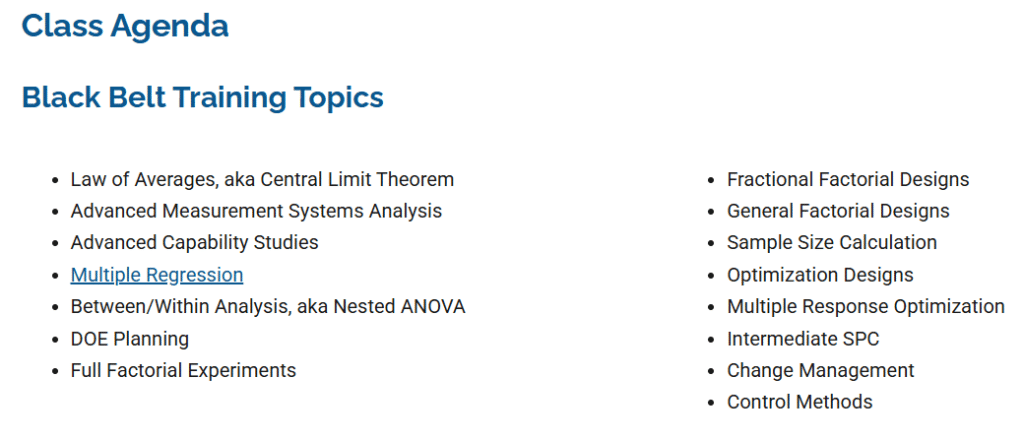
Top Black Belt courses include advanced statistics, hypothesis testing, regression, design of experiments, leadership training, software tools like Minitab, and real-world project coaching for rigorous preparation and certification credibility.
Can I take Lean Six Sigma courses online with flexible schedules?
Yes, many courses offer self-paced online modules, live virtual classes, downloadable resources, and mobile access, making it easier for working professionals to balance study with other commitments while completing certification.

![Aceable Promo Code [Verified October 2026 Discounts]](https://www.miamiherald.com/careers-education/wp-content/uploads/sites/2/2026/10/aceable-promo-code-mh-1024x768.jpg)

![National Council on Strength and Fitness (NCSF) Coupon Codes [Verified Discounts]](https://www.miamiherald.com/careers-education/wp-content/uploads/sites/2/2026/10/ncsf-promo-code-mh-1024x768.jpg)
![Course Hero Promo Code [Verified Discounts]](https://www.miamiherald.com/careers-education/wp-content/uploads/sites/2/2026/10/course-hero-promo-code-mh-1024x768.jpg)
![Learn Laugh Speak Promo Code [Verified Coupons]](https://www.miamiherald.com/careers-education/wp-content/uploads/sites/2/2026/10/learn-laugh-speak-promo-code-mh-1024x768.jpg)
![Education.com Coupon Code [Verified Discounts]](https://www.miamiherald.com/careers-education/wp-content/uploads/sites/2/2026/10/education-com-promo-code-mh-1024x768.jpg)