Becoming a licensed home inspector has caught your eye? With the home inspection industry projected to grow by 9% in the next decade, there’s a real demand for qualified home inspectors!
But before you can start inspecting homes, you’ll need the right training and certification. And choosing the best home inspection school in Florida can feel a bit like navigating a maze. There are so many online courses and programs out there, each promising to turn you into a successful home inspector.
After testing the top options and conducting in-depth research, I’ll show you what courses are best for different preferences and what makes each program stand out, helping you pick the perfect one to kickstart your home inspection career.
Top Florida Home Inspector Training Course Comparison
| Course Provider |  |  |  |  |
|---|---|---|---|---|
| Pricing | $695 – $1995 | $99 | $799 | $76 – $509 |
| Discounts | No Discounts | No Discounts | Save $100 | Save $100 |
| Pass Guarantee |  | | |  |
| Refund Policy | | | | |
| Course Access Length | Lifetime | 6 Months | 6 Months | 6 Months |
| Primary Learning Format | Online + Live Field Training | Exam Prep | Online, Self-Paced | Online, Self-Paced |
| Support | Email, Phone | Email, Phone, Live Chat | Email, Phone, Live Chat | Email, Phone |
| Learn More | Start Now | Start Now | Start Now | Start Now |
Which Florida Home Inspection Course is for You?
Choosing the right home inspection training program can feel like a big decision. Here’s a quick guide to help you narrow down your choices based on your preferences:
- Pick ICA if you want to choose between an onsite, in-person class or a self-paced online program with the option for robust business training.
- Opt for CompuCram if you primarily need a strong boost for passing the National Home Inspector Exam (NHIE) and want lots of practice questions and simulated exams.
- Choose Kaplan if you prefer the credibility of a big-name school plus the option to flip between pure self-study and live online sessions.
- Go with McKissock if continuing education is your priority. Their massive catalog of CE webinars lets you keep leveling up while meeting your education requirements.
- Select AHIT if you’re a “learn-by-doing” type who wants hands-on field training and step-by-step business launch support.
1. ICA

When I first explored ICA, I was really impressed by how much they packed into their online course. Within the first week, I was building mock inspection reports using their software and felt like I’d already leveled up. It’s designed to give you a thorough understanding of home inspection from start to finish. You can learn at your own pace, which is perfect if you have a busy schedule.
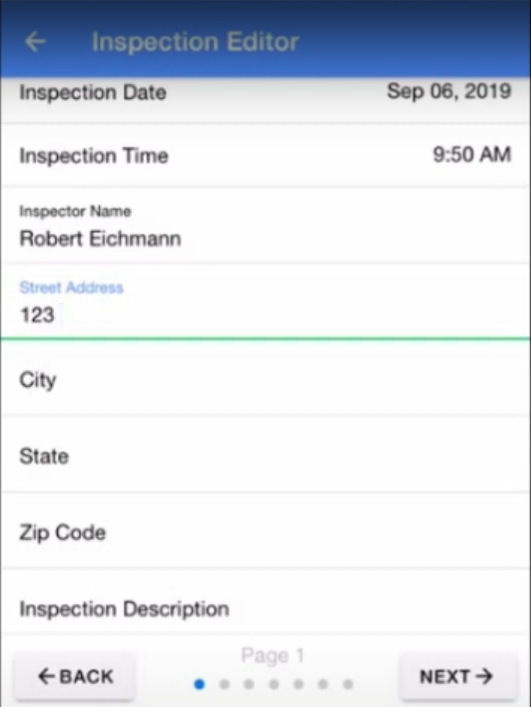
The course covers everything from the basics of home systems, like electrical systems and plumbing, to more advanced topics and even the nitty-gritty of starting a home inspection business.
I really appreciated how they structured the modules, making complex information easy to digest. I used ICA’s bundled home inspection software in a practice project—it gave me a realistic feel for how I’d report findings on actual jobs. This combination of comprehensive training and practical tools makes ICA a strong contender for anyone looking to become a licensed home inspector and work through the entire home inspection process confidently.
“I’m currently in class in Maryland now. 4th day in. The class curriculum is called ICA. Overall the experience is awesome. Very in-depth, class structure so far. There is a test at the end of the class you have to pass.”
Reddit.
Course Features
- Comprehensive Online Curriculum: Covers all major home systems and components. I found their online modules incredibly detailed, especially the sections on the building envelope and structural components.
- Unlimited Course Access: You can review the material as many times as you need, which I found crucial for reinforcing tough concepts.
- Report Software Included: Access to InspectHost reporting software, an essential tool for successful home inspectors. This helped me get a feel for what home inspection software is like.
- One-Year InterNACHI Membership: Often bundled, providing access to additional training, resources, and certification opportunities. I think this alone adds significant value, offering a pathway to becoming a certified professional inspector.
- Business & Marketing Training: Guidance on how to start and grow a successful home inspection business. I noticed they include helpful tips on marketing materials and attracting clients.
- Free Bonus Courses: Additional training on topics like commercial inspections, mold, and radon. I appreciated these extra modules for professional development.
Pros
- Self-paced Flexibility: The ability to learn at your own pace is perfect for those juggling other commitments.
- Comprehensive Curriculum: Covers all aspects needed for the National Home Inspector Exam and state licensing.
- User-Friendly Platform: The online learning environment is intuitive and easy to navigate.
- Lifetime Access: Many of their packages offer unlimited access, meaning you can always refer back to the material.
- Clear, Concise Content: The information is presented in an easy-to-understand manner, avoiding unnecessary jargon.
Cons
- No Live Classes: If you thrive in a live classroom environment, this might not be the best fit, as it’s primarily self-study.
Bottom Line
I truly believe ICA offers one of the best all-around values for aspiring inspectors looking to secure their Florida home inspection license. If you’re disciplined enough to manage a self-study program and want a comprehensive foundation without breaking the bank, ICA is an excellent choice.
ICA
2. CompuCram

CompuCram specializes in exam preparation, and I found their approach to be incredibly focused and efficient. Unlike full-fledged training programs that cover every detail of a home inspection, CompuCram is designed to help you pass the NHIE on your first attempt.
It’s a fantastic supplementary tool for anyone who has already completed their primary training and needs a serious boost in their test-taking skills. When I used CompuCram after finishing a full course elsewhere, I found it sharpened my recall efficiently.
Unlike Kaplan or ICA, which guide you through every topic from scratch, CompuCram is best for those who already know the material and just need to build confidence before the exam.

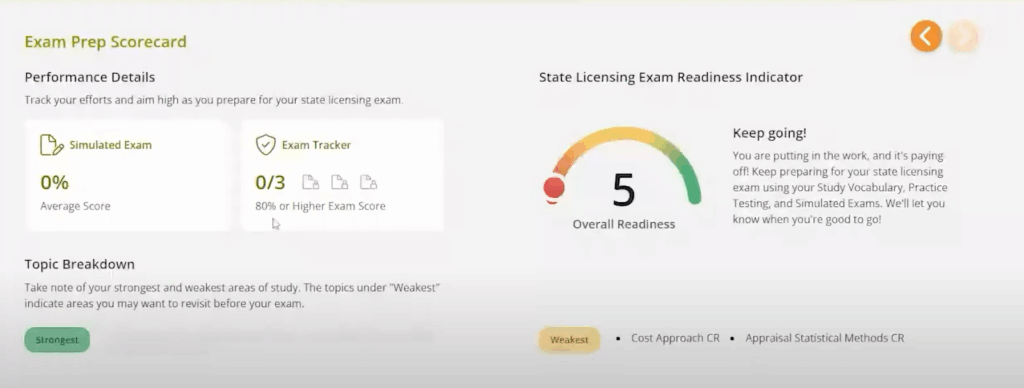
What impressed me most about CompuCram was its adaptive learning technology and extensive bank of practice questions. Even on my phone during my commute, I could drill weak topics and trim my study time in half. They really hone in on the areas where you need the most improvement, which makes your study time incredibly effective. Using CompuCram after a full course helped me pinpoint weak areas quickly—the readiness indicator was especially motivating as the exam date neared.
If you’re looking for a direct, no-fluff path to exam success, CompuCram is designed precisely for that, giving you a thorough understanding of what to expect on the test.
Course Features
- Comprehensive Practice Exams: Thousands of practice questions mirroring the National Home Inspector Exam format. I found these incredibly realistic.
- Simulated Exams: Full-length, timed exams to simulate the actual test day experience. This helped me manage my time effectively.
- Digital Flashcards: Interactive flashcards to reinforce key terms and concepts.
- Readiness Assessment: Tracks your progress and tells you when you’re ready to take the exam. I loved this feature for confidence building.
- Mobile-Friendly: Access your study materials on any device.
- Detailed Explanations: Provides explanations for both correct and incorrect answers. This was crucial for learning from my mistakes.
- Vocabulary Builder: Helps you master industry-specific terminology.
Course Discount
on CompuCram to boost your National Home Inspector Exam score with the targeted exam prep.
Pros
- Extensive Practice: Offers a vast question bank that provides ample practice, helping you feel more confident on exam day.
- Targeted Learning: Adaptive learning guides you to focus on your weak areas, ensuring you get the most out of your preparation time.
- On-the-Go Access: Study whenever and wherever it suits you with our mobile-friendly platform, putting your learning in your pocket.
- Seamless Integration: Easily incorporate the platform into your existing study routine; it’s convenient to be used alongside any primary training.
- Readiness Confirmation: Gain peace of mind and confidence with the readiness indicator, which clearly shows you when you’re truly prepared for the exam.
Cons
- Not a Standalone Training Program: It’s an exam prep tool, not a full course to teach you everything about being a home inspector.
- Limited Instructor Support: The focus is on self-study and practice, not direct instruction.
Bottom Line
If your primary goal is to ace the NHIE, or if you’ve completed a foundational course and need a powerful review tool, CompuCram is an outstanding choice. I found it to be incredibly effective for honing test-taking skills and ensuring readiness for the exam. It’s a budget-friendly and highly efficient way to cross that final hurdle toward becoming a certified home inspector.
CompuCram
3. Kaplan
Kaplan is a name you probably recognize from various educational fields, and their home inspection licensing courses uphold their reputation for quality instruction. Though their licensing courses are only available for a handful of states (Florida, Mississippi, New Hampshire, New Jersey, Oklahoma, Oregon, South Carolina, South Dakota, Tennessee, Texas, Vermont, Virginia, and Washington), they have professional development courses for nearly every state.
What I found particularly appealing about Kaplan is its versatility; it offers programs that cater to diverse learning styles, from purely online self-paced options to more interactive experiences.

They aim to provide a thorough understanding of all aspects of home inspection, preparing you not just for the exam but for the realities of working as a home inspector.
Their curriculum is robust, covering essential tools and techniques, structural components, electrical systems, and much more. What sets Kaplan apart is the optional live online instruction that some packages include—ideal for learners who want structured schedules and direct interaction with instructors. While fully self-paced programs like ICA offer maximum flexibility, Kaplan strikes a balance by giving you a choice between guided and independent learning.
I noticed that Kaplan often integrates business development into their courses, which is super helpful for those planning to start their own business.
If you’re looking for a well-established provider with a solid educational framework that you can trust, Kaplan is definitely worth considering for your home inspection training.
Course Features
- Flexible Course Formats: Offers online self-paced, online with instructor support, and even live online options.
- Comprehensive Curriculum: Covers all major home systems and standards of practice along with very well-organized content.
- Instructor Q&A: Access to instructors for questions and clarifications when you hit a tricky subject.
- National Exam Prep: Dedicated materials and practice exams to help you pass the National Home Inspector Exam.
- Business Startup Guidance: Modules on building and marketing your home inspection business. I found this practical for future business success.
- Reporting Tools: This includes an all-in-one, easy-to-use system to take control of your business and keep clients happy and informed.
Course Discount
Save $100 on Kaplan’s trusted home inspector courses to launch your new career with confidence.

Pros
- Reputable Provider: Kaplan’s long history in education adds a layer of trust and reliability.
- Adaptable Learning Options: Caters to various preferences, from self-paced to more structured learning.
- Strong Curriculum Depth: Provides a comprehensive understanding of home inspection.
- Includes Business Basics: Helpful for those looking to build a successful home inspection business.
Cons
- Pricing Can Be Higher: Compared to more budget-friendly options, Kaplan can be a bit more expensive.
- Generic Software Focus: Less emphasis on specific home inspection software training compared to some others.
Bottom Line
I see Kaplan as an excellent choice for individuals who want a well-rounded education from a highly respected institution. If you’re looking for a flexible program that offers solid academic content and prepares you thoroughly for your home inspector license without necessarily needing extensive in-person field training, Kaplan is a strong contender.
Kaplan
4. McKissock

McKissock is a prominent name in online professional education, and they bring that expertise to their home inspection continuing education courses for license renewals. What I particularly liked about McKissock is its dedication to flexible, self-paced online learning, making it incredibly convenient for busy professionals. I tested their webinar feature one evening and found the live session tools (chat and slides) very smooth, thoughtful, and engaging.
They are well-regarded for their comprehensive curriculum that not only prepares you for your initial home inspector certification but also offers a vast array of continuing education options.
I found their platform to be very user-friendly, and their content is designed to give you a thorough understanding of all home components and inspection processes. They understand the importance of ongoing professional development in a home inspection career and provide resources to support you throughout.
While ICA is often a go-to for getting started, I found McKissock to be particularly valuable if you’re already certified and want to keep growing (and meet those mandatory CE requirements) through high-quality courses.
Course Features
- Self-Paced Online Courses: Learn on your schedule, at your own pace. I found this ideal for fitting studying around my other commitments.
- Extensive Course Catalog: Offers a wide range of continuing education courses for most states.
- Webinar Access: Live and on-demand webinars on various inspection topics for deeper dives.
- Business Resources: Guidance on starting and running a successful home inspection business.
- Instructor-Led Support: Access to instructors for questions and guidance.
- High-Quality Content: Well-structured and easy-to-understand modules covering things like electrical systems and plumbing.
Course Discount
Save $100 on McKissock’s flexible online home inspector training and continuing education courses.
Pros
- Ultimate Flexibility: Perfect for those who need to fit their studies around work or family to truly learn at their own pace.
- Strong Continuing Education Focus: Excellent for long-term professional development, ensuring you stay a qualified home inspector.
- Good for Self-Starters: Ideal if you are disciplined and can manage your own study schedule.
- Business Insights: Offers advice for launching a successful home inspection business.
Cons
- Limited Hands-On Training: Primarily an online provider, so practical field experience needs to be sourced independently.
- Can Be Text-Heavy: Some courses might rely heavily on written material, which might not suit all learning styles.
- Less Direct Instructor Interaction: While support is available, it’s not as integrated as in live classroom settings.
Bottom Line
McKissock is a solid choice for individuals seeking a highly flexible, self-paced online program for their home inspection training. I recommend it, particularly for those who already have strong self-discipline and are looking for a provider that can support their entire home inspection career with extensive continuing education options.
McKissock
5. AHIT

When I checked out AHIT, I immediately noticed its strong emphasis on both theoretical knowledge and practical application. They offer a fantastic blend of online learning and live classes, including actual field training, which really stood out for me. I found that their approach really helps bridge the gap between learning concepts in a textbook and actually inspecting homes in the real world. They don’t just teach you the rules; they show you how to apply them.
However, navigating their course portal wasn’t as intuitive as I expected—some links to the video sessions were buried under submenus.
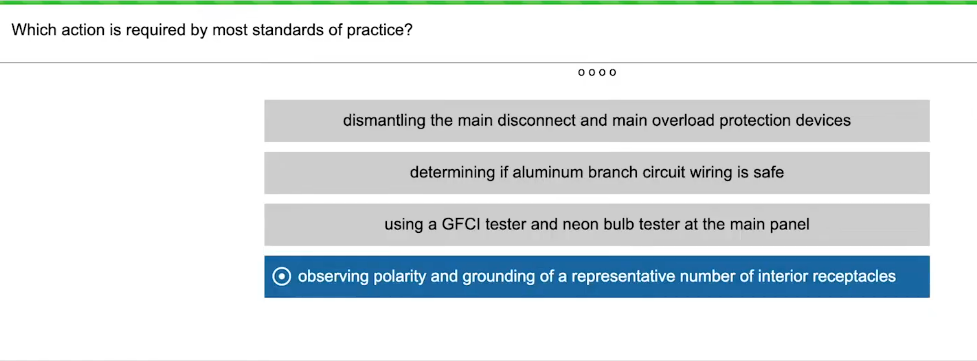
AHIT also places a significant focus on business development, which is crucial for building a successful home inspection business. Their programs often include resources for marketing materials, report writing, and even liability insurance guidance.
“Just started with AHIT about two weeks ago. The course is very good, and you can work at your own pace.”
Reddit.
Course Features
- Online and Live Classroom Options: Choose the learning style that suits you best. I really liked the option for live classes for that immediate interaction.
- Extensive Field Training: Hands-on experience inspecting real homes, which is a major advantage.
- Report Writing Software Training: Learn to use and implement essential home inspection software.
- Instructor Support: Access to experienced home inspectors for questions and guidance even after course completion.
- Flexible Packages: Various course options are designed to train you as AHIT’s professional home inspector, no matter your background or goals.
Pros
- Superior Hands-On Training: Live field training is incredibly valuable for practical skills. I felt much more prepared after getting real-world experience.
- Comprehensive Business Support: Their focus on business success, including marketing and report software, sets you up well for launching your own business.
- Flexible Learning Options: The choice between online and live classes caters to different preferences.
Cons
- Higher Price Point: Especially for their live options, AHIT can be more expensive than purely online alternatives like ICA.
- Pace Can Be Fast: If you prefer to truly learn at your own pace, live classes might feel rushed.
- Course Lack Depth: Some lessons skim the basics and skip detailed, step-by-step inspection scenarios, leaving even experienced learners feeling underprepared.
Bottom Line
For those who value hands-on experience and a structured learning environment, AHIT is an outstanding choice. I found their blend of online content and live field training to be incredibly effective in preparing students for the realities of a home inspection career. While it might be a higher investment than some other programs, the comprehensive training, especially in business aspects, makes it worth considering.
AHIT
6. ATI

ATI training is renowned for its in-depth, practical approach, often emphasizing advanced techniques and real-world scenarios. ATI stood out with its advanced modules—I found some sections especially valuable and practical for offering premium services later. What truly impressed me was their focus on you performing home inspections with confidence.
I noticed that ATI training often includes extensive material that can give you a competitive edge. This additional training is incredibly valuable for professional development. However, that intensity sometimes made the early modules feel a bit rushed for someone without prior construction knowledge.
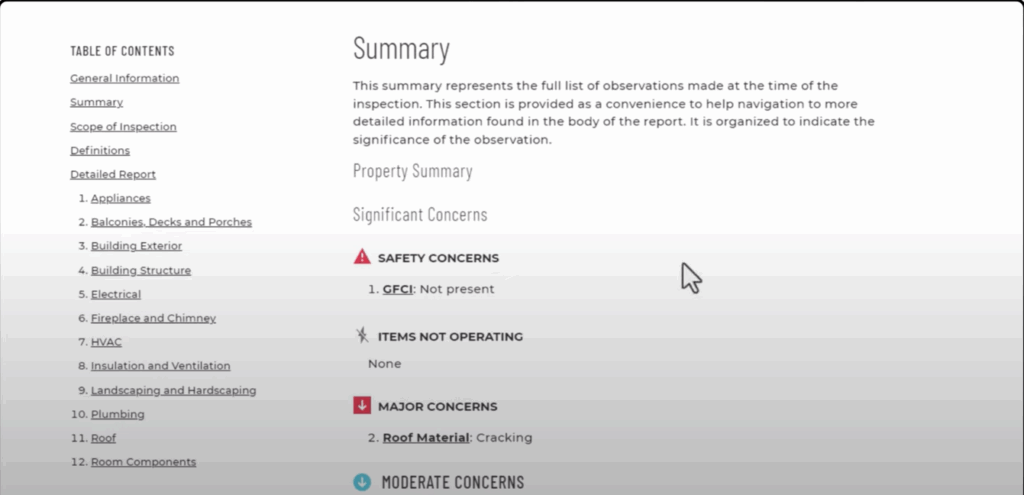
They are geared towards students who want to be more than just average; they want to be truly qualified home inspectors capable of offering comprehensive services. If you’re serious about mastering the craft and building a robust career path, ATI is a fantastic option.
Course Features
- Comprehensive Online & Live Training: Offers robust online modules complemented by immersive live classes and field training events.
- Business & Marketing Support: In-depth guidance on building and growing your home inspection business, including marketing materials and client acquisition strategies.
- Report Writing Training & Software: Practical application of writing detailed inspection reports, often with access to specific home inspection software.
- State-Specific Licensing Guidance: Tailored information to help you navigate your state’s home inspector license requirements.
- Extensive Practice Exams: Plenty of opportunities to test your knowledge and prepare for the National Home Inspector Exam.
Pros
- Unparalleled Hands-On Experience: ATI excels in providing practical, real-world training, which is crucial for becoming a truly qualified home inspector.
- Detailed Curriculum: Covers every aspect of home inspection thoroughly, from electrical systems to structural components.
- Flexible Options: While often hands-on, they offer varying levels of online and blended learning.
Cons
- Premium Price: ATI is one of the more expensive options, which might be a barrier for some.
- Intensive Programs: Their in-depth nature means a significant time commitment, especially for live courses.
- Limited Live Locations: Access to live, hands-on training depends on your geographic location.
- Refund Policy Can Be Strict: Given the investment, their refund terms seem less flexible than some other providers, like Kaplan or ICA.
Bottom Line
For aspiring home inspectors who are ready to make a significant investment in their education and want the most comprehensive, hands-on, and advanced training available, ATI is an exceptional choice. I found their focus on practical skills and business acumen truly prepares you for a successful career. If you’re looking to be among the best home inspectors and provide top-tier services, ATI should be at the top of your list. But if you are looking for a budget-friendly course with comprehensive training and business support on a budget, McKissock can be a better option.
ATI
7. InterNachi

InterNACHI isn’t primarily a pre-licensing school like ICA or Kaplan but rather a leading professional association that provides an incredible wealth of resources for home inspectors.
What’s truly unique is that once you become a member, you gain access to an enormous library of free online courses, continuing education, and certification programs. InterNACHI’s course library kept me learning long after I finished the basics. I often returned for refresher lessons when I hit unusual inspection situations. However, because there’s no structured curriculum path, it took me time to figure out which certifications I should start with.

Their focus is on upholding high standards, providing continuous learning, and supporting home inspectors throughout their career path. While they don’t typically offer a single, bundled “start-to-finish” licensing course in the same way some other providers do, their individual courses are top-notch and cover every conceivable aspect of home inspection.
You can either choose InterNACHI as your primary certification body after completing the initial training elsewhere, or use InterNACHI’s free courses to fulfill continuing education requirements and deepen your expertise.
Course Features
- Extensive Free Online Courses: 80+ online courses are available to members on a wide array of home inspection topics, from electrical systems to plumbing.
- Inspector Certification: Offers various certifications, including Certified Professional Inspector (CPI). This is a key step for many aspiring home inspectors.
- Essential Business Tools: Access to unlimited e-signed inspection agreements, home inspection checklists, free legal documents, and unlimited electronic report hosting.
- Direct Inspector Support: Opportunities for inspector mentoring and access to the “emergency forum” for on-site help and job listings.
- Inspector Forums & Community: A vibrant online community for networking and peer support for asking questions and learning from others.
Pros
- Incredible Value: For the annual membership fee, the amount of free training and resources is astounding.
- Comprehensive Course Library: Covers almost every niche area of home inspection imaginable, allowing for deep dives into specific topics like home energy audits.
Cons
- Not a Dedicated Pre-Licensing Program: While comprehensive, it might not be structured as a single “pass your state exam” course in some states; you might need supplemental material.
- Requires Self-Motivation: With so many courses, it can be easy to get sidetracked without a structured curriculum.
- No Direct Pass Guarantee: As it’s an association, it doesn’t offer a pass guarantee for licensing exams directly, though its courses prepare you well.
- Information Can Be Dispersed: Finding exactly what you need among the vast resources can sometimes take a bit of searching.
Bottom Line
InterNACHI is essential for any aspiring or current home inspector. While it might not be your only stop for initial licensing, it is an indispensable resource for ongoing education, certification, and building a professional network. However, if you need a structured path to initial licensing with a clear curriculum and potentially direct instructor interaction from day one, a dedicated pre-licensing school like Kaplan or ICA might offer a more streamlined and guided approach.
InterNachi
8. Ashworth

Ashworth College offers a Home Inspector Career Diploma program, which is a more formal academic approach compared to many industry-specific certification courses. Ashworth’s structured layout reminded me of college—it wasn’t as fast-paced as others, but I liked the depth of the foundational knowledge.
This program goes beyond just exam prep; it aims to provide comprehensive training for a home inspection career, including practical skills and business principles. I appreciated that it’s self-paced, allowing students to balance their studies with other commitments.
That said, if your goal is to get licensed and start working quickly, Kaplan or McKissock might be a better fit, offering a streamlined, industry-focused training path that can be completed in a fraction of the time.
Course Features
- Structured Diploma Program: A full academic program leading to a Home Inspector Career Diploma.
- Textbook-Based Learning: Utilizes physical textbooks alongside online materials. I found this helpful for offline study.
- Career Services: Resources to help you with job searching and building your home inspection business.
- Comprehensive Curriculum: Covers home inspection fundamentals, reporting, and business aspects.
- Payment Plans: Flexible payment options to make the program more accessible.
Pros
- Structured Curriculum: Offers a well-organized learning path, which can be beneficial for learners who prefer a guided approach.
- Academic Support System: Access to counselors and instructors for a more traditional learning experience.
Cons
- Longer Program Length: This can take longer to complete than some expedited certification courses (a few weeks vs. a few months).
- No Direct Exam Pass Guarantee: This does not typically offer a guarantee for the National Home Inspector Exam.
- Less Hands-On Training: Primarily theoretical, lacking the extensive field training found in ICA or AHIT.
- Higher Overall Cost: While payment plans exist, the total cost can be higher than single certification courses.
- Not An Industry-Specific Certification: While it’s a diploma, it might not be as directly recognized for immediate licensing as dedicated certification programs, depending on state requirements.
Bottom Line
Ashworth College is a suitable choice for individuals who prefer a more traditional academic pathway to become a home inspector and desire a formal diploma. But if you value the credibility of a big-name school with more direct access to instructor support, Kaplan often provides a more dynamic and potentially quicker route to market readiness compared to Ashworth’s longer, purely academic approach.
Ashworth
9. ASHI

Similar to InterNACHI, ASHI isn’t a course provider in the traditional sense but a leading professional association that sets the standard for quality and ethics in the home inspection industry.
Becoming an ASHI member signifies a commitment to excellence and provides access to valuable educational resources. I found ASHI to be a cornerstone for professional development and maintaining high standards in a home inspection career. However, since the learning resources are spread across multiple partner sites, it took extra effort to stitch together a complete study flow.

Their primary role is to establish and uphold the industry’s Standards of Practice and Code of Ethics, which are crucial for any successful home inspection business. While they don’t offer a single, unified “course,” their membership provides pathways to education, networking, and resources that are vital for any certified home inspector.
Course Features
- Industry Standards of Practice & Code of Ethics: The foundation for professional home inspectors.
- Educational Resources: Access to online learning modules, webinars, and discounted courses through partners.
- Membership Benefits: Includes access to a network of home inspectors, business tools, and marketing support.
- Continuing Education: Helps members fulfill their ongoing CE requirements.
- Conferences & Events: Opportunities for in-person learning and networking with industry experts.
Pros
- Valuable Networking: Opportunities to connect with experienced home inspectors and industry leaders.
Cons
- Not a Direct Pre-licensing Course: You’ll likely need another provider for your initial state-specific licensing training.
- Less Integrated Learning Platform: Unlike ICA or McKissock, it’s more of an association with educational partnerships rather than a single learning portal.
- No Direct “Pass Guarantee” for courses: Focus is on professional standards, not exam passage.
- Requires External Course Purchases: While they provide resources, many specific courses require additional payment through their partners.
- No Single, Integrated Learning Platform: The learning content isn’t all housed on one unified platform, which could be less streamlined than a dedicated school’s website.
Bottom Line
I see ASHI as a crucial organization for any aspiring or established home inspector. While it doesn’t serve as a standalone pre-licensing course, its role in setting industry standards, providing access to professional development, and fostering a strong community is invaluable. So, while ICA or Kaplan are generally your go-to for initial licensing and foundational training, ASHI ensures you not only meet but exceed industry benchmarks throughout your career.
ASHI
10. Carson Dunlop

Carson Dunlop is a well-respected name in home inspection education, known for its rigorous, technically detailed programs, often delivered in partnership with colleges and universities. What I found particularly appealing about Carson Dunlop is their emphasis on providing very deep, comprehensive training that prepares you for complex inspection scenarios. Still, some of the textbook chapters felt overwhelming—especially when multiple systems were explained back-to-back without interactive examples.
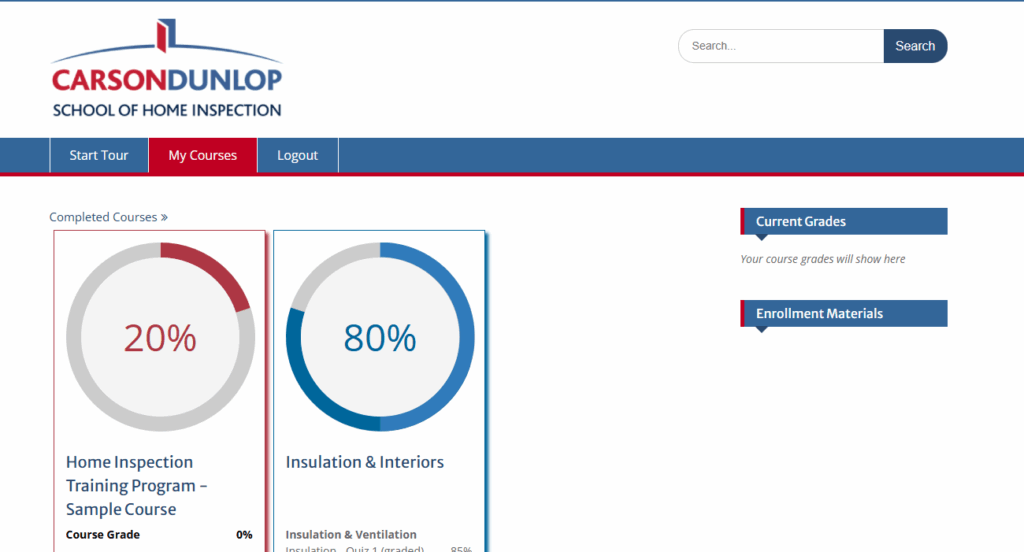
Their approach goes beyond basic certification, aiming to produce highly qualified home inspectors with a thorough understanding of building science and residential systems. If you’re looking for a program that offers an academic-level education and robust technical training to confidently inspect homes, Carson Dunlop is an exceptional choice.
“Carson Dunlop is basically the gold standard for training. For continuing ed, there are lots of options generally through whichever professional affiliation you look to join.”
Reddit.
Course Features
- College-partnered Programs: Often delivered through reputable educational institutions, lending academic credibility.
- Comprehensive Textbooks: Detailed, well-illustrated textbooks that serve as valuable long-term references.
- Online Modules & Videos: Supplements textbooks with interactive online content.
- Report Writing Software Training: Focus on developing professional report writing skills and often includes access to proprietary home inspection software.
- Technical Support: Access to experienced instructors for in-depth technical questions. I appreciated this for complex electrical systems or structural queries.
- Business & Marketing Tools: Guidance on establishing and promoting your home inspection business.
Pros
- Exceptional Technical Depth: Provides a very thorough understanding of building systems and their components.
Cons
- Higher Price Point: Generally one of the more expensive options due to its comprehensive nature and academic affiliation.
- Less Hands-On Field Training: While robust, it doesn’t always include extensive physical field training compared to Kaplan or ATI.
- Can Be Text-Heavy: Relies heavily on written material, which may not suit all learning styles.
- Longer Completion Time: The depth of content may mean a longer study period.
- Potentially Overwhelming for Absolute Beginners: The highly detailed and technical nature of their curriculum could be overwhelming for someone with no prior construction.
- Limited Community & Networking Features: Compared to large associations like InterNACHI or ASHI, Carson Dunlop, as a training provider, offers fewer direct community forums or large-scale networking events.
Bottom Line
Carson Dunlop is an excellent choice for aspiring home inspectors who value deep technical knowledge and a structured, academic approach to learning. I would highly recommend it for those who are willing to invest more time and money to gain a truly thorough understanding of home inspection. However, for those who prioritize robust community support and extensive networking opportunities throughout their career, InterNACHI stands out significantly.
Carson Dunlop
Honorable Mentions
While I’ve focused on the top providers, it’s worth noting other valuable resources that contribute to a successful home inspection career.
- Home Inspection Institute
- HI-TEC
- NAIT
- Gregory Enterprises -The Home Inspection Training Center
- University of Florida
How the Courses Were Ranked
When I evaluated these home inspector training courses, I focused on several key factors to give you the most objective and helpful rankings possible. It wasn’t just about what was included but how it impacted the learning experience and overall preparation for a home inspection career.
Course Content Quality
I looked at the depth and accuracy of the study materials. Did they cover all the essential tools and knowledge needed for inspecting homes, from electrical systems to structural components? I found ICA and Kaplan excelled here, providing a truly thorough understanding.
Effectiveness
This was about proven success rates and student outcomes. Do these courses actually help you pass the National Home Inspector Exam and build a successful home inspection business? I saw strong evidence of this with CompuCram for exam prep and ATI for comprehensive skill development.
User Experience
I considered the ease of navigation, the interface, and the quality of support. Was the online platform intuitive? Was customer support responsive? I appreciated the user-friendly dashboards of ICA and McKissock.
Practice Questions & Exams
The quantity and quality of test simulations were critical. Did they mirror real exam formats? CompuCram, with its vast question bank and readiness assessments, was a clear winner here, giving me confidence for the actual test.
Instructor Engagement
I evaluated the teaching style and clarity of explanations. Were the instructors knowledgeable and able to break down complex topics? AHIT’s live instructors and ATI’s lifetime support stood out for their expert guidance.
Value for Money
This wasn’t just about the lowest price, but the pricing versus the features offered. Did I feel like I was getting my money’s worth? ICA consistently impressed me with its comprehensive offering at a competitive price, especially with the included InterNACHI membership.
Flexibility
I assessed whether the courses offered self-paced vs. structured learning options. Could I learn at my own pace? McKissock and ICA shone in offering excellent self-paced online courses, perfect for busy individuals.
How to Choose the Best Home Inspector Course for You
Selecting the ideal home inspector training program is a personal journey. Here’s a buyer’s guide to help you figure out what matters most for you.
Learning Style
Consider how you learn best. Do you prefer to learn at your own pace, or do you thrive in a structured environment?
- Self-Paced Learning: If you’re disciplined and need flexibility, courses like ICA and McKissock are excellent. They offer on-demand videos and text-based modules you can complete on your own schedule. I found this super helpful for fitting studies around my life.
- Structured Learning (Live Classes): If you benefit from direct interaction and fixed schedules, AHIT and ATI offer fantastic live classes and field training that provide hands-on experience and immediate feedback.
Course Format
Think about which format suits your goal of becoming a Florida Professional Home Inspector. Is it video-heavy, text-based, or a mix?
- Video-Centric: Many modern online courses, like those from ICA, integrate video lectures to make learning engaging.
- Text-Heavy & Comprehensive: Carson Dunlop is renowned for its detailed textbooks and in-depth written content, which are excellent for those who prefer reading and detailed references.
- Mixed Media: Most providers offer a blend of videos, text, quizzes, and practice questions to cater to different preferences.
Practice Questions & Exams
High-quality practice tests are essential for passing the National Home Inspector Exam.
- Extensive Question Banks: CompuCram is the absolute leader here, offering thousands of practice questions and simulated exams designed specifically for the NHIE. I genuinely felt prepared for the exam after using their tools.
- Integrated Practice: Most comprehensive programs like ICA, AHIT, and ATI also include practice questions within their modules to reinforce learning.
Adaptive Learning
Some platforms offer advanced Home Inspector exam prep tools to personalize your study plan.
- AI-Driven Personalization: While not all home inspector courses explicitly state “adaptive learning,” platforms like CompuCram use algorithms to identify your weak areas and customize your practice, ensuring efficient study time.
Instructor Support
Having access to experienced instructors can make a big difference.
- Direct Access: AHIT, ATI, and Kaplan often provide direct access to instructors for questions via email, Q&A sessions, or even live support. I found having industry experts clarify complex topics, like nuances of electrical systems, invaluable.
- Community Forums: InterNACHI excels with its active forums, where you can get answers from a vast community of experienced home inspectors.
Budget
Courses vary widely in price. Determine what you’re willing to invest.
- Budget-Friendly Exam Prep: CompuCram is very affordable for its focused exam prep.
- Mid-Range Value: ICA offers incredible value, bundling comprehensive training with essential resources at a competitive price.
- Premium Comprehensive: AHIT, ATI, and Carson Dunlop are higher-end, but their intensive training and hands-on components often justify the investment for a truly successful career.
Pass Guarantee
This offers peace of mind if you’re worried about passing the exam.
- Common Guarantees: Many licensing courses, including those from ICA, AHIT, and Kaplan, offer a pass guarantee for the National Home Inspector Exam. Always read the fine print!
Course Access Length
How long will you have access to the materials?
- Lifetime Access: Many self-paced online courses like ICA offer unlimited lifetime access, which is fantastic for future review and continuing education.
- Fixed Access: Other programs might have a fixed access period (e.g., 6 months or 1 year). Consider if this aligns with your study pace.
Not in Florida? Check out my reviews of the best home inspection training courses.
Home Inspector Course vs Course Comparison
Let’s dive into some direct comparisons between the top contenders, sharing my insights from using them.
ICA vs. AHIT
ICA really shines for its incredible value and comprehensive online self-paced program. I found their inclusion of a one-year InterNACHI membership and InspectHost reporting software to be a huge head start for anyone building a home inspection business. It’s fantastic if you’re a self-starter who wants to learn at your own pace, get a thorough understanding of home inspection fundamentals, and gain valuable marketing materials without a huge upfront cost.
On the other hand, AHIT impressed me with its robust blend of online learning and hands-on field training. While it’s a higher investment, the practical experience gained from inspecting homes in person is invaluable, especially for mastering details like electrical systems or plumbing. If you learn best by doing and want that direct, in-the-field experience to become a truly qualified home inspector, AHIT is likely a better fit. I felt more confident in my practical skills after engaging with AHIT’s live options.
AHIT vs. ATI
AHIT offers an excellent mix of online and live field training, making it accessible for many, and their business coaching is top-notch for launching your home inspection business. I appreciated how they balanced comprehensive content with real-world application, making it a great choice for those who want strong practical skills without necessarily diving into the most niche advanced topics.
ATI, however, takes practical training to the next level, particularly with its emphasis on advanced concepts and technologies. I felt ATI was geared towards producing the absolute best home inspectors, those who want to offer a wider range of services and stand out in the market. While it’s a premium investment, their lifetime instructor support and focus on business success make it a powerhouse for a new career path. If you want the deepest technical training and the skills to inspect every aspect of a home, ATI is the one.
ICA vs. McKissock
ICA often stands out as a “startup kit” for aspiring inspectors. I found its inclusion of a one-year InterNACHI membership and home inspection software truly valuable right out of the gate, making it a highly cost-effective and complete package for getting started and building a successful home inspection business. It provides a very direct path to certification with strong foundational training.
McKissock, on the other hand, is particularly strong in its depth of continuing education and long-term professional development. While it offers pre-licensing courses, I felt its broader library of specialized topics and webinars makes it an indispensable resource for inspectors throughout their careers. If your primary need is a comprehensive online course that also provides extensive avenues for future learning, McKissock is a superb choice.
Kaplan vs. McKissock
Kaplan tends to offer a bit more flexibility in learning formats, sometimes including live online instructor support, which can be great if you thrive on scheduled interaction even from afar. I appreciated their well-structured curriculum that prepares you thoroughly for the National Home Inspector Exam and general business principles.
McKissock excels in its truly self-paced model and its vast array of continuing education options. I felt it was incredibly convenient for fitting studies into a busy schedule, and its focus on lifelong learning means it supports your home inspection career well beyond initial certification. If you’re looking for ultimate flexibility and a long-term partner for professional development and continuing education, McKissock might edge out Kaplan.
AHIT vs. Carson Dunlop
AHIT truly stands out for its blend of online and hands-on field training. I found that getting out into actual homes with experienced instructors was invaluable for building practical skills and confidence, especially for understanding real-world scenarios like inspecting electrical systems or tricky plumbing. Their focus on immediate application is a major strength.
Carson Dunlop, however, emphasizes a more academic and technically rigorous approach, often partnered with colleges. Their detailed textbooks and comprehensive theoretical content provide an incredibly thorough understanding of building science. I would recommend Carson Dunlop if you prefer a deep dive into the ‘why’ behind home inspection and appreciate a very structured, academically rich program, even if it means less direct field training from the provider.
CompuCram vs. InterNACHI
CompuCram is a laser-focused exam preparation tool. I found its adaptive practice questions and simulated exams incredibly effective for drilling down on the specific knowledge needed to pass the National Home Inspector Exam. It’s designed for efficiency and confidence-building right before your test.
InterNACHI, on the other hand, is a professional association that offers a massive library of free online courses as part of its membership. While these courses certainly help you become a certified home inspector and deepen your knowledge, InterNACHI’s primary value for me was as an ongoing resource for certification, continuing education, and business support throughout a home inspection career rather than just initial exam prep.
Ashworth College vs. ICA
Ashworth College offers a Home Inspector Career Diploma, which is a longer, more traditional college-style program with textbooks and academic support. I’d recommend it if you prefer a structured, broader educational foundation and want a formal diploma to mark your professional development.
ICA provides a more direct and often quicker path to becoming a certified home inspector. I found their comprehensive online course, which often includes InterNACHI membership and reporting software, to be incredibly practical and geared towards getting you licensed and ready to start a successful home inspection business in a few weeks or months. It’s a more industry-focused, complete training package for immediate entry into the field.
ATI vs. Carson Dunlop
ATI really excels in providing hands-on, advanced technical training, often covering specialized areas like thermal imaging. I felt their programs were geared toward producing inspectors who want to offer a wide range of services and stand out with practical, cutting-edge skills.
Carson Dunlop is more about academic rigor and theoretical depth in building science. While their programs are thorough, they might be more text-heavy and less focused on physical hands-on field experience provided directly by them. If you prefer a highly detailed, scholarly understanding of how homes work and appreciate comprehensive textbooks as essential tools, Carson Dunlop is an excellent choice.
Kaplan vs. ICA
Kaplan leverages its long-standing reputation in professional education, often providing flexible online formats, including options with instructor support, which I found reassuring for more complex topics. It feels like a very solid, academically backed choice.
ICA, however, often presents a more compelling value proposition, especially for new entrants. I was particularly impressed by their all-inclusive package that frequently bundles a one-year InterNACHI membership and home inspection software, making it an incredibly attractive and cost-effective option for anyone looking to quickly launch a successful home inspection business with all the essential tools.
McKissock vs. InterNACHI
McKissock is a dedicated provider of online courses and webinars with a strong focus on continuing education (CE) requirements. I found their platform easy to navigate and their CE library extensive for professional development. You purchase specific courses or packages for your learning needs.
InterNACHI offers a unique model where its vast library of hundreds of online courses is essentially “free” as part of an annual membership. For me, this made InterNACHI an unparalleled resource for continuous, ongoing learning and certification throughout my career. If you’re a member, you have access to an incredible amount of content without paying per course, making it a powerful tool for a successful career path.
ASHI vs. InterNACHI
ASHI, as a professional society, focuses on setting the industry’s Standards of Practice and Code of Ethics. While they support education and have partnerships (like The ASHI School), they don’t directly provide the same massive, free course library for members that InterNACHI does. ASHI is more about the rigorous professional certification and ethical framework.
InterNACHI, on the other hand, actively provides a massive, constantly updated library of online courses to its members, covering nearly every aspect of inspecting homes, from electrical systems to specific components. I found this to be an immense benefit, allowing inspectors to gain certifications and fulfill continuing education requirements directly through their membership, making it a more direct source for ongoing home inspector training.
CompuCram vs. Kaplan
CompuCram is a highly specialized exam prep tool. I found its adaptive practice questions, simulated exams, and readiness indicator to be incredibly effective for pinpointing weaknesses and ensuring I was truly ready for the National Home Inspector Exam. It’s a precise, no-frills tool for passing the test.
Kaplan, while also offering exam prep, integrates it into its broader pre-licensing courses. Their exam prep components are solid, but they are part of a larger curriculum designed to teach you how to be a home inspector, not just how to pass the exam. If you need a standalone, highly focused exam drill, CompuCram is superior for that specific purpose, whereas Kaplan provides exam prep as part of a more comprehensive training package.
InterNACHI vs. ASHI
InterNACHI truly blew me away with the sheer volume of free online courses and resources available to members. I found their platform to be an incredible hub for ongoing professional development, continuing education, and business success tools. It’s fantastic for constantly expanding your knowledge, securing a Certified Professional Inspector designation, and networking with other successful home inspectors.
ASHI, on the other hand, stands as the venerable standard-setter, particularly known for its rigorous Standards of Practice and Code of Ethics. While it doesn’t offer the same vast library of free courses as InterNACHI, its membership signifies a strong commitment to professionalism and ethical conduct. I found that being an ASHI member lends significant credibility, especially if you want to align with the industry’s longest-standing professional body.
Final Thoughts
Embarking on a home inspection career is an exciting journey, and choosing the right training is your first critical step. If you’re looking for a highly comprehensive, self-paced online program that offers incredible value, including InterNACHI membership, ICA is a fantastic all-in-one package.
For those who prioritize hands-on experience and live classroom interaction to become truly qualified home inspectors, AHIT provides an excellent blended learning approach. And if you’re aiming for the most in-depth, practical training with a focus on advanced techniques and business success, ATI is a top-tier investment.
Remember, becoming a successful home inspector involves continuous learning, so leveraging resources like InterNACHI for ongoing professional development is key to a thriving career.
FAQs
Yes, Florida does not have a statewide licensing requirement for home inspectors, but many cities and counties do. More importantly, the most reputable home inspector training in Florida will advise you to obtain national certifications.
The time it takes varies depending on the course and your pace. Self-paced online courses can be completed in a few weeks to a few months, while more intensive programs with live classes might take several months to a year.
The NHIE is a standardized examination used by many states as a requirement for home inspector licensing or certification. Courses like CompuCram and the exam prep modules in ICA, AHIT, and ATI are designed to help you pass this crucial test.
Absolutely! All reputable home inspector training programs, including ICA, AHIT, and Kaplan, provide comprehensive training on inspecting electrical systems, plumbing, HVAC, roofing, structure, and other major home components.
While not always a direct state licensing requirement, obtaining certification through respected associations is highly recommended. It adds significant credibility and provides access to valuable resources and continuing education. Most successful home inspectors hold one or both of these certifications, which can lead to making more money.