Every year, nearly 70,000 aspiring attorneys sit for the bar exam. That’s a truly exceptional pool of people, having conquered a number of sky-high hurdles to even get to that point.
But what will it take for you to meet the bar exam requirements?
The answer depends on several key factors. This includes your law school, educational background, and the state where you plan to practice law. Let’s break down the essentials so you can move forward with confidence.
Key Takeaways
- Most States Require an ABA-Approved J.D.: Graduating from an ABA-accredited law school is the standard route to bar exam eligibility.
- The MPRE Is Almost Always Required: Nearly every jurisdiction expects you to pass the Multistate Professional Responsibility Examination before licensure.
- Character and Fitness Matters: Your background, honesty, and personal conduct are part of the evaluation—be thorough and transparent.
- Some States Offer Alternative Paths: A few states allow apprenticeships or nontraditional legal education in place of a J.D.
- Requirements Vary by State: Always check with your jurisdiction’s bar examiners for specific rules, deadlines, and exceptions.
The Basics: What You Need to Sit for the Bar
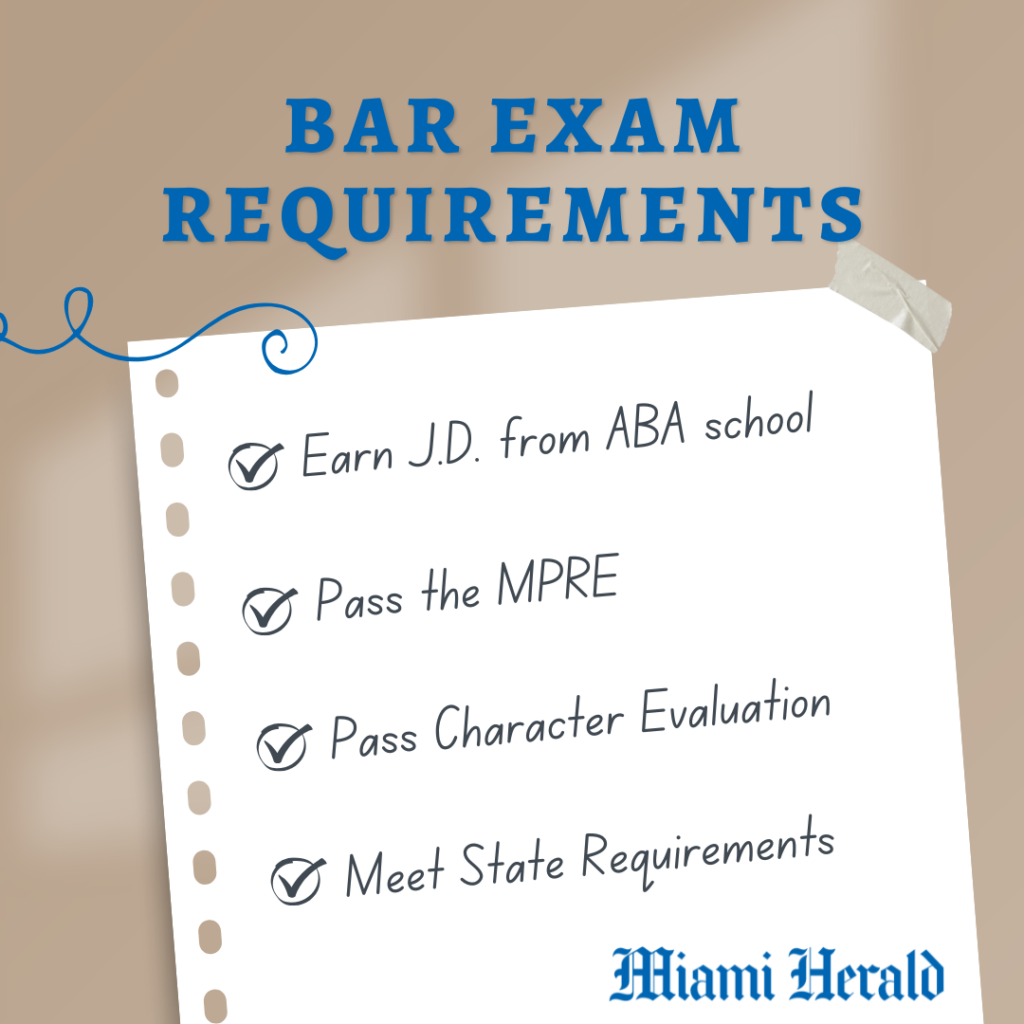
Most U.S. jurisdictions require you to meet these core criteria before you can take the bar exam:
- Earn a J.D. from an ABA-Accredited Law School
Graduating from an American Bar Association (ABA) approved law school is the standard in most states. It ensures your legal education meets nationwide standards. Some states, like California and Vermont, allow graduates from non-ABA-approved schools to sit for the bar, but your options for practicing law may be limited. - Pass the Multistate Professional Responsibility Examination (MPRE)
This ethics exam is required in nearly every state. It tests your understanding of professional conduct rules. Most law students take it during or after their second year. - Complete the Character and Fitness Evaluation
Every state will assess your overall moral character and fitness to practice law. This includes a background check, financial disclosures, and sometimes interviews. - Meet Any Additional State-Specific Requirements
Some states have unique rules, like extra coursework or supervised practice programs. Always check with your state’s bar examiners to be sure.
Law School Matters: ABA Accreditation and Beyond
Attending an ABA-accredited law school is the most straightforward path to bar eligibility. These schools meet specific educational standards, and their graduates are generally eligible to sit for the bar in any state.
If you attended a non-ABA-approved law school, your eligibility depends on the state. For example:
- California allows graduates from certain unaccredited schools to take the bar, but they must first pass the First-Year Law Students’ Examination (the “Baby Bar”).
- New York permits foreign-trained lawyers to sit for the bar if they meet specific educational requirements.
Always verify with your state’s bar examiners if your law school qualifies.
The MPRE: Ethics Exam Essentials
The MPRE is a multiple-choice test with 60 questions designed to check how well you understand the rules of professional ethics and conduct for lawyers. It’s required in all jurisdictions except Puerto Rico and diploma privilege candidates in Wisconsin.
You can take the MPRE before or after the bar exam, but most students opt to complete it during law school. A passing score varies by state, so check your jurisdiction’s requirements.
Character and Fitness: What to Expect
The Character and Fitness evaluation is a thorough background check that examines your moral character and suitability to practice law. It typically includes:
- A detailed application covering your education, employment, and legal history
- Fingerprinting and criminal background checks
- Credit history and financial responsibility assessments
- References and possibly interviews
Be honest and thorough in your application. Discrepancies or omissions can delay your admission or lead to denial.
State-Specific Requirements: Know Before You Apply
Each state has its own bar exam format and additional requirements. For instance:
- Nevada requires a passing score on its state-specific bar exam and an MPRE score of 85 or higher.
- Wisconsin offers diploma privilege to graduates of its two in-state ABA-accredited law schools, allowing them to bypass the bar exam.
- New Hampshire has an alternative licensing program for certain law school graduates.
Always consult your state’s bar admission office for the most current information.

Alternative Paths: Reading the Law and Apprenticeships
A few states allow aspiring lawyers to qualify for the bar exam through apprenticeships or “reading the law” under the supervision of a licensed attorney. States offering this path include:
- California
- Vermont
- Virginia
- Washington
These programs require several years of study and practical experience. While less common, they can be a viable alternative for those unable to attend traditional law school.
Final Thoughts
Determining your eligibility for the bar exam involves understanding your educational background, meeting ethical standards, and complying with state-specific requirements. By staying informed and proactive, you can navigate the process effectively and move closer to your goal of practicing law.
Remember, each jurisdiction has its nuances, so always consult your state’s bar admission office for the most accurate and up-to-date information.
FAQs
Most states require a J.D. from an ABA-accredited law school, a passing MPRE score, and completion of a character and fitness review. Some states have additional rules.
Yes, in a handful of states—like California, Virginia, and Vermont—you can take the bar through a supervised legal apprenticeship instead of law school.
It depends on how you define “easiest,” but states like South Dakota and Wisconsin are often cited due to higher pass rates or, in Wisconsin’s case, diploma privilege.
Criminal history, financial dishonesty, or lying during your application process can disqualify you during the character and fitness review.
Not officially. You can have a law degree, but you can’t practice law or call yourself a licensed attorney until you pass the bar exam (with a few state-specific exceptions).