
‘It was torture’: Florida inmate left to starve and die after officers broke his neck
For five days, trays of food piled up in Craig Ridley’s cell at a Florida prison.
Breakfast, lunch and dinner, Ridley left his meals untouched.
That’s because he couldn’t walk.
Ridley, 62, was lying on his bunk paralyzed, his neck dislocated — a catastrophic injury suffered after corrections officers tackled him to the ground face first on Sept. 8, 2017. A little more than a month later, he would be dead, having been manhandled, mocked and ignored by prison staff, even as he begged for help.
“My neck is broke,” Ridley said, according to a video taken by officers shortly after his injury and obtained by the Miami Herald. “I’m paralyzed.”
Instead of calling for a backboard, officers at the scene of his injury forced Ridley into a wheelchair. He drooped forward awkwardly, crying out in pain, the video shows. A prison nurse disregarded his complaints during a brief exam. “You ain’t paralyzed,” one officer told him.
Officers then put Ridley in a confinement cell, positioning him on a toilet where, unable to balance, he fell onto the hard floor — again face first — leaving a pool of blood that horrified other inmates. Once more, prison medical staff said he was fine.
Over the next five days, Ridley’s blockmates realized he couldn’t move and asked staff to give him medical attention. But officers and nurses walked by and did nothing, sometimes dozens of times a day, prison security footage shows.
Finally, on Sept. 12, 2017, a CO acknowledged something was grievously wrong and Ridley was taken to a hospital in Jacksonville. He died on Oct. 12 — five years ago Wednesday — intubated and unable to communicate.
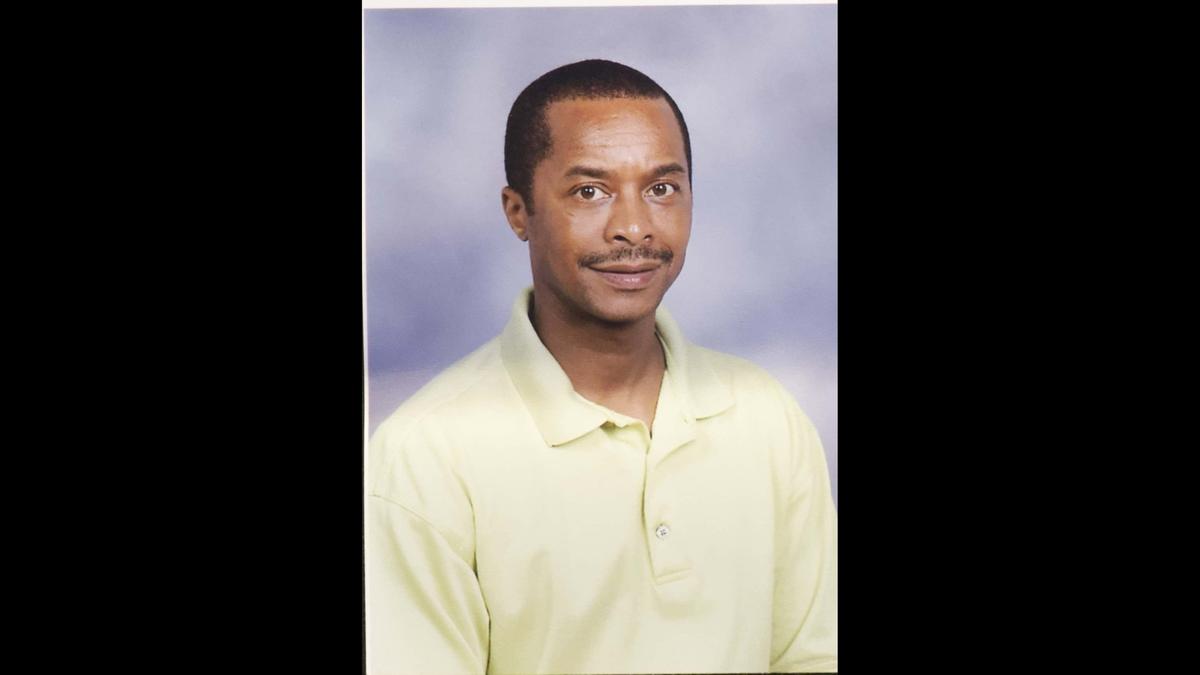
Ridley’s story, laid out in minute detail in a 383-page investigative report by the Florida Department of Law Enforcement, has never been told — thanks in part to a state prison system with a long history of burying abuses, refusing to communicate with family members of incarcerated people, and delaying public records requests.
“This was an inhumane death caused by an abysmal lack of medical treatment,” said Diane Ridley Gatewood, Ridley’s sister, a lawyer from New York who has fought for years to obtain records about her brother and seek answers. “It was torture.”
But no one was charged in Ridley’s slow death.
READ MORE: Florida prisons have a long history of covering up scandals
State and federal prosecutors decided that corrections officers had relied on the advice of medical professionals, despite an exhaustive investigation by FDLE that turned up repeated evidence of abuse and medical neglect.
Now, after suffering through the strain of the pandemic, Florida’s beleaguered prison system is stuck in a worsening crisis that could produce more cases like Ridley’s. Florida prisons have only 76 percent of the employees they need, with a statewide shortage of nearly 4,000 officers, according to the Florida Department of Corrections.
The situation has grown so alarming that Gov. Ron DeSantis is activating Florida’s National Guard to help staff state prisons, where roughly 450 incarcerated people die every year. Many pass away from natural causes thanks to the state’s long sentences and aging inmate population. Some die young because of illicit drugs, others by suicide. Most result in an autopsy, a rudimentary report — and then not much else.
In Ridley’s case, a medical examiner ruled his death a homicide. The causes of death were listed as “blunt impact” to the head and neck, a major spinal cord injury and “complications of quadriplegia” — the paralysis of all four limbs.
That contradicted the diagnosis of prison medical staff. During examinations on the day Ridley was injured, a prison nurse and doctor said the inmate was fine, even though FDLE found no record that they conducted neurological testing. Officers insisted Ridley was faking, then falsified documents to show Ridley had eaten during the five-day period when he languished in confinement, according to FDLE. In fact, he hadn’t touched his meals. They also likely forged his signature on documents that FDLE found he couldn’t have signed, given his injuries.
One officer was observed on video seeming to mock Ridley after moving his head around. Then an inmate said he saw an orderly (an inmate on work duty) twist Ridley’s head back and forth, laughing at him, in front of a guard and nurse at the prison’s urgent care center.
“They f***ed with him and they f***ed with him,” the inmate told FDLE.
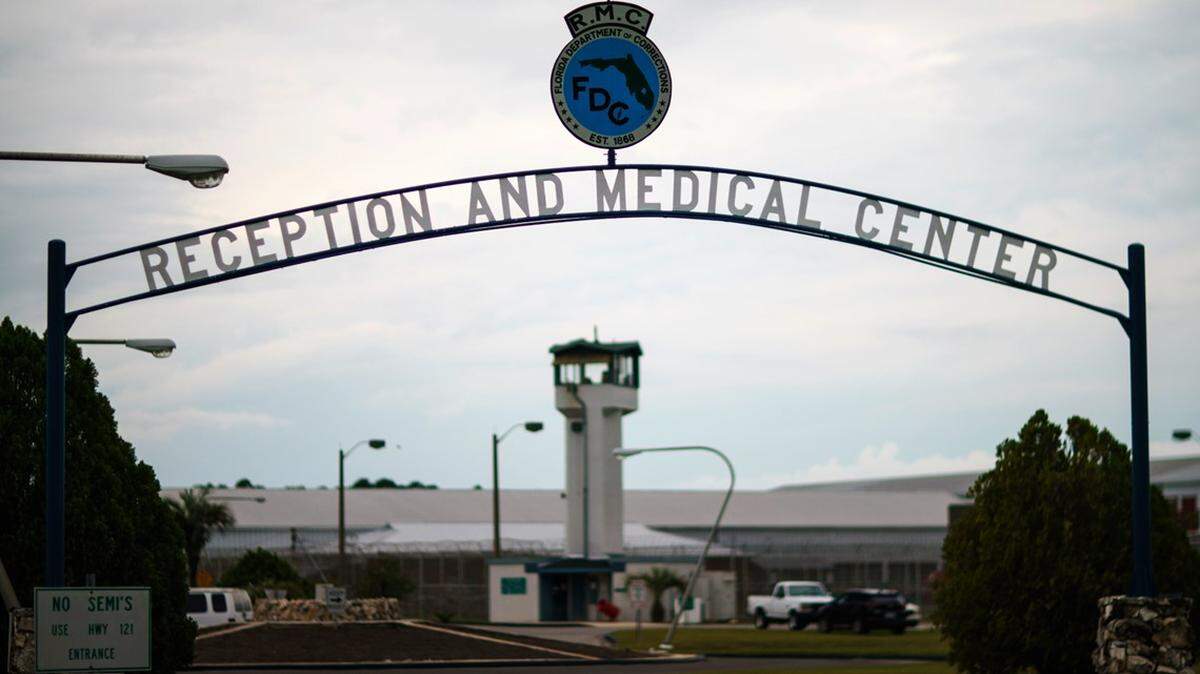
Ridley’s death was all the more preventable because it took place at the Reception and Medical Center in Lake Butler, the main hospital for Florida’s prison system. Ridley was not a patient there but a so-called “permanent,” a prisoner who worked at the hospital full-time, in Ridley’s case as a kitchen worker. The hospital had extra staffing the weekend Ridley was injured because Hurricane Irma was rolling through. An officer accused Ridley of punching him, leading the officer and a colleague to tackle Ridley to the ground.
Michelle Glady, a spokeswoman for the Florida Department of Corrections, acknowledged the state had failed Ridley, a Jacksonville resident.
“The circumstances of this case are isolated, and absolutely no reflection of what our policies outline and expect,” Glady wrote in an email. “We have reviewed this case in depth and recognize the many failures that took place and we have learned from it.”
Glady said the department’s Office of Inspector General “sustained numerous findings” against officers and that “all individuals still employed at the conclusion of the case were disciplined for the role they played.”
“The medical staff were not Department employees, and no longer work inside Florida’s correctional institutions,” she continued. “Additionally, in 2019, a new warden was hired.”
She did not respond when asked what policy changes Florida’s prison system made in response to Ridley’s death, nor did she produce a copy of the inspector general’s report.
In at least two other high-profile cases in recent years, Florida correctional officers have broken the necks of inmates — leaving one woman paralyzed and another man dead.
‘Should have been criminal charges’
Ridley was a quiet man who played chess and ran several miles a day while waiting out a 20-year prison sentence on charges of aggravated assault and criminal mischief.
Before being locked up in 2008, he had served in the U.S. Army, earned a degree in electronic engineering, worked in information technology and taken joy in his pastimes of golf, sailing and scuba diving.
Other inmates said Ridley, who grew up in Missouri, often read and worked out. One knew him by his nickname, “the President,” because of his generally calm and cool demeanor — although he was known to talk back to guards when he felt they weren’t treating him or other inmates fairly. Still, a corrections officer described Ridley as a “model inmate” in an interview with FDLE. His family sent him money so he could maintain his vegetarian diet — no easy feat behind bars.
Disciplinary records show Ridley occasionally earned minor infractions for refusing orders and not wanting to work.
.jpg "Craig 2.jped (1).jpg")
The decision not to charge anyone criminally over his death shocked former corrections officers and prison investigators.
“There should have been criminal charges to come out of this,” said Aubrey Land, a former investigator with the department’s inspector general and now a private prison consultant who reviewed the records obtained by the Herald. “There is serious medical neglect, evidence of falsifying documents, and a man that died. It looks mighty bad.”
Land said officers should have taken seriously Ridley’s complaints that he couldn’t walk.
“They should have immediately summoned medical personnel to the location where he was injured,” he said. “They shouldn’t have moved him. He should have been collared and transported to a hospital. You don’t just grab a guy up who says, ‘I’m paralyzed, I can’t feel my legs.’ ”
Steven Vanni, chief of medical staff at HCA Florida University Hospital, agreed that the way prison staff treated the injured Ridley was “appalling.”
“In terms of management of a potential spinal cord injury, it’s the worst management you could ever imagine,” said Vanni, a former chief of spinal surgery at Jackson Memorial Hospital who at the Herald’s request reviewed Ridley’s medical records and the video taken after his injury. “If the guy had a salvageable injury, they likely made it worse, which is why he ultimately died.”
The office of State Attorney Brian Kramer, which covers the Gainesville area and declined to prosecute over Ridley’s death, did not respond to requests for comment. Neither did the Civil Rights Division of the U.S. Department of Justice, which also decided against bringing charges after Kramer’s office referred the case.
Despite operating prisons with skeleton crews, Florida continues to incarcerate about 80,000 people at a given time. Though that is a considerable dip in prison population from the roughly 100,000 inmates housed a decade ago, the facilities have been hemorrhaging staff under poor working conditions and low pay, forcing prison closures and pushing inmates onto “emergency beds” — mats laid out on the day-room floor.
Ridley’s daughter, Jatoon Moss, has filed a civil rights lawsuit in federal court against Ricky Dixon, the secretary of the Department of Corrections, as well as more than a dozen current and former corrections officers and medical staff.
“They think they’re above the system and they can make this go away,” Moss said of the state prison system. “But they’re wrong.”
“It’s not just my father,” she added. “We have to get as much light as we can on this issue, especially for the Black community. My father was a Black man. I am a Black woman.
Moss, who now lives in Utah, grew up in the Bahamas with her mother and didn’t know her dad well. She cried after reading FDLE’s report for the first time.
“I didn’t get too much time with him,” she said. “This is where my regret and hurt comes from. We have so much in common. What we went to school for. Scuba diving and loving the water. We had so many similarities.”
James Cook, the Tallahassee attorney representing Moss, said officers had no basis to conclude Ridley was faking his injuries.
“He suffered the torment of the damned prior to his death,” Cook said.
‘Hell of a cover-up’
For almost his entire sentence, Ridley had been incarcerated at Florida’s prison hospital, where the medical treatment he received was poor.
The doctor who treated Ridley after his broken neck had been reprimanded and fined by the state medical board for botching cosmetic injections on a woman’s face, leaving her with abscesses and infections.
The doctor, Jean Dure, earned his medical degree abroad and was licensed to work in Florida only at prisons, government health facilities and high-need hospitals. He concluded nothing was wrong with Ridley after taking an X-Ray and CT scan. Dure’s notes claim that Ridley had walked into the prison’s urgent care. And although Dure said Ridley passed neurological testing, FDLE found that no one had filled out forms showing those tests had been performed. An inmate said a corrections officer repeatedly told Dure that Ridley was lying about his injuries while the doctor treated him.
Dure, listed as still practicing medicine in Florida, did not respond to questions. He is one of the defendants named in the federal lawsuit.
Medical care at Florida prisons is provided by a private contractor, Centurion of Florida, which was brought in after previous providers were repeatedly accused of malpractice and neglect. Centurion did not respond to several requests for comment.
The U.S. Supreme Court has held that prisoners have a constitutional right to appropriate medical treatment. In Estelle v Gamble, the court ruled that “deliberate indifference to serious medical needs of prisoners” constitutes a violation of the Eighth Amendment’s prohibition against cruel and unusual punishment.
David Rembert, an assistant professor of criminal justice at Prairie View A&M University and a former Texas corrections officer, said the details of Ridley’s case were “horrifying.”
“His civil rights were violated,” said Rembert, who reviewed the records obtained by the Herald. “This was deliberate indifference to medical need. … If you’re walking past somebody’s cell day after day and they’re not moving, you have to know something is wrong.”
Rembert pointed to the interviews of officers and medical staff — which wildly contradict both each other and available records — as signs that prison workers were trying to “cover their tracks.” He also noted the disappearance of certain video evidence sought by FDLE.
“You don’t know who’s telling the truth and who’s not,” he said. “This is a hell of a cover-up.”
After Ridley’s death, FDLE agents interviewed more than 170 inmates, corrections officers and medical staff at the prison to determine how he could have been abandoned to die, according to a report obtained by the Herald. The FDLE agents even flew to North Dakota to interview one former officer and traveled to New York to update Ridley’s sister on the status of the case.
Gretl Plessinger, a spokeswoman for FDLE, said the department’s agents and analysts “conducted an exhaustive investigation working more than 4,400 hours on this case to determine the facts of what happened.”
The FDLE investigation — led by special agent David Maurer — also uncovered allegations of a culture of abuse and neglect at the prison.
Inmates told FLDE that officers routinely took them out of view of prison cameras to beat and douse them with pepper spray, ignored their medical needs, and subjected them to vile humiliations like “saucing” their food by spitting tobacco juice onto it.
Because prosecutors declined to bring charges, only minor and administrative repercussions came from FDLE’s probe. The Department of Corrections suspended one officer for 8.5 hours without pay because he walked by Ridley’s cell 16 times over two days without calling for aid or noting that he wasn’t eating. Two others had letters placed in their files reprimanding them for using “inappropriate” language to Ridley after his neck was broken. The department did not provide records showing what other actions it took against the dozens of officers and medical staff who had contact with Ridley.
Ridley’s case is one of several Florida prison beatings that led to an inmate being paralyzed or killed.
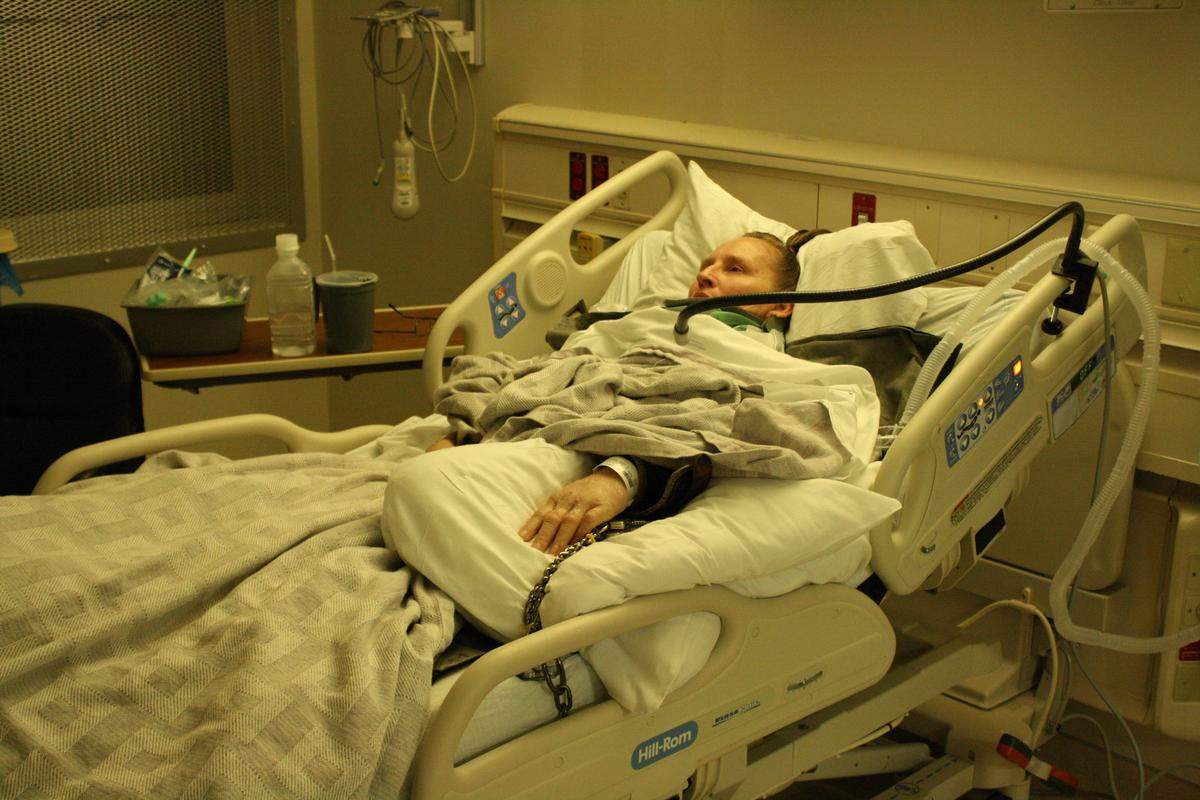
In 2019, officers at the state’s largest women’s prison, Lowell Correctional Institution, beat Cheryl Weimar, who was rendered a paraplegic and now needs a breathing tube to survive.
The next year, officers at Lake Correctional Institution near Orlando beat 51-year-old Christopher Howell, breaking his neck and killing him. Howell was serving four years for stealing phone chargers from a Target store in West Palm Beach.
No one was charged in Weimar’s beating. Former CO Michael Riley was charged with second-degree murder in Howell’s death. He has pleaded not guilty.
‘This might never have happened’
Ridley’s time in prison stemmed from a dispute over money.
On Nov. 10, 2007, Ridley went to the office of a man who owed him $300 in Duval County, according to police.
Ridley was upset the man hadn’t paid him for driving a limo and cut the man’s tires, an incident report from the Jacksonville Sheriff’s Office states. He also fired two rounds from a handgun into the man’s office door. An arrest report calculated the total damage at $800.
He was arrested nearly three months later after being pulled over for speeding.
Prosecutors hit him with charges, including attempted murder, that could have resulted in decades behind bars. Ridley’s sister said he rejected a plea deal — angry at what he thought was prosecutorial overreach. A jury found Ridley guilty and a judge sentenced him to 20 years, the mandatory minimum.
“He said he was going to fight for his rights,” Ridley Gatewood said. “He believed in justice, freedom and equality. If he had taken the plea deal, this might never have happened.”
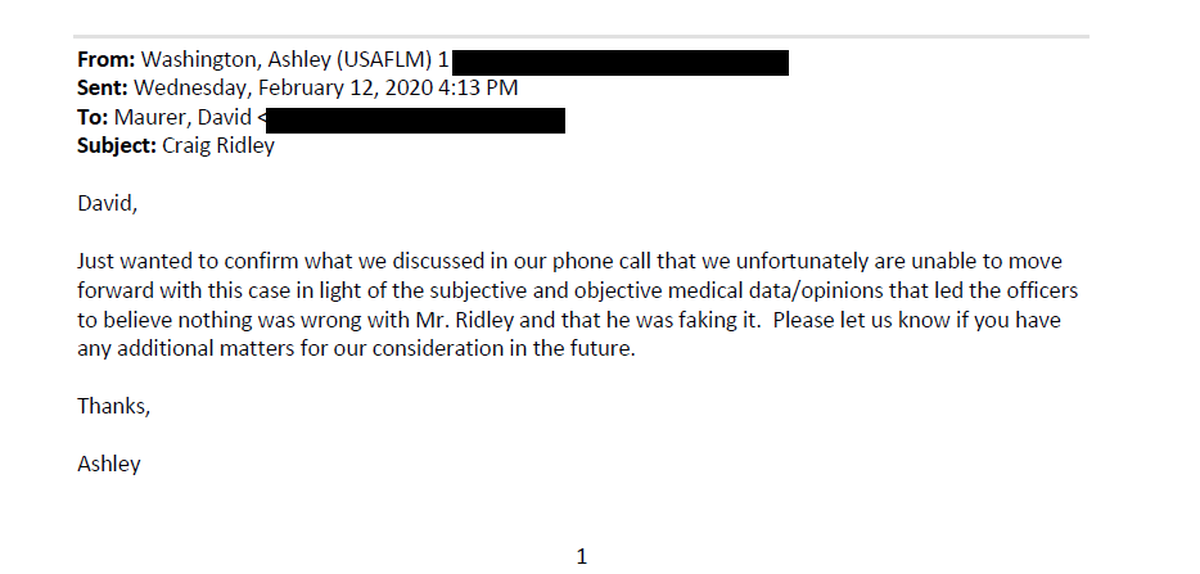
Since her brother’s death, Ridley Gatewood has been making public records requests and contacting state and federal prosecutors, desperate for information and to seek discipline for those responsible. She said she was originally told that her brother had fallen ill with cancer — which she didn’t believe — leading her to dig further. (Other inmates at the prison also said staff told them Ridley had died of cancer.)
Although Ridley Gatewood praised the efforts of FDLE’s agents, she has felt stonewalled at every turn by other authorities involved in the case. She shared many of the documents, photographs and videos used by the Herald in this story after being approached by reporters who’d been tipped off about her brother’s death. Because the Department of Corrections takes months or even longer to answer records requests, telling Ridley’s full story would have been impossible without her persistence.
The Herald obtained other records about Ridley through its own requests to state officials.
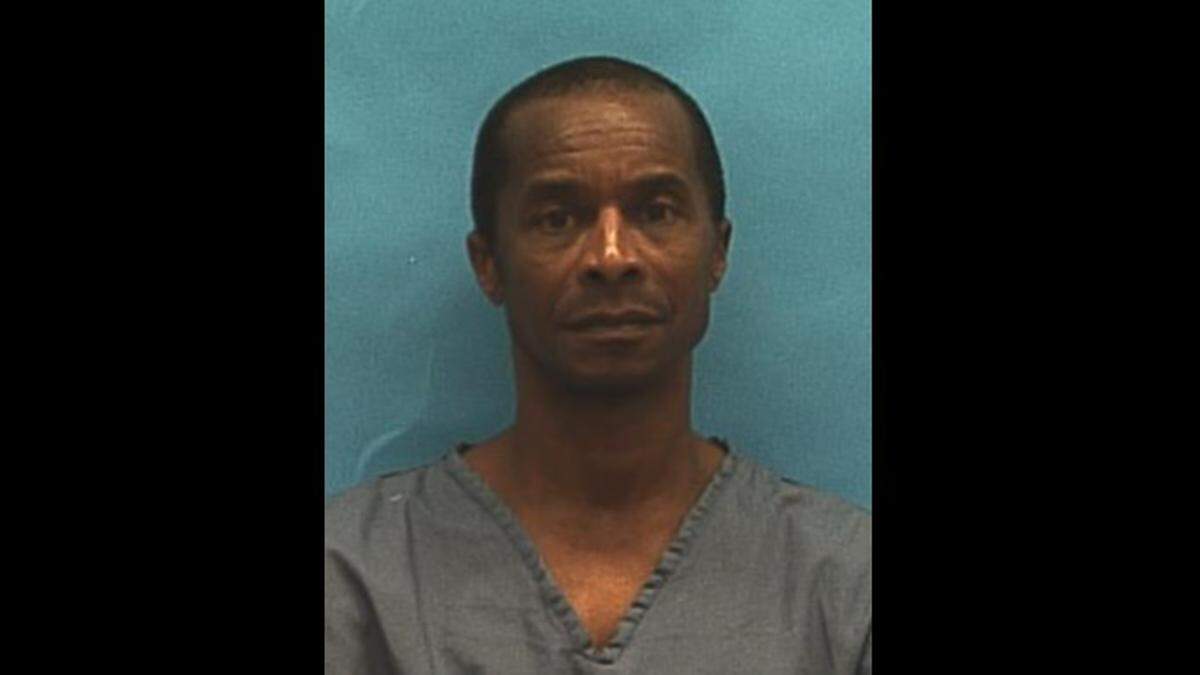
The chain of events that would end in Ridley’s death began early in the morning of Sept. 8, 2017, according to FDLE’s investigation. (The officers allegedly involved either did not respond to requests for comment or could not be reached.)
At around 3 a.m. in the prison’s Dormitory A, Ridley was roused for his kitchen duties. He muttered something to Sgt. John Nettles, who accused him of being disrespectful and took him outside for “counseling.” There, Nettles said Ridley punched him in the face. They began to struggle. Another officer, Capt. William Jerrels, intervened and tackled Ridley to the ground face first. Inmates said they could hear Ridley shouting at the guards to stop hitting him and that he was not resisting.
After being tackled, Ridley said he couldn’t walk. An officer brought him a wheelchair.
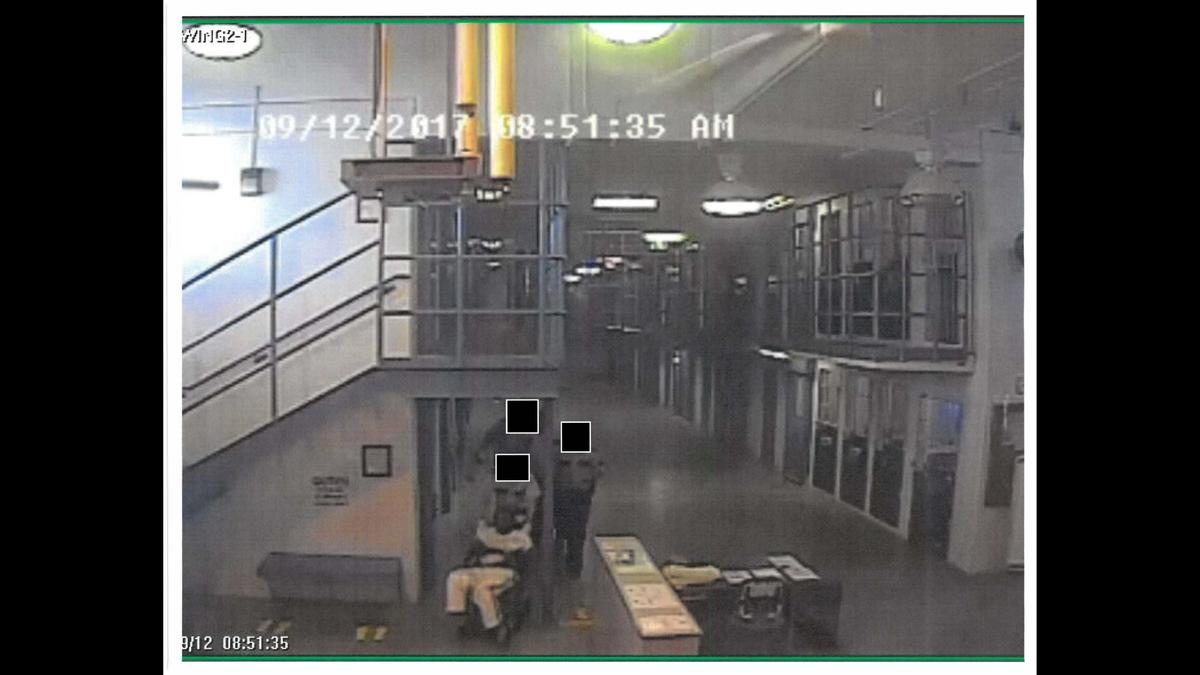
Officers began recording video at 3:32 a.m. The video shows Ridley being picked up by three guards and placed in the wheelchair. Ridley did not appear to assist the guards in any way. He almost fell out of the chair but was held in place by a guard grabbing his shirt.
The officers took Ridley to the prison clinic, where an officer told a nurse: “He says his feet ain’t working.”
Ridley told the nurse he couldn’t move.

After the exam, with his head hanging toward his chest at an awkward angle, Ridley asked an officer to push it up. Sgt. Gerrie Guy moved his head and then smiled “animatedly toward the camera,” according to FDLE. Ridley, grimacing, didn’t appear able to move his head, arms or legs under his own power.
Then, instead of taking Ridley to see a doctor, two officers took him to confinement — consisting of special cells used in part to punish inmates for breaking rules that they cannot leave without a special appointment or medical emergency. The guards, Sgt. John Nyitray and Officer Daniel Greene, told Ridley to get up from his wheelchair and go into his cell. He said he couldn’t.
“You’re bullsh*tting,” Nyitray responded, according to what one inmate told FDLE. “You’re just trying to get a lawsuit.”
The officers put Ridley on the confinement cell’s toilet and closed the door. Ridley immediately fell to the floor and hit his face, causing a massive nose bleed.
His cellmate, Moise Cherette, started banging on the door and called for aid. But an officer walked away and no other staff came to help, Cherette told FDLE. (Another inmate said he also saw Ridley lying in a “pool of blood.”)
Ridley told Cherette he couldn’t move or feel his arms and legs. Cherette turned him on his back and poked his foot with his finger. Ridley said he could feel something but wasn’t sure what it was.
Cherette again yelled for help and Ridley was taken to the infirmary, where he was finally seen by the prison doctor, Dure, who said he was fine. (Cherette claimed he was later beaten by staff for asking too many questions about Ridley.)
That afternoon, Ridley was returned to a confinement cell, this time with no cellmate. Prison staff walked by 19 times that day without entering to check on him, although they occasionally shined a flashlight into his cell, security footage shows. On Sept. 9, staffers walked by 44 times without entering to check on him, then passed by 48 times on Sept. 10, another 41 times on Sept. 11, and 18 times on Sept. 12. No one changed his sheets or offered him a shower.
At least 11 inmates in his cell block reported that Ridley never moved from his bunk, did not pick up his food trays, and that the officers ignored him and said he was faking.
Finally, on Sept. 12, CO Jesse Mallard noticed that Ridley was mumbling unintelligibly and not moving.
“CO Mallard stated something did not feel right with how Ridley was acting,” FDLE wrote in its report.
Mallard contacted a supervisor and Ridley was taken to the medical unit. Seeing his condition had worsened from the last time they saw him on Sept. 8, doctors sent him to Memorial Hospital in Jacksonville at around 1 a.m. on Sept. 13. Security footage captured an orderly sweeping wrapped sandwiches and other food items out of his cell.
Ridley’s sister flew down from New York to see him but he was already intubated, couldn’t communicate and died the next month.
He would have been eligible for release in 2025.
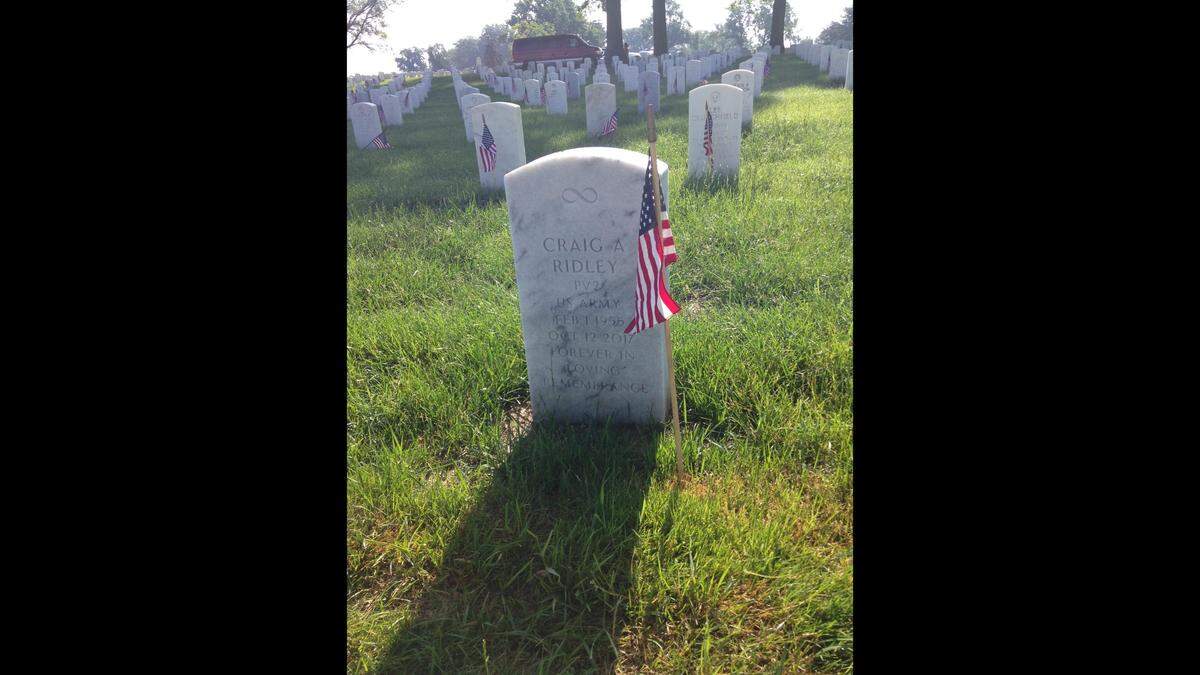
This story was originally published October 12, 2022 at 6:00 AM with the headline "‘It was torture’: Florida inmate left to starve and die after officers broke his neck."