
With Disney and Pivot upset, the consequences of Florida’s anti-LGBTQ+ legislation get real | Editorial
Disney’s CEO, deep into damage-control mode, apologized and announced Friday the company is ”pausing” all political donations in Florida after widespread blowback over the company’s feeble response to Florida’s fiercely debated “Don’t Say Gay” bill.
And a big-deal tech and business conference, Pivot, scrapped plans to bring the event back to Miami as planned in 2023, with the co-host of the three-day conference citing the “appalling” nature of the “trans- and homophobia” inherent in the bill.
Perhaps the Republican Legislature’s actions are finally catching up to it. We hope so.
Florida lawmakers passed the Parental Rights in Education bill this week, sending it to Gov. Ron DeSantis’ desk for his signature. The bill seeks, among other things, to ban “classroom instructions” about sexuality and gender identity before the fourth grade and also in other grades “in a manner that is not age-appropriate or developmentally appropriate for students in accordance with state standards.”
Supporters keep saying the bill doesn’t actually prohibit anyone from using the word “gay,” but that’s mighty broad wording, wide open to interpretation by those in power.
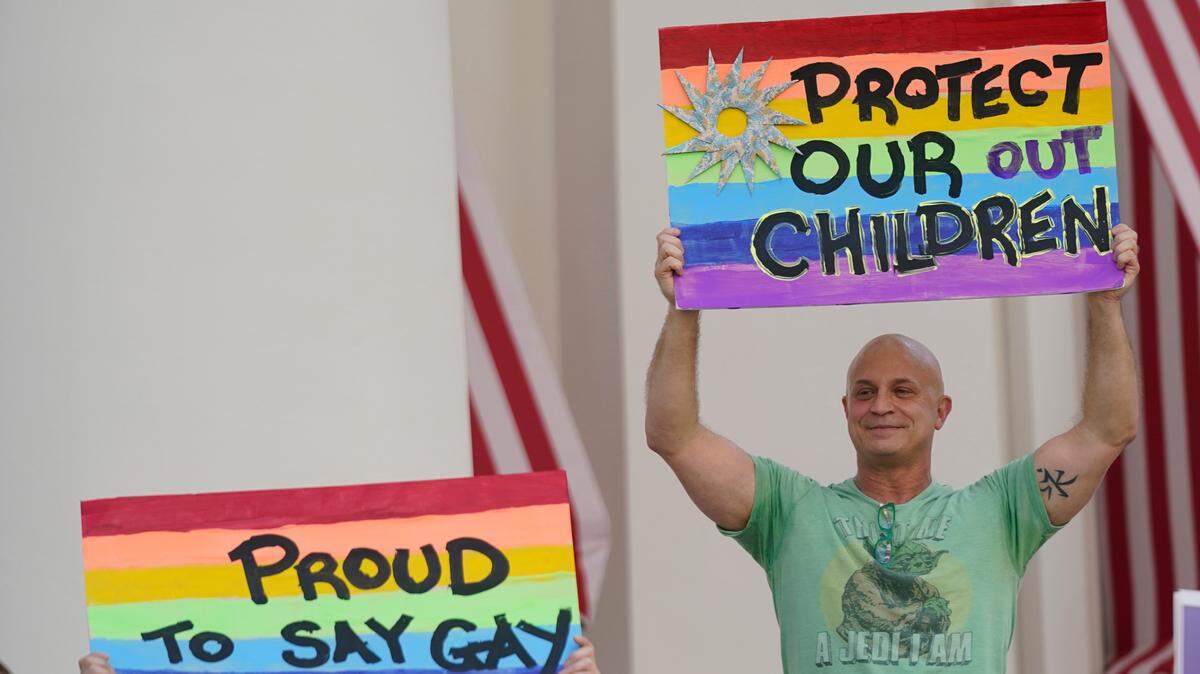
The bill has prompted protests at the Capitol and at schools, with critics saying it could harm LGBTQ kids and children whose parents are gay. Celebrities have been tweeting out “gay, gay, gay.” President Biden called it “hateful.” A Saturday Night Live skit made Florida the butt of the joke.
Florida lawmakers, apparently reverting to the Anita Bryant days of homophobia, pushed it through anyway.
But now the uproar is affecting Disney, a multibillion-dollar company that preaches inclusion at its parks, but that gave big bucks in political donations, including to the bill’s GOP sponsors and to the governor’s political committee. CEO Bob Chapek sent a letter Friday to Disney workers saying he now realizes that this furor is “not just an issue about a bill in Florida, but instead yet another challenge to basic human rights,” the Orlando Sentinel reported.
That came after a week of criticism leveled against Disney and Chapek for remaining silent and only opposing the bill after it was headed to DeSantis. Chapek tried to say Disney could fight bigotry through its creative content, but nobody bought that. He also said he would talk with DeSantis to make sure the bill wasn’t “weaponized.” DeSantis then attacked Disney as “woke” — his favorite label of late — and of “lining their pockets” with money from Communist China.
And now we have a buzzy tech conference being yanked away from Miami over the same divisive bill. Miami Mayor Francis Suarez, the city’s chief marketer on all things tech and a Republican, was set to be the kick-off speaker. We don’t know the financial impact of pulling Pivot out of the state, but it certainly is a blow to that shiny, city-of-the-future image Suarez wants to promote.
Miami-Dade County Mayor Daniella Levine Cava has tried to salvage the situation. She sent a letter to Kara Swisher, co-host of the Vox Media Pivot podcast, drawing attention to Miami-Dade’s progressive policies. She told Swisher, who is gay, that she sees the bill as “cruel and ignorant.”
We know DeSantis won’t back down on this. He’s staked too much on it, especially if he seeks the presidency in 2024. But legislators must run for reelection this year. They have to face constituents. They need political contributions. And if there’s one thing we know about politics, money talks.
Disney and Pivot may be on to something here.
BEHIND THE STORY
MOREWhat's an editorial?
Editorials are opinion pieces that reflect the views of the Miami Herald Editorial Board, a group of opinion journalists that operates separately from the Miami Herald newsroom. Miami Herald Editorial Board members are: opinion editor Amy Driscoll and editorial writers Isadora Rangel and Mary Anna Mancuso. Read more by clicking the arrow in the upper right.
What's the difference between an op-ed and a column?
How does the Miami Herald Editorial Board decide what to write about?
The Editorial Board, made up of experienced opinion journalists, primarily addresses local and state issues that affect South Florida residents. Each board member has an area of focus, such as education, COVID or local government policy. Board members meet daily and bring up an array of topics for discussion. Once a topic is fully discussed, board members will further report the issue, interviewing stakeholders and others involved and affected, so that the board can present the most informed opinion possible. We strive to provide our community with thought leadership that advocates for policies and priorities that strengthen our communities. Our editorials promote social justice, fairness in economic, educational and social opportunities and an end to systemic racism and inequality. The Editorial Board is separate from the reporters and editors of the Miami Herald newsroom.
How can I contribute to the Miami Herald Opinion section?
The Editorial Board accepts op-ed submissions of 650-700 words from community members who want to argue a specific viewpoint or idea that is relevant to our area. You can email an op-ed submission to oped@miamiherald.com. We also accept 150-word letters to the editor from readers who want to offer their points of view on current issues. For more information on how to submit a letter, go here.
This story was originally published March 11, 2022 at 5:50 PM with the headline "With Disney and Pivot upset, the consequences of Florida’s anti-LGBTQ+ legislation get real | Editorial."