Top suspect in Haiti assassination probe in U.S. custody in Miami
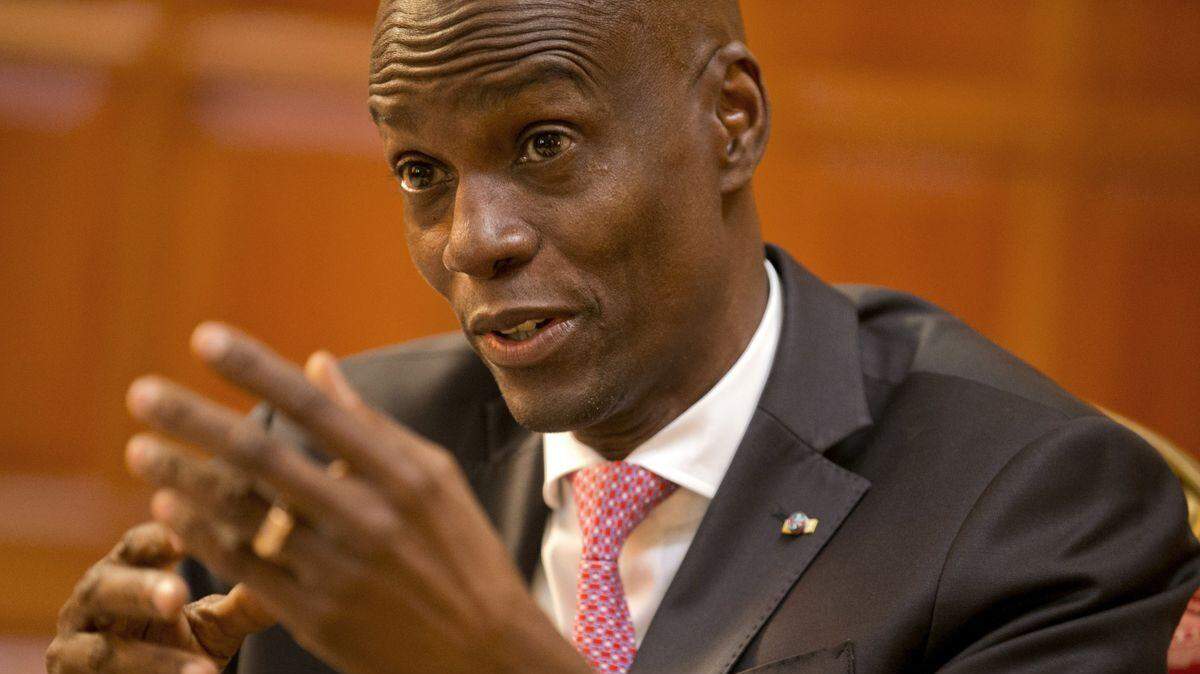
A sprawling, months-long investigation into the assassination of Haitian President Jovenel Moïse achieved a breakthrough on Tuesday when U.S. authorities charged a former Colombian solider with conspiracy, the first charges brought forth since last summer’s killing.
Mario Antonio Palacios Palacios, 43, also known as “Floro,” appeared in Miami federal court Tuesday afternoon after being arrested in the early morning by federal agents in Miami after arriving from Panama. He is the first person allegedly involved in the assassination of the Haitian president on July 7, 2021, to be formally charged with a crime.
A former Colombian soldier, Palacios traveled to Haiti about a month before the assassination, according to a federal complaint unsealed Tuesday, and was in contact with at least one of three now-jailed Haitian Americans in Port-au-Prince before Moïse was shot 12 times and his wife, Martine, was left for dead with multiple gunshot wounds.
The arrest could prove to be critical to U.S. authorities who are investigating several South Florida individuals and businesses in connection with the assassination. The probe by Haitian authorities has been stalled.
Palacios had been in custody in Jamaica, which moved to deport him to his homeland of Colombia Monday. But during a layover in Panama, he agreed to travel to the United States, according to federal authorities.
A criminal complaint, drafted by the FBI, accuses Palacios of conspiracy to commit murder or kidnapping outside the United States and providing material support resulting in death, knowing that such support would be used to carry out a plot to kill the Haitian president. The criminal complaint had been filed under seal in federal court on Nov. 24, 2021, and was unsealed Tuesday.
Palacios was appointed a private attorney by U.S. Magistrate Judge Alicia Otazo-Reyes because the Colombian said he did not have enough money to hire his own lawyer. He told Otazo-Reyes that while he owned his home in Cali, Colombia, his monthly income was the equivalent of $367.87 from his military pension. His next appearance in federal court is scheduled for Jan. 31, when a hearing on the legal basis for the criminal complaint is planned.
Assistant U.S. Attorney Walter Norkin accused Palacios of committing a “serious crime” and said he potentially faces up to life in prison if convicted. He argued the defendant should be detained until trial, but that issue will be addressed later in court. In the meantime, because of the COVID-19 pandemic, Palacios will remain in isolation at the Federal Detention Center in Miami for at least two weeks.
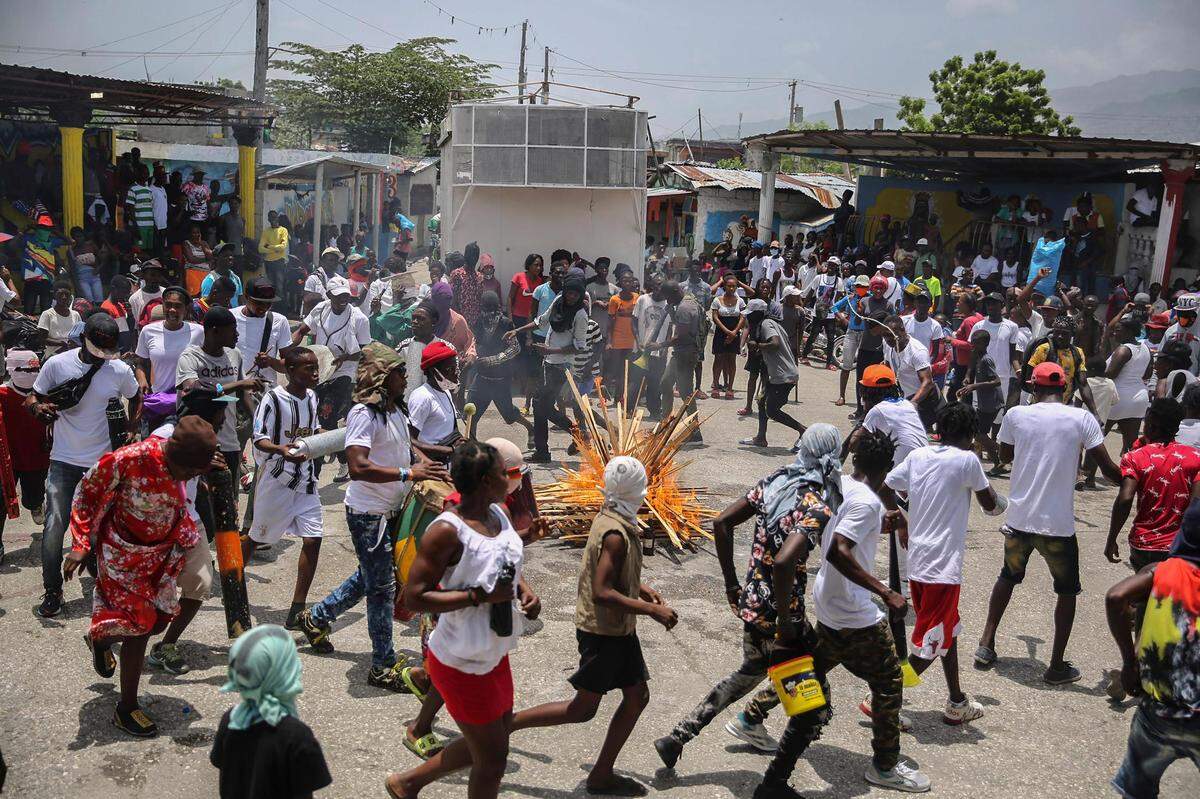
The charges against Palacios relate to the assassination of Moïse at his private residence in Port-au-Prince. The FBI criminal complaint says that a group of about 20 Colombians and another group of Haiti-based dual Haitian Americans participated in the plot to kidnap or kill the president. One co-conspirator, a dual Haitian-American citizen, traveled to the United States on June 28, 2021, to provide other individuals with a written request for assistance to advance the plot targeting the Haitian president, the complaint says.
“As alleged in the complaint, while the plot initially focused on conducting a kidnapping of the president as part of a purported arrest operation, it ultimately resulted in a plot to kill the Haitian president,” according to a news release issued by the Justice Department after Palacios’ federal court appearance in Miami.
The complaint states that, after eluding arrest and traveling to Jamaica, Palacios asked to speak to U.S. law enforcement and provided them with voluntary statements in October. These included details about how the plan was drawn up.
“Palacios spoke about the initial plan to ‘capture’ the Haitian president at the airport, where the co-conspirators would don black hoodies and take away the president by plane,” the complaint says, confirming a Haitian police investigation report previously obtained by the Herald. When the plan failed to materialize, Palacios told investigators, he was later informed that the scheme had changed into a plot to assassinate rather than kidnap Moïse.
The complaint alleges that Palacios and others “entered the president’s residence in Haiti with the intent and purpose of killing President Moïse, and in fact the president was killed.”
The Haitian American who traveled to the United States on June 28 is identified only as “co-conspirator #1.” The Miami Herald has learned that the co-conspirator is James Solages, who was subsequently arrested by Haitian authorities and remains in custody in Haiti. Solages has claimed he was working as a translator.
Palacios’ detention in Jamaica had been for an immigration violation until his deportation via Panama to Colombia on Monday night.
According to the Haiti National Police investigation report obtained by the Herald, the hit squad of ex-Colombian military soldiers, accompanied by two Haitian Americans and Haitian police officers, swarmed the Haitian presidential compound in the hills overlooking Port-au-Prince with military precision. Claiming to be part of a U.S. Drug Enforcement Administration operation, team leaders carried a Samsung Galaxy smartphone — to photograph the president’s corpse and assure the masterminds of his death, according to police.
Palacios, police investigators said, was one of the Colombians who allegedly entered the president’s room, where Moïse was tortured before being shot multiple times. He could tell investigators who fired the fatal shots.
Haiti initially arrested 44 suspects in the slaying. One has since died of COVID-related illnesses, and four others were recently released by the investigative judge conducting the probe there in advance of bringing charges. None of those individuals have yet been charged, however.
Haiti police investigators have detained and interrogated 18 Colombians, as well as two Haitian Americans, Solages and Joseph Vincent, the latter of whom also claimed he was working as a translator. Investigators also questioned and imprisoned Christian Emmanuel Sanon, a Haitian-American pastor and doctor considered by police to be one of the planners. They have linked Sanon to the owner of a Miami-area security firm, Counter Terrorism Unit, or CTU, and to one of the owner’s associates. CTU is suspected of recruiting the Colombians and obtaining two loans from a Weston-based lending firm that Haitian police say provided money for the assassination.
U.S. lawyers for the South Florida business owners, whose homes and offices have been the subject of search warrants, have said that while they were involved in a plan to replace Moïse with an interim leader in a peaceful transition of power, they had no knowledge of a plot to kill or violently overthrow him. Solages, Vincent and Sanon have also professed their innocence directly. After turning themselves in, Solages and Vincent, a former DEA informant, told Haitian authorities that their mission was not to kill Moïse but to arrest him and install Sanon as interim president.
Both the FBI and Homeland Security Investigations are conducting their own probes, looking at the involvement of the two companies, their owners and the three jailed Haitian Americans, all of whom lived in South Florida before traveling to Port-au-Prince early last year ahead of the slaying. The question is to what extent Palacios’ arrest connects to the broader ongoing U.S. probe and whether it might help FBI and Homeland Security agents build a strong case.
The way Palacios arrived in the United States is not unusual. U.S. law enforcement agencies sometimes seek to circumvent the lengthy process of extradition — with the cooperation of foreign governments — when a suspect is in transit. Haiti’s government had filed an INTERPOL Red Notice, an international alert, on Oct. 21, 2021, after Palacios’ Jamaica arrest.
Palacios had surrendered in Jamaica in October. He was among several suspects on the run after Moïse’s murder. One of the suspects, Haitian-Palestinian businessman Samir Handal, was detained in Turkey after arriving in Istanbul from Miami. His ultimate destination was Jordan. His family in Miami says he is innocent and that authorities knew his whereabouts all along. He is currently the subject of a Haitian government extradition request.
This story was originally published January 4, 2022 at 9:02 AM with the headline "Top suspect in Haiti assassination probe in U.S. custody in Miami."