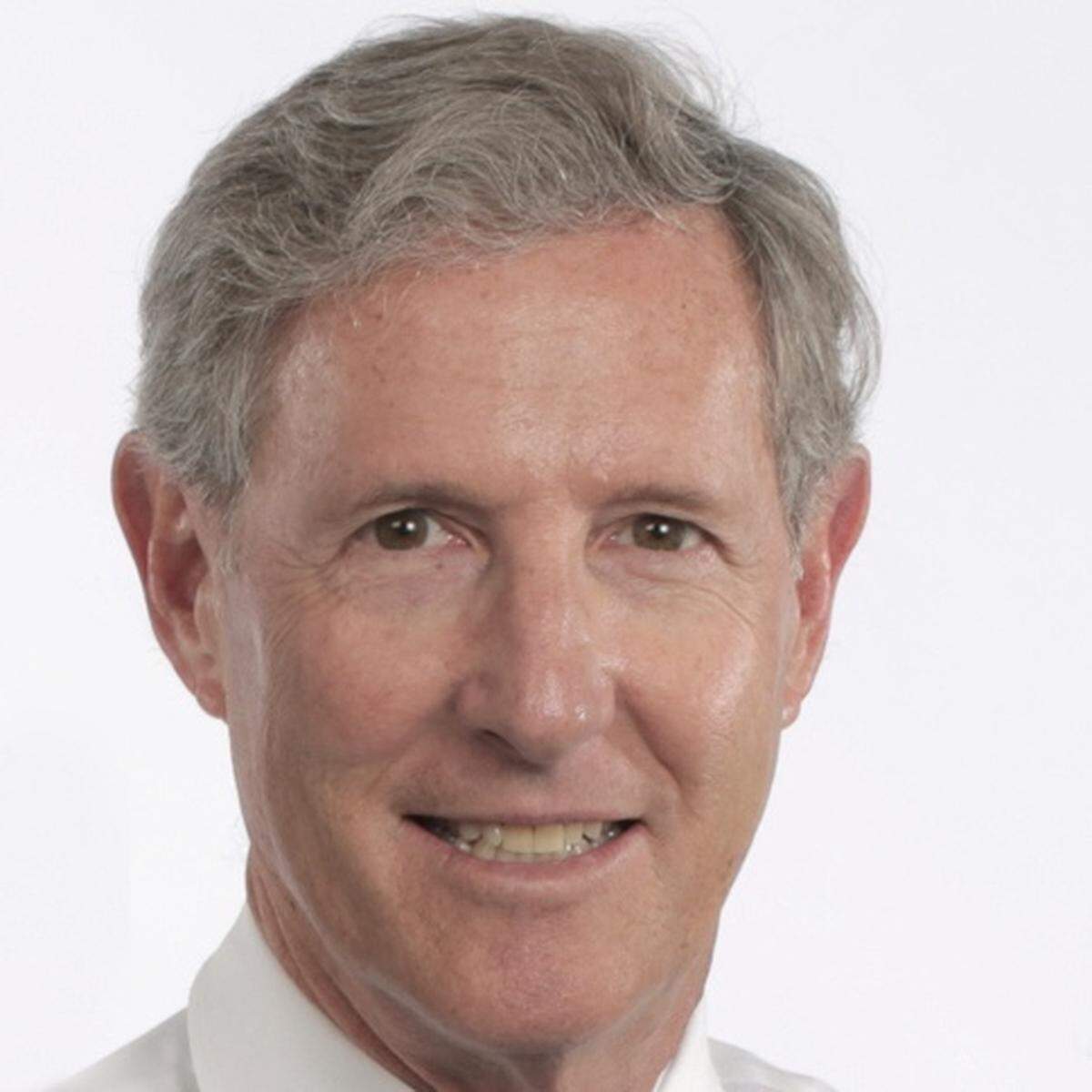
Former UM medical school executive sues university over firing, seeks millions
Jonathan Lord, the chief operating officer of the University of Miami’s medical program, had only been on the job for four months when he was given a $150,000 raise along with two new titles, vice president for medical administration and chief compliance officer. His annual compensation rose to about $914,000.
In a July 2012 letter to the UM-educated physician, medical school dean Pascal Goldschmidt gushed about Lord’s leadership in driving “both a fiscal and cultural turnaround” of the university’s entire healthcare network.
Goldschmidt said Lord’s impact on UM’s medical school and hospital system was “transformational,” noting that his “tireless dedication to leading our school to greatness has made all the difference in the world.”
Six months later, Lord would be fired — pushed out, he says in a new wrongful termination lawsuit against UM, because he uncovered inflated Medicare claims for transplant testing services in the surgery department and approved an independent audit of its questionable billing activity.
Lord claims the university’s then-president, Donna Shalala, ordered his firing after he informed her, Goldschmidt and the board of trustees that UM’s surgery department was billing the federal Medicare insurance program for unnecessary organ transplant tests at Jackson Memorial Hospital, according to his suit filed Thursday in Miami federal court.
Lord claims the university put its own spin on his forced departure, saying publicly that he lost the confidence of the UM hierarchy after he made unpopular budget cuts and faculty layoffs — tough decisions that he says were supported by Shalala and Goldschmidt because of UHealth’s persistent financial troubles.
His suit provides a rare look inside the power struggles of a major South Florida university and medical school that was seeking national recognition as it ran up debts and ran afoul of Medicare laws, according to his lawsuit. Lord, nearly a decade after his firing, says the university and its president, Shalala, “publicly humiliated” him when they retaliated against the second-in-command at the medical school for simply pressuring its leaders to address the alleged violations.
Lord and his attorneys, Jeffrey Sloman and Erica Perdomo, who named only the university as a defendant in the wrongful termination case, declined to comment for this story.
UM’s longtime lawyer, Eric Isicoff, would not comment on Lord’s specific allegations of retaliation. “We do intend to defend this case,” he said. “We had a legitimate basis for his termination.”
A spokeswoman for UM declined to comment on Lord’s lawsuit, citing “pending litigation and personnel matters.” Shalala also did not respond to a request for comment after the Miami Herald sought to reach her by email and cellphone messages through UM’s communications department.
Goldschmidt also did not respond to a request for comment. After retiring as the medical school’s dean in 2016, Goldschmidt was later hired as the chief medical officer at South Florida home builder Lennar Corp., which is headed by Stuart Miller, the chair of the UM board of trustees. The university’s medical school, heavily endowed by the Miller family, is named after his father.
Successful whistle-blower
Lord, who attended UM as both an undergraduate and medical student before specializing in pathology and administration, has filed the wrongful termination suit following his successful whistle-blower case against the university. In May, the Coral Gables university settled the False Claims Act case by paying $22 million to the federal government, with half of that total going to the taxpayer-funded Medicare program for the elderly and disabled. The university also paid the state of Florida about $325,000 under the terms, with half of that amount going to the Medicaid program for the indigent.
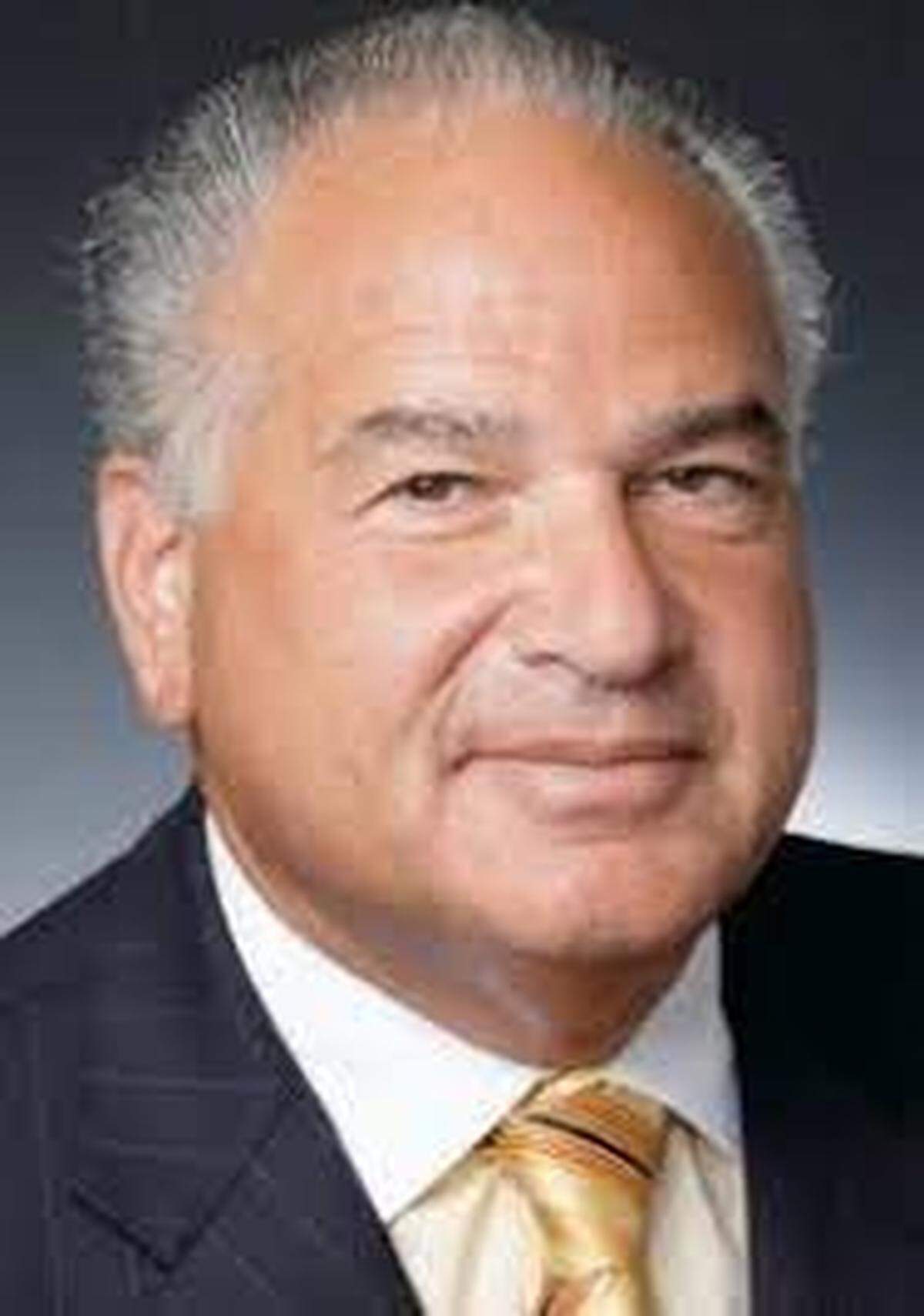
UM’s settlement with the Justice Department, which intervened on Lord’s behalf in the whistle-blower case, was to resolve allegations of fraudulent billing practices in the surgery department’s transplant testing lab and excessive doctors’ fees charged to patients at clinics who were not notified of the higher costs, according to the agreement.
Jackson Memorial Hospital, a publicly owned teaching facility that has a joint operating agreement with UM’s medical school to provide doctors and other services including organ transplant lab tests, also agreed to pay $1.1 million to the federal government, according to the settlement.
The Justice Department began investigating the allegations after they were first raised by Lord, who filed his whistle-blower suit in 2013. Lord received about $4 million of the settlement as a reward for initiating the suit against his former employer.
At the time Lord raised the Medicare billing problem internally, UM was struggling with massive debt after undertaking an ambitious transformation of the medical school into a sprawling academic healthcare system under Shalala. Among her biggest decisions was the acquisition of the old Cedars of Lebanon hospital in 2007 — a move that compelled one prominent figure, auto magnate Norman Braman, to resign from the UM board of trustees.
After Shalala retired as UM’s president in 2015, she was elected to Congress three years later. But the Miami Democrat was defeated in a surprising upset in her race for reelection two years later. In March of this year, UM announced that Shalala, who had served two terms as the U.S. Health and Human Services secretary in the Clinton administration, rejoined the school as a professor teaching a class on the politics of health policy.
High-profile hires
At UM, Shalala was credited with raising the profile of the university and its medical school through significant fundraising and personnel recruiting. Perhaps her most significant hire was Goldschmidt, a renowned Duke University cardiologist, as the dean of UM’s medical school. As the university and its medical school expanded rapidly, Shalala and Goldschmidt turned to Lord to help steer the UHealth system.
Lord was not only a UM-trained pathologist but a veteran hospital administrator. He served as the chief operating officer of the American Hospital Association from 1997 to 1999, and then over the following decade he was the chief innovation officer and senior vice president of Humana Inc., where he helped create a joint research center between Humana and UM. In 2010, he returned to the university to help develop the UM Tissue Bank and later became the university’s chief innovation officer and a pathology professor at the medical school.
In March 2012, Lord was hired as the chief operating officer of UHealth, the hospital and clinical network of the Leonard M. Miller School of Medicine.
Internal correspondence filed with his lawsuit shows that Lord was making progress and gaining promotions in short order — tasked with multiple responsibilities, including budgets, union negotiations, the joint operating agreement with Jackson Memorial Hospital, organizing medical departments and ensuring compliance with Medicare and Medicaid policies.
But he and the medical school dean, Goldschmidt, also had to wrestle with increasing debts, which triggered the layoffs of about 900 full-time and part-time workers in May 2012. The job cuts so angered the UM medical school’s faculty that many doctors called for the ouster of Goldschmidt and Lord.
The following month, Lord came to learn about rising tensions between UM’s surgery and pathology departments over organ lab testing for the transplant institute at Jackson Memorial Hospital. The surgery department, run by longtime UM cancer surgeon Alan LIvingstone, had taken over the transplant testing services years earlier from the pathology department and moved them from Jackson Memorial to the university’s nearby medical school. The two departments engaged in a turf battle and argued over the number of transplant lab tests for patients and who should oversee them, according to internal emails and documents reviewed by the Miami Herald.
Lord and Goldschmidt discussed conducting an independent audit of the surgery department’s organ testing services and replacing Livingstone as the Miami Transplant Institute’s director at Jackson Memorial, according to new details of the power struggle included in Lord’s suit.
Then, in September 2012 UM received an anonymous letter about UM’s transplant testing services that had been sent to the U.S. Department of Health and Human Services, Office of Inspector General’s hotline.
“This is to report a fraud, which is taking placed [sic] in the Transplant laboratory, Department of Surgery at the University of Miami, Miller School of Medicine.” The letter detailed a scheme to commit “fraud” by overbilling Medicare for medically unnecessary transplant pathology testing, which the author likened to “organized crime” and a “chapter of American Greed.”
The university’s leadership reported receiving the anonymous letter to the inspector general’s office, according to Lord’s suit.
As the university’s chief operating and compliance officer, Lord ordered an external audit with support from the medical school’s dean, Goldschmidt, as well as UM’s president, Shalala. In October 2012, the consulting firm Transplant Management Group (TMG) was hired to conduct the outside audit.
Livingstone complained about the TMG audit to UM’s chief medical compliance officer who answered to Lord, according to his suit.
In an email, Goldschmidt commented to Lord that Livingstone was trying to destroy the career of a top UM surgeon who was considered the front-runner as his replacement as head of the Miami Transplant Institute at Jackson Memorial, the suit says. The suit further claims Livingstone began “to lobby Shalala to end the TMG investigation and advocate for the termination of Dr. Lord.”
Court records also reveal that the external audit of the surgery department’s transplant lab services stirred up fears among some surgeons to speak out about the divisive issue because of concerns about their careers. A TMG transplant consultant noted in a memo that a few UM transplant surgeons said they were afraid because of pressure from the “highest levels” to keep the transplant lab testing under the surgery department and away from the pathology department.
In early December 2012, TMG issued a preliminary report, finding that the surgery department’s organ testing lab “participated in duplicative billing” to Medicare; “engaged in inappropriate, unnecessary, and redundant testing”; performed many “routine” laboratory tests on [Jackson Memorial] patients when [Jackson] “offered identical services at a much lower cost,” according to Lord’s suit.
Goldschmidt, Lord and other senior administrators concluded that TMG’s findings “raised serious concerns” about the surgery department’s claims to Medicare and ordered a full billing audit.
Lord personally updated Shalala on the consultant’s findings, while Goldschmidt continued to support TMG’s full audit.
Shalala shuts down audit
Concerned about the fate of his control over the transplant lab testing services, which generated millions of dollars in revenue for UM’s surgery department, Livingstone continued to pressure Shalala to put a stop to the outside audit, Lord’s suit says.
In December 2012, as friction mounted among UM’s top doctors, Shalala shut down the external audit of the surgery department’s organ transplant testing and its Medicare billing practices. Instead, UM hired a law firm, Hogan Lovells, and another outside auditor to do the probe. (The following year, the university agreed to reimburse $356,000 to Medicare regarding disputed bills for transplant lab tests by UM’s surgery department, records show.)
According to the suit, Livingstone prevailed upon Shalala to ax Lord. His suit claims “President Shalala, upon the advice and urging of Dr. Livingstone, terminated Dr. Lord from all positions at UM to avoid the dissemination of the TMG findings identified in the TMG Report.”
Livingstone, who wielded tremendous influence over the medical school’s faculty, was allowed to keep the lucrative transplant lab services under the surgery department. That practice led to UM’s recent settlement with the Justice Department over millions of dollars in unnecessary Medicare billing. No wrongdoing, however, was found on Livingstone’s part.
Livingstone’s lawyer, David O. Markus, did not respond to a request for comment for this story, but in previous articles he defended the longtime UM surgeon.
“Dr. Livingstone was not involved in ordering tests,” said Markus, who represented the physician with his law partner, Margot Moss. “He was simply trying to referee a dispute between doctors over appropriate testing protocols. At all times he told the physicians to exercise their best medical judgment. No more, no less.”
Lord’s lawsuit, however, argues that Livingstone as well as Shalala were directly involved in the turf battle over the questionable transplant lab testing, which Lord says led to his firing.
In a phone call on New Year’s Eve in 2012, Lord was fired “without notice or warning related to any issues” about his performance. Goldschmidt called Lord and told him that UM’s president, Shalala, had fired him as UHealth’s chief operating officer, according to Lord’s suit.
Lord says he formally learned in January 2013 that he would not be keeping any of his senior administrative positions at UHealth — nor would he be allowed to continue to serve as a pathology professor at UM’s medical school.
“Before he was formally terminated, UM harassed, isolated and publicly humiliated Dr. Lord by disseminating a false narrative implying that he was solely to blame for the May 2012 budget cuts and the resulting faculty unrest,” his wrongful termination suit says. “In truth and in fact, Dr. Lord was terminated solely on account of his investigation, discovery, and internal reporting of [False Claims Act] violations, and not for any legitimate reason.”
Six months later, Lord filed his whistle-blower complaint accusing the university of violating the False Claims Act by committing Medicare fraud in the surgery department. Now that the Justice Department has settled the case with UM, Lord is moving forward with his wrongful termination suit, seeking twice his back pay and benefits from the university dating to Jan. 31, 2013.
If he wins, potential damages could cost UM millions of dollars.
This story was originally published August 13, 2021 at 11:06 AM with the headline "Former UM medical school executive sues university over firing, seeks millions."