
Nicaraguan doctors say population now fighting two enemies: the government and COVID-19
While the rest of the world scrambled to get critical medical supplies and implement quarantines in the early days of the coronavirus, the Nicaraguan government held a march calling for “love in the time of COVID-19,” and encouraged the population to ignore social distancing.
While the government told citizens to go about normal activities because the virus was not a threat in Nicaragua, deaths from suspected coronavirus cases mounted. Doctors reported being forced to give false pneumonia diagnoses and list other causes of death before victims were sent away for quick, closed-coffin clandestine burials in the middle of the night.
Meanwhile, healthcare workers were told by supervisors they were causing undue panic and were prohibited from using personal protective equipment like masks or trying to implement safety protocols in public hospitals. The Matagalpa Diocese of the Catholic Church set up a COVID-19 call line with a group of doctors and the line was shut down by the Ministry of Health.
Still, healthcare workers defied the government and President Daniel Ortega. They sounded the alarm that the virus is being widely transmitted in Nicaragua, began using personal protective equipment in hospitals, gave COVID-19 diagnoses for suspected cases and called for a nationwide quarantine.
Now they say they are fighting against two enemies: the virus and the government.
“Ortega is seeking to intimidate and punish health workers for trying to protect the health of all Nicaraguans and exercising their basic right to freedom of expression,” said José Miguel Vivanco, Americas director at Human Rights Watch. “The government went from denying the pandemic to deliberately trying to conceal the real effects of its shameful failure to respond to the virus.”
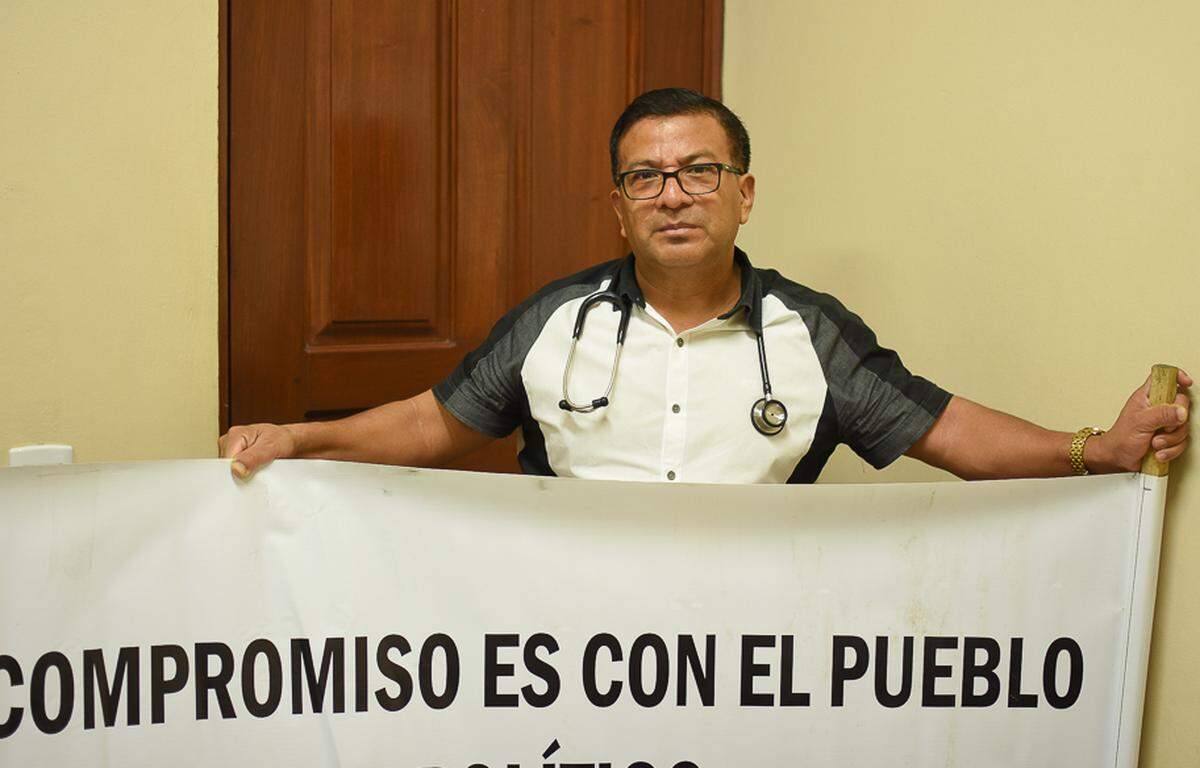
More than 700 doctors signed a letter in May denouncing the government’s response to the pandemic, asking it to stop persecuting healthcare workers who speak out about the virus and demanding to be allowed to use personal protective equipment.
Since then, 25 physicians who signed the letter have been fired arbitrarily and 75 healthcare professionals have died from COVID-like symptoms, according to the Unidad Médica Nicaragüense, an organization formed to protect doctors from political persecution. Others have been threatened with losing their medical licenses and having their labs and clinics closed.
By attacking anyone who challenges the government on the pandemic, the government has politicized the public health emergency, critics say, causing the response to fall along political lines that go back to the 2018 uprising against Ortega.
Then, communities around the country barricaded themselves off from police declaring independence from the state. The government used live rounds on crowds protesting changes to social security, and massive protests ensued, demanding Ortega step down. The result was a brutal crackdown in which military weapons and disproportionate force were deployed against largely peaceful protests. Protesters were incarcerated and charged with crimes like terrorism.
Now, members of the opposition say they continue to be persecuted as they denounce the government’s response to COVID-19. Others remain in jail, where the virus is spreading, on what activists and human rights groups say are fabricated charges.
Opposition organizations like La Alianza Cívica, initially formed to pressure Ortega to leave power, have used their voice to inform the public and call for a quarantine, even as the government continues to downplay the threat of the virus. The Unidad Médica Nicaragüense was formed when the government ordered doctors to deny treatment to injured protesters in 2018 and began firing those who did not comply. Now its members are providing telemedicine care for coronavirus patients and opponents of the government who fear going to public hospitals, and standing up for healthcare workers who say they are once again being persecuted.
“In 2018 when we started to organize and attend to the population that was being massacred by the government they began dismissals in retaliation for proper medical work,” the president of Unidad Médica Nicaragüense, Dr. José Antonio Vásquez, said. “Today we are once again asking for protection, and that is not a crime. It is an obligation.”
The Observatorio Ciudadano, a group run by Nicaraguan epidemiologists and other doctors, reports 7,893 suspected cases of COVID-19 in the country and 2,225 deaths as of July 8, while the Nicaraguan government reports 2,846 cases and 91 deaths.
The Pan American Health Organization, which reports numbers provided by the government, lists the official number of COVID-19 infections as 2,411 and 91 deaths. But PAHO has publicly said it does not believe Nicaragua’s official tally.
The Nicaraguan Ministry of Health did not respond to a request for comment, but there are signs the government is becoming more concerned about the pandemic.
Vice President Rosario Murillo announced last week that the July 19 celebrations of the Sandinista Revolution, normally a massive street party, would be held online, but did not say it was because of the coronavirus. The government is now releasing weekly updates on the virus in the country, though healthcare workers say they are still minimizing the number of cases. Mask use is becoming more accepted throughout the country and some hospitals have begun to allow masks if they are purchased by workers, but many still say they cannot protect themselves.
“We can’t open our mouths because they fire you. I can’t say I want a face mask because they are going to chase me out and I have two kids to take care of. This is a daily issue,“ said a healthcare worker who asked to remain anonymous because the last time she gave an interview with her name someone tried to destroy her husband’s car with acid. She and her husband were fired for criticizing the government and giving medical assistance to opposition protesters.
The opposition to Ortega’s rule continues to face systematic persecution from the government both in and out of prison, including in the response to the pandemic, which has left them in an even more precarious position.
“They want to take your rights and the human dignity that you have, take it and throw it in the ground,” Vásquez said.
Julio Montenegro, an attorney who has represented the most well-known political prisoners, said that while the focus in the country has shifted to the virus, the situation is worse than ever for the 85 political prisoners still behind bars.
More than 40 political prisoners have reported symptoms of COVID-19 to their families. They held a hunger strike at the end of May to demand safer conditions and access to protective equipment for the virus. The government let 2,815 prisoners free in May, but did not mention COVID-19 and said it was to commemorate Mothers’ Month. Not a single prisoner who was involved in the opposition was released, according to the opposition group Unidad Nacional Azul y Blanco.
“Seeing the type of person who is being let out onto the street, we question if some of them deserve these special conditions. Some of them committed grave crimes, including against women. ... As for the political prisoners, they haven’t even considered them,” Montenegro said.
Family members who try to send medical supplies like masks, hand sanitizer and acetaminophen to the political prisoners say the packets never arrive.
Karen Lacayo’s brother, Edward Enrique Lacayo, has been in prison since March 2019. She tried to get supplies to him when he reported that he had coronavirus symptoms but he said he never received the supplies.
Eventually she gave them to a family member of another prisoner who was not involved in the opposition. When the guards saw on camera that the prisoner had passed supplies to Lacayo, they confiscated them, she said.
“They don’t give my brother water. They don’t take my brother to get some sunlight. He looks yellow,” Karen Lacayo said. She manages to bring him some food packets when she visits once a week.
Karen Lacayo said her home remains surrounded by police and paramilitaries and she is often harassed in the street when police recognize her. She doesn’t recognize Ortega as her president and still believes in the opposition, despite the challenging circumstances presented by the pandemic.
.

After years of government repression and a weak economy, the country has been put in an impossible position by the virus, said Roberto Cruz, a former Sandinista soldier who quit to join the opposition against Ortega.
“People can’t think about organizing themselves politically when their heads are full thinking that you have to take care of your family, you have to protect them, you have to figure out how to stay alive during a pandemic because there are no security measures. You know that if you go to the hospital, you will die,” Cruz said. “Also, you can’t go out into the street to protest because you are afraid of being infected, and if you go out and protest, it is clear you will be taken prisoner. It’s a very sinister game.”
This story was originally published July 15, 2020 at 6:00 AM with the headline "Nicaraguan doctors say population now fighting two enemies: the government and COVID-19."