
The arts bring in big bucks
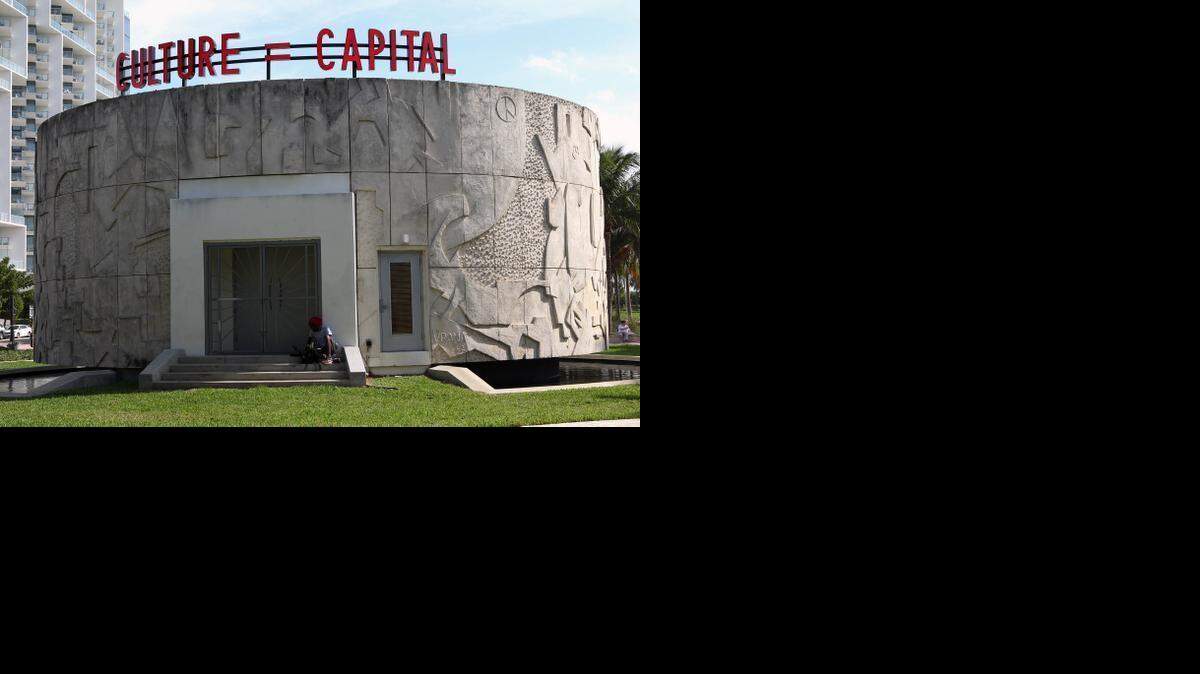
If you visited Miami Beach recently, you might have noticed the message “Culture = Capital” on top of the rotunda in Collins Park in front of the Bass Museum. It’s a work by artist Alfredo Jaar and was installed as part of Art Basel’s yearly public program.
The work likely was staged during Art Basel as a comment on the flagrant commercialization of art that takes place during the week of the art fair. But the work also got me thinking about how art has become an integral part of the South Florida economy and how it has helped drive local industry.
Earlier this year, much ado was made when the U.S. Bureau of Economic Analysis released its first study ever attempting to measure the value of artistic production in the country. The study determined that 4.2 percent of the country’s GDP, nearly $700 billion, was from creative industries, greater than other industries including construction, agriculture or tourism.
When O, Miami founder P. Scott Cunningham shared the results of the study on social media, he said what many local creatives wished they could tell local business leaders: “You’re welcome.”
The arts are sometimes denigrated and seen, by some, as unessential. But the arts are especially vital in Miami, and many fail to realize just how big of an impact they have on its economy.
In terms of dollars, nonprofit arts and culture organizations and their audiences produced more than $1 billion in direct spending according to the Arts & Economic Prosperity study by Americans for the Arts. This study also found that nonprofit arts and culture organizations in Miami-Dade County employ almost 30,000 workers.
According to the Beacon Council, the nonprofit arts economy employs nearly as many jobs as the top three private employers in Miami-Dade County combined, which include Baptist Health South Florida, University of Miami and American Airlines. It also amounts to about as many employees on the Miami-Dade County government’s payroll.
While our arts scene is much newer than others around the country, we’ve already become among the most prosperous arts communities in the United States. According to the aforementioned Arts & Economic Prosperity study, we have more economic output from nonprofit arts and culture organizations and audiences than Hawaii, Nebraska, New Hampshire, South Dakota, Delaware, and Wisconsin combined.
To put that into perspective, we have more economic output in the nonprofit arts community than the population of the 17 million in those states despite being home to only 2.5 million in Miami-Dade County.
While the direct impact of these arts nonprofits is significant, there is also the for-profit arts and culture industry, which includes commercial art galleries, live music and cultural events. While statistics on the for-profit arts and culture industry are difficult to find, Miami-Dade County Cultural Affairs director Michael Spring estimated that the direct economic impact behind both the commercial and nonprofit arts and culture industry is $2 billion.
While the measurable economic effects are significant, the arts have also driven up our cultural capital in a way that studies can’t capture. This community has helped reshape the image of Miami into a city that is perceived as cosmopolitan.
That has attracted new audiences to Miami, many of whom drop big bucks while visiting or even decide to move or make investments here.
If even just a small percentage of those visiting, moving to or investing in Miami are doing so primarily because of the arts community, the indirect economic impact would likely measure in billions of dollars on top of the more easily calculated direct impact. Greater Miami has done a remarkable job at fostering this artist community and now its reaping its rewards.
We must double down on this community to allow it to thrive. While many arts institutions in Miami are on the rise, they need to support of government, corporate sponsors and individual donors to continue their work and expand their horizons.
In addition, we must foster and patronize arts for-profits like art galleries and music venues that showcase local and national talents.
More important, we need to continue to foster the community culture that has allowed the arts to thrive and ensure that everyone who wishes to contribute the arts in Miami have the opportunity for success.
Because what’s good for the arts is good for our economy.
Ricardo Mor is operations and programs coordinator for the Miami Center for Architecture & Design.
This story was originally published February 4, 2015 at 5:43 PM with the headline "The arts bring in big bucks."