
Haiti must continue its push toward democracy with secure elections
It was a first step.
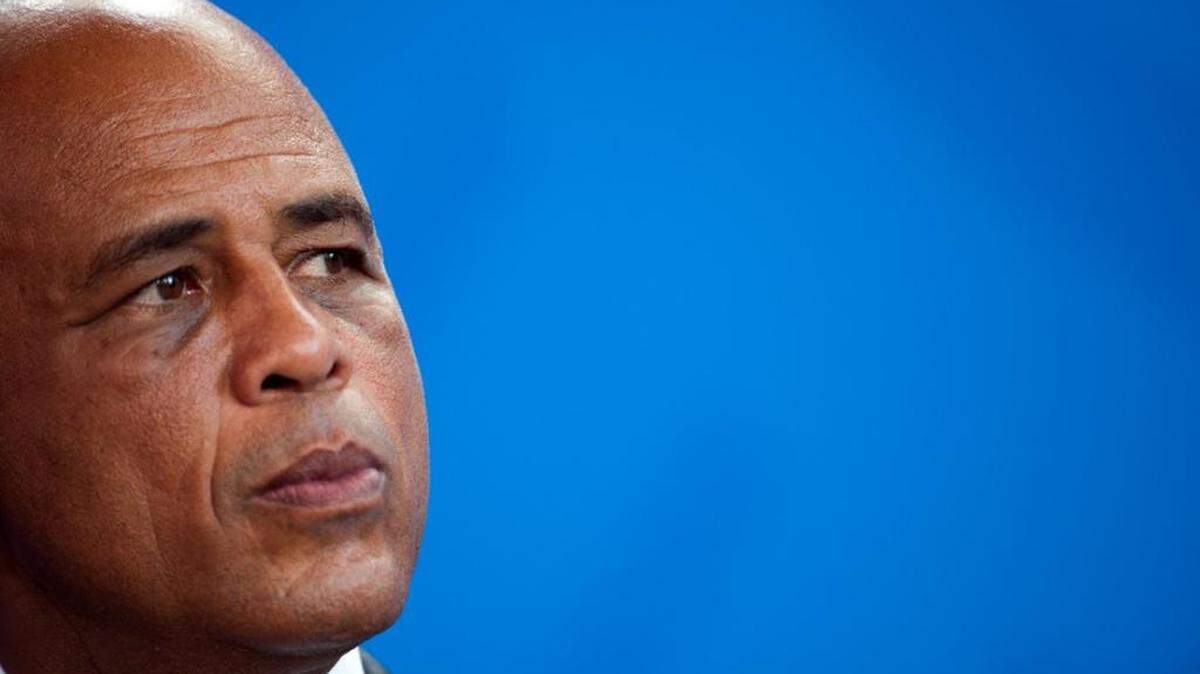
With the departure of Haiti’s President Michel Martelly on Feb. 7 and the handover of power to the president of the National Assembly, while the prime minister and his ministers remained in place, the worst was avoided.
However, it is essential to continue working toward a sustainable democratic solution to Haiti’s political crisis, which worsened following the suspension of the second round of voting in the presidential election on Jan. 24.
To that end, the OAS, at the request of Martelly, sent a working mission to support Haitians in their efforts to find workable possibilities. The OAS took on this role in a complex environment, a country that has suffered the gradual erosion of democracy, in which the work of the international community has not been the most efficient. In this setting, a system devoid of guarantees and transparency has grown.
This lack of transparency by some politicians, raising suspicions about illicit enrichment, gives rise to an atmosphere of mistrust in which false and unethical rumors predominate.
The initial reactions to the OAS mission were a good example, without trying to set aside the responsibility of the Organization for mistakes in the past.
Despite these difficulties, the mission, headed by Ambassador Ronald Sanders of Antigua and Barbuda, current chair of the OAS Permanent Council, held a broad and impartial dialogue with a variety of actors to allow the Haitian people to express themselves freely and legitimately on the subject of who should be their leaders.
Following up on the agreement signed on Feb. 6 by Martelly and the presidents of both legislative chambers, the formation of a representative and plural transitional government is moving forward with a transitional president.
The selection of a consensus prime minister by the president and with the approval of the National Assembly should put into action the recommendations of the electoral commission established by Martelly, which had a pluralistic composition of five members plus an observer designated by the executive.
The commission concluded that the electoral process should be improved and suggested the immediate implementation of a series of measures. Some were implemented; others were ignored and will have to be taken into account ahead of the upcoming elections set for April 24.
The legitimacy and sustainability of this transition government must be guaranteed by the participation and commitment of all political and social actors in Haitian society.
Political actors in Haiti must create spaces for dialogue. Without a dialogue among Haitians it will not be possible to build a much-needed long-term political agreement.
It is worth noting that the OAS deployed an Electoral Observation Mission (EOM) in Haiti since August 2015. On Aug. 9, the Mission observed the first round of legislative elections.
Next, on Oct. 25, three different elections took place: the first round of the presidential vote, the second round for the majority of the legislative elections and the first round of the municipal elections.
The EOM/OAS issued preliminary statements on the processes. Low levels of voter turnout, growing tension, polarization, violence and an excessive presence of party representatives at voting centers eroded the credibility of the electoral process.
The successive resignation of several of its members, including its president, is one of the factors that undermined the role of the Provisional Electoral Council (CEP) as an impartial body with the capacity to carry out and supervise the electoral processes under way.
For our part, the OAS General Secretariat and its Electoral Observation Mission adopted a professional and impartial position.
Our commitment to Haiti and its people will continue to be guided by the protection of political rights and the ultimate objective of contributing to the strengthening of electoral democracy as the only legitimate source of the democratic exercise of power.
The guarantee of civil and political rights is essential in this process. Unyielding opposition does not resolve political problems.
The social costs of this kind of policy are too great and keep countries frozen in the past, unable to move forward.
Luis Almagro is the secretary general of the Organization of American States.
This story was originally published February 13, 2016 at 11:13 AM.