
Don’t let lame-duck governors make future judicial appointments
Proposed constitutional amendments that make it onto the ballot through citizen petition drives often reflect Floridians’ priorities that their elected leaders have ignored. The class-size amendment and this year’s Water and Conservation Lands amendments are good examples.
Amendments proposed by lawmakers are very different. They can make it to the ballot with little or no fanfare. That is certainly the case with Amendment 3.
Haven’t heard of it? You are not alone. That in itself should be enough to convince you to vote No.
When Floridians are asked to change their state Constitution, it should be up to those who are asking for the change to make the case. The only arguments offered to date by the proponents of Amendment 3 do not withstand scrutiny.
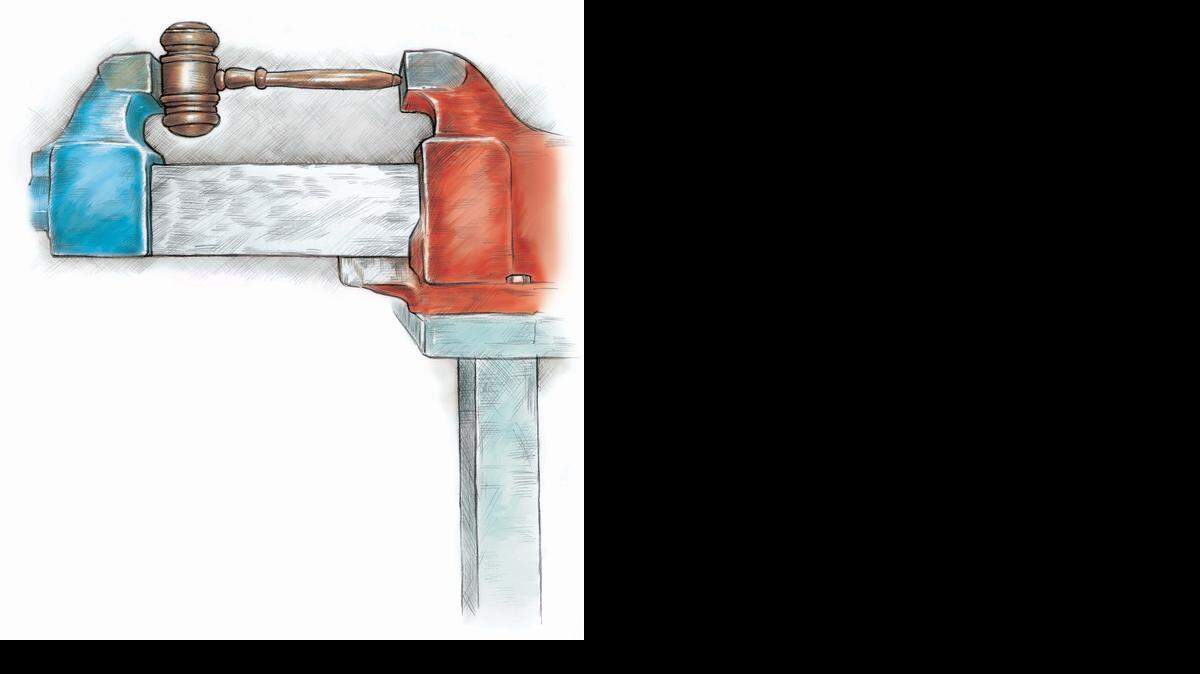
The scheme proposed in Amendment 3 boils down to this: It takes the power to appoint judges that, under current law, belongs to the governor who is in office at the time that the position on the court becomes open and opens the door for lame-duck governors in the future to stack the court on their way out the door.
It is just the latest in a series of outrageous proposals aimed at seizing partisan control over our fair and impartial courts. Despite strong and repeated rejection of legislators’ previous efforts, it sure seems like a case of “there they go again.”
The sponsors of Amendment 3 say they are trying to eliminate confusion and an imaginary future constitutional crisis in the delay of a new governor making the appointments. Don’t be fooled. This is not a simple clarification. It is a wholesale change from what our Constitution currently allows.
The Constitution is already clear on the question of when judicial vacancies occur resulting from judicial retirement. The three anticipated Supreme Court vacancies specifically targeted by the amendment occur in four years, and at the same time that the term of an outgoing governor expires. Of course appointments cannot be made until a position is vacant, hence the authority to name a replacement belongs to an incoming governor, not the governor whose term has ended.
In 2006, The Supreme Court was asked to provide an advisory opinion on the very question Amendment 3 claims to “clarify.” That opinion says that the Constitution is “clear and unambiguous” on the issue.
Legislative backers also argue the amendment is needed to avoid the potential “crisis” of lengthy vacancies that could potentially result from the simultaneous retirement of three Supreme Court justices. While this is the first time three justices will leave the court on the same day, there have been several instances of two simultaneous retirements — without any hint of crisis.
Just as the Senate is governed by the Senate Rules and the House is governed by the House Rules, the Court has rules in place that have provided for the timely and orderly replacement of retiring justices and other Florida judges for more than four decades. If there are delays in an appointment, as there have frequently been, the chief justice has long used several options for ensuring the work of the court moves forward without interruption. The chief justice has the authority to either extend the service of a retiring justice until the appointment is made, or the chief can appoint a temporary replacement from other sitting judges.
Both alternatives have been utilized repeatedly over the years to provide for smooth transitions. This history proves any alleged crisis of delay in processing the court's cases is a false threat. Further, rather than averting an imaginary disaster, what Floridians are really being asked to eliminate is a critical element of accountability that was built into our system for selection and retention of judges based solely on merit.
In addition to requiring appointed judges to go before the public for merit retention at regular intervals, the governor is accountable for his appointments. That accountability vanishes if governors leaving office are allowed to make appointments for future openings.
Floridians across the political spectrum have consistently agreed on the importance of keeping partisan politics out of our courts. Voters need to send that important message again this November, by voting No on Amendment 3.
Former Florida Senate Majority Leader J. Alex Villalobos served in the Florida Legislature from 1992 to 2010.
This story was originally published October 18, 2014 at 3:00 PM with the headline "Don’t let lame-duck governors make future judicial appointments."