
Father a man of ‘prophetic vision’
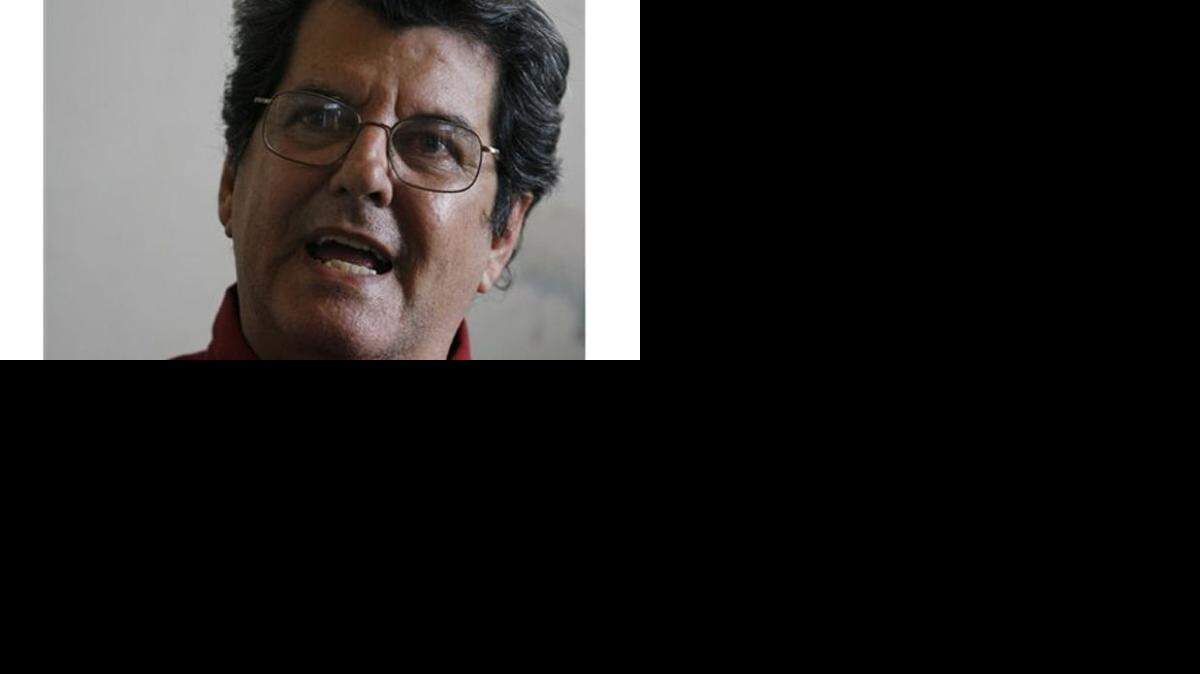
Ángel Carromero, the secretary general of the Madrid regional branch of the Spanish People's Party's youth organisation Nuevas Generaciones, drove the car that lost control and ended up in a ditch, killing Cuban dissident Oswaldo Payá. He has recently published a book, Death Under Suspicion. The following is an excerpt from the book’s prologue by Payá’s daughter, Rosa María Payá Acevedo.
My father was the most generous man I ever knew. Also the happiest. I know that any child feels it is her right to praise her father. I hope, however, that in my case I can allow myself to do so without embarrassment.
My father dedicated his efforts to securing opportunities for happiness for his fellow citizens. Many ask us about our childhood, about the difficulties of growing up in a family marked by confrontation with a totalitarian regime.
I realized that my parents’ desire was that, in those times of the greatest shortages of my childhood, we not feel the rigor of everyday life. And I realize how ignorant I was of our reality. It was normal for me that there was less than three ounces or so of bread each day for each member of the household. “Normal” in those conditions was impossible, as in a state of war. I have only happy memories of this time. And extraordinarily beautiful memories of my parents.
When my father was 17, he was sent to do his military service in a punishment camp. The people in the camp were sent there for being Christians — as in his case — hippies, homosexuals or writers, anyone with an alternative way of expressing themselves, even if it wasn’t political. They were considered social scum. The suffering he witnessed there, the friends and experiences of those three years, marked the man that he was.
Always an optimist and a risk taker, he founded a movement, the Christian Liberation Movement, that was based, and is based, on Christian humanist values and that has as its objective to lead the country toward democracy. He designed a peaceful and potential solution for all Cubans. Today, it is the hope and strategy of many of us who are working for democracy.
“The cause of human rights,” my father insisted, “is a single cause, as there is only a single humanity.” If today we speak of globalization, we announce that if solidarity is not globalized, not only are human rights in danger but the right to be human is in danger. Without human solidarity, we cannot preserve for ourselves a healthy world where life is possible for human beings.
My father’s prophetic vision transcends the borders of the country, He saw, in time, the threat to democracy throughout Latin America by the Cuban government. He saw the strategy of the group in power in Cuba to preserve its privileges, its control, its money, at whatever cost. A strategy that my father unmasked and called “fraud change.” It is manifest in the reforms of recent years that concede some permissions or privileges to some citizens, but that do not recognize the rights of all. Reforms that serve as an excuse for those who, in the name of their economic interests, try to justify the totalitarian regime in Havana.
Power believed it was necessary to destroy my father. He maintained the difficult combination being the manager of a possible democratic solution and of maintaining firm position in the face of the regime and its accomplices trying to hold on to their power.
Not only did the Christian Liberation Movement, the opposition as a whole and my father himself, represent an alternative to the political indecency in power in Cuba, but they are determining factors in the decisions of his executioners.
While the Cuban government was trying to consolidate its “fraud change” to remain in power for several more years, my father made it impossible. What would the consequences have been of having a leader like Oswaldo Payá traveling, collecting international support throughout the world or being forbidden to leave — clear evidence of the fraud of the travel and immigration reform of 2013?
Vaclav Havel had died four months earlier. My father and Aun San Suu Kyi sent condolence videos as a posthumous tribute. My father and the leader of the Velvet Revolution had become friends in Prague 10 years earlier, on the second occasion that the Cuban government had allowed him to leave Cuba. They maintained an almost intimate correspondence, which will be published. It enriches the soul and opens an understanding about the reality of the perversities of totalitarianism and the solutions these two friends talked about.
Havel, almost alone among the politicians at his level, maintained a firm and sincere position against the regime in Havana. I do not think it is coincidental that the Cuban government made a definitive attempt on the life of my father only after the death of the former Czech president. One thing I know for sure: The Cuban repressers would not have given the order for the attack if the democratic centers of the world, both in Europe and America, had not been looking the other way.
Like the Cuban people, they left my father on his own.
This story was originally published October 10, 2014 at 7:50 PM with the headline "Father a man of ‘prophetic vision’."