
Our Recommendation: Charlie Crist for governor
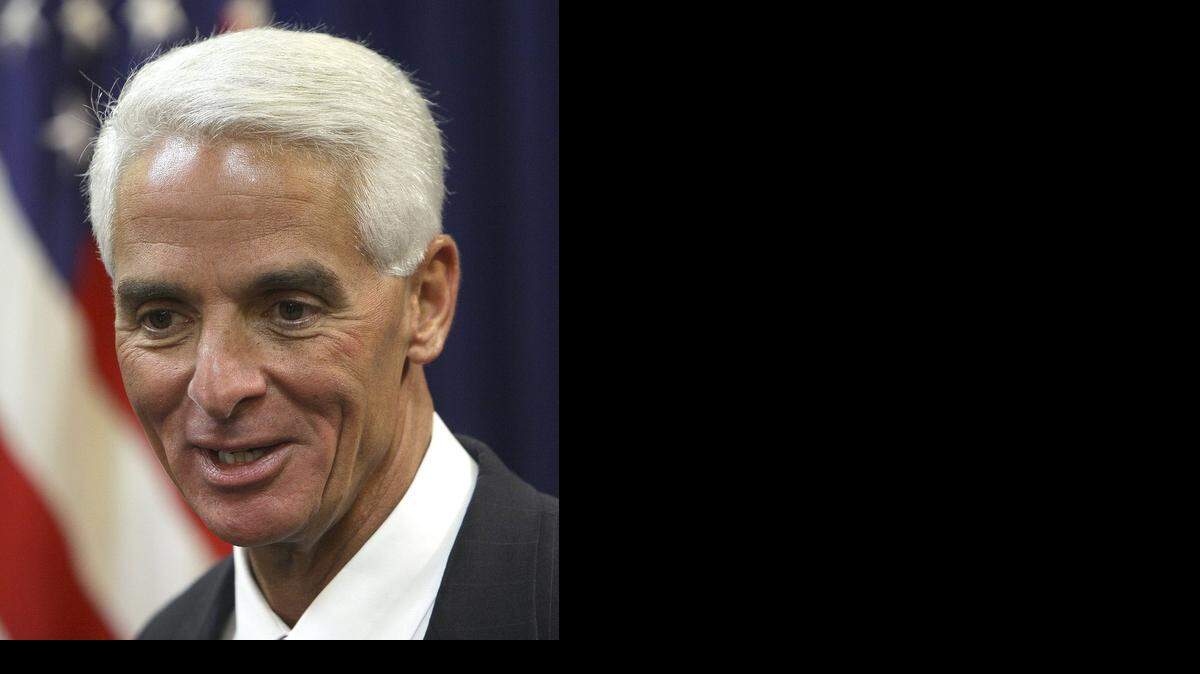
Rick Scott and Charlie Crist have done such a good job of tearing each other down in the campaign for governor that voters may be tempted to conclude they’re equally flawed and undeserving of victory. That would be wrong. The candidates take a markedly different approach to open government, have contrasting records on the economy, and they’re polar opposites on defining issues for the future of Florida.
THE ECONOMY
When it comes to the all-important issue of jobs, Mr. Crist could learn from the current governor. Mr. Scott has actively wooed new businesses and jobs to Florida. He saw job creation as his priority from Day One and has never lost focus. He’ll move heaven and Earth to keep a Florida business from moving elsewhere.
In contrast, as governor Mr. Crist rarely bothered to get deeply involved in such matters and did not have the contacts in the business world that Mr. Scott does, nor the experience. Such a dismissive attitude would be unacceptable should Mr. Crist win a second go in the governor’s mansion — it would do long-lasting damage to Florida’s economy and its long-term chances of emerging as a global powerhouse.
Mr. Scott understands that Florida competes not just against other states for business — a hard-charging Georgia, for instance — but globally. Panama, for example, is a fierce competitor when it comes to attracting new business to the hemisphere.
Does Gov. Scott deserve credit for the turnaround in the Florida economy? Not completely, but it happened under his watch and that gives him boasting rights. If Mr. Crist retakes the office, he’ll have to do a far better job of reaching out to the business community, listening to its concerns, deftly addressing them and ensuring that Florida remains open for business. After all, private enterprise, not government, is Florida’s prime job creator.
TRANSPARENCY
Barely in office one month, Mr. Scott announced his first budget at a tea party rally in Eustis in February 2011. That was a clue that he failed to understand that he was governor of all the people. He has improved since then, but not much. Public appearances are scripted and tightly controlled. He likes to stick to talking points and often won’t answer questions. And he still hasn’t shown the common touch, a heartfelt connection to Floridians and their day-to-day concerns and expectations.
He has ignored the state’s open-government tradition and transparency rules. His lawyers are suing Google in an effort to bottle up private e-mails that may have been used to conduct state business. He won’t talk about his out-of-state travels and he won’t release details of a secret hunting trip to the King Ranch in Texas indirectly paid for by U.S. Sugar. The governor has yet to realize that he is no longer the CEO of a private corporation — he is a public servant.
Mr. Crist, a native Floridian who’s held a variety of statewide offices, has rarely run afoul of transparency laws. His response to tough questions can be slick and lawyerly, but he’s not afraid to talk to the press.
THE ISSUES
▪ In his first year in office, Mr. Scott abolished the state’s growth-management agency, which speaks volumes about his devotion to environmental issues. He still won’t acknowledge the reality of global warming and the need to devise effective policies to combat it. Mr. Crist was endorsed by the Sierra Club for his own actions to protect the environment, including an effort to stop the building of new coal-fired plants.
▪ Mr. Scott is just fine with the dangerous Stand Your Ground law, and appointed a task force to examine the issue and give him the result he wanted — Nope, this law doesn’t need tweaking at all. Mr. Crist, however, realizes that it needs to be fixed before more people use it to commit homicide and walk away without punishment.
▪ Mr. Crist favors accepting $51 billion from the federal government to expand Medicaid to give some 1 million Floridians medical coverage. Mr. Scott was against it, then for it, but never lifted a finger to get the Republican-led Legislature to approve it.
▪ Mr. Scott slashed funding for K-12 public education in his first year in office by $1.3 billion. He’s restored some of those cuts, but per-pupil spending is still $200 less than under Mr. Crist in 2007.
There are many other troubling issues in Mr. Scott’s record: He signed laws (since rejected by the courts) requiring drug testing for welfare recipients and some state employees. He rejected $2.4 billion in federal aid to build a high-speed train in Central Florida. And he signed laws designed to suppress the black vote.
Neither one of these candidates is perfect. Mr. Crist has had to defend his political migration from Republican to Democrat, his current support for same-sex marriage and his pro-choice stance against charges of political expedience. However, Mr. Scott stood firm against in-state tuition for young undocumented students before changing his mind this election year. The governor was four-square behind the Common Core curriculum, then wasn’t, claiming federal overreach — instead of the tea party’s tap on his shoulder.
Mr. Crist’s record on the issues, his record as a moderate — even as a Republican — and his undoubted devotion to the state of Florida give him a clear edge. For governor of Florida, the Miami Herald recommends CHARLIE CRIST.
This story was originally published October 17, 2014 at 6:20 PM with the headline "Our Recommendation: Charlie Crist for governor."