
What climate change? As South Florida sizzles, DeSantis chooses denial with new law | Opinion
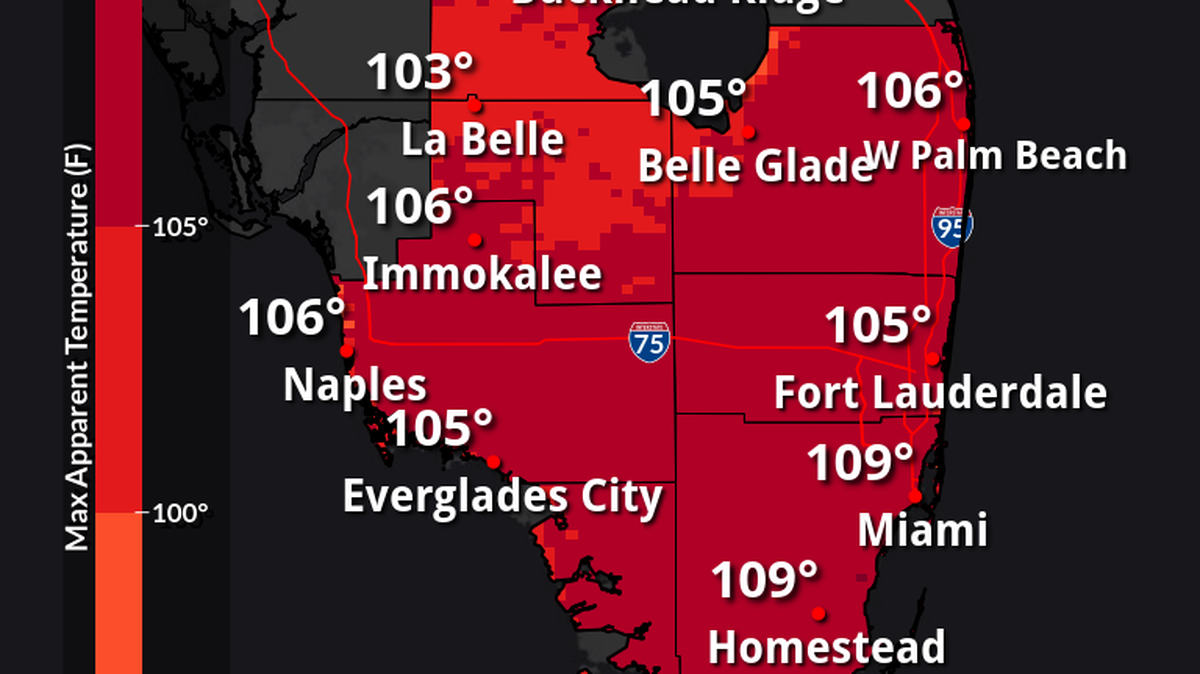
This month has already proven be one for the records — the hottest May ever documented in Miami, based on the heat index, a “feels like” measure that accounts for temperature and humidity. The index this past weekend peaked at a staggering 112 degrees, the Herald reported Tuesday.
The extreme weather has been the result of a perfect storm of fewer clouds, moist air coming from the southwest and the air sinking and warming, an occurrence known as a high pressure ridge, the Herald reported. Last summer’s unbearable temperatures were influenced by the El Niño phenomenon.
But scientists have made it clear: climate change is making these record-high temperatures and hotter summers more common. The whole planet has gotten warmer.
As Miami-Dade County takes the lead by planting more tree canopies (though that’s not going as planned, as the Herald reported) and having conversations about a green sustainable future, Florida has knee-capped many of those efforts, as well as efforts to deal with some effects of climate change.
Gov. Ron DeSantis signed legislation this year that prohibits local governments from passing heat protections for outdoor workers.Another bill he signed last week deletes most references to climate change from state law, among other things.
Ironically, both laws will go into effect this summer, on July 1, while many of us brace for another season of potentially sweltering temperatures and the possibility of farm workers dying from excessive heat, as it reportedly happened in 2023.
To give the governor credit, the state has invested millions of dollars in sea-level and flooding resilience projects and he even appointed a chief resilience officer. But Florida ignores that the long-term solution is to reduce carbon emissions, though we recognize that it takes more than one state to accomplish that.
House Bill 1645 removes the word “climate” from Florida statute in nine different instances, limits renewable energy production and likely expands the use of fossil fuels, according to the CLEO Institute. The legislation bans offshore windmill turbines and relaxes regulations of natural gas pipelines.
In some cases, the bill’s deletions of climate change seem innocuous. In others, those deletions are more far-reaching.
For example, Florida statute used to read: “The Legislature finds that... the impacts of global climate change can be reduced through the reduction of greenhouse gas emission.” That was removed and replaced with: “The purpose of the state’s energy policy is to ensure an adequate, reliable, and cost-effective supply of energy for the state...”
In some ways, the new law is a symbolic move that Florida is “rejecting the agenda of the radical green zealots,” as DeSantis said last week. The state, for example, doesn’t attract much wind energy investment because of its lower wind speeds. Therefore, the practical effects of the HB 1645 might be minimal — though it could stifle future innovation if wind energy becomes more feasible in the state, the Times/Herald Tallahassee Bureau reported.
House Bill 1645 is as much about energy policy as it is about using climate change to launch culture wars as DeSantis fights to stay relevant ahead of a potential presidential bid in 2028. Yet the consequences of a warmer planet are not in some hypothetical dystopian future.
Florida has always been vulnerable to hurricanes, but, thanks to warmer ocean waters, there’s evidence they are intensifying more quickly. A warmer ocean also prompted an unprecedented coral reef die-off last year, the Herald reported.
According to NASA: “Due to global warming, global climate models predict hurricanes will likely cause more intense rainfall and have an increased coastal flood risk due to higher storm surge caused by rising seas.”
Florida is already dealing with a property insurance crisis as premiums skyrocket and homeowners are dropped by their insurers. Our state leaders would rather ignore how “more intense rainfall” and “increased coastal flood,” especially in places like Miami Beach, could make that crisis worse.
Climate change denial — and the politicization of this real problem — has made inaction acceptable. How much longer can we pretend reality isn’t happening before living in Florida becomes too unbearable?
Click here to send the letter.
BEHIND THE STORY
MOREWhat's an editorial?
Editorials are opinion pieces that reflect the views of the Miami Herald Editorial Board, a group of opinion journalists that operates separately from the Miami Herald newsroom. Miami Herald Editorial Board members are: opinion editor Amy Driscoll and editorial writers Isadora Rangel and Mary Anna Mancuso. Read more by clicking the arrow in the upper right.
What's the difference between an op-ed and a column?
How does the Miami Herald Editorial Board decide what to write about?
The Editorial Board, made up of experienced opinion journalists, primarily addresses local and state issues that affect South Florida residents. Each board member has an area of focus, such as education, COVID or local government policy. Board members meet daily and bring up an array of topics for discussion. Once a topic is fully discussed, board members will further report the issue, interviewing stakeholders and others involved and affected, so that the board can present the most informed opinion possible. We strive to provide our community with thought leadership that advocates for policies and priorities that strengthen our communities. Our editorials promote social justice, fairness in economic, educational and social opportunities and an end to systemic racism and inequality. The Editorial Board is separate from the reporters and editors of the Miami Herald newsroom.
How can I contribute to the Miami Herald Opinion section?
The Editorial Board accepts op-ed submissions of 650-700 words from community members who want to argue a specific viewpoint or idea that is relevant to our area. You can email an op-ed submission to oped@miamiherald.com. We also accept 150-word letters to the editor from readers who want to offer their points of view on current issues. For more information on how to submit a letter, go here.