
Floridians will likely lose money with DeSantis’ anti-ESG stance, but he’ll still win | Opinion
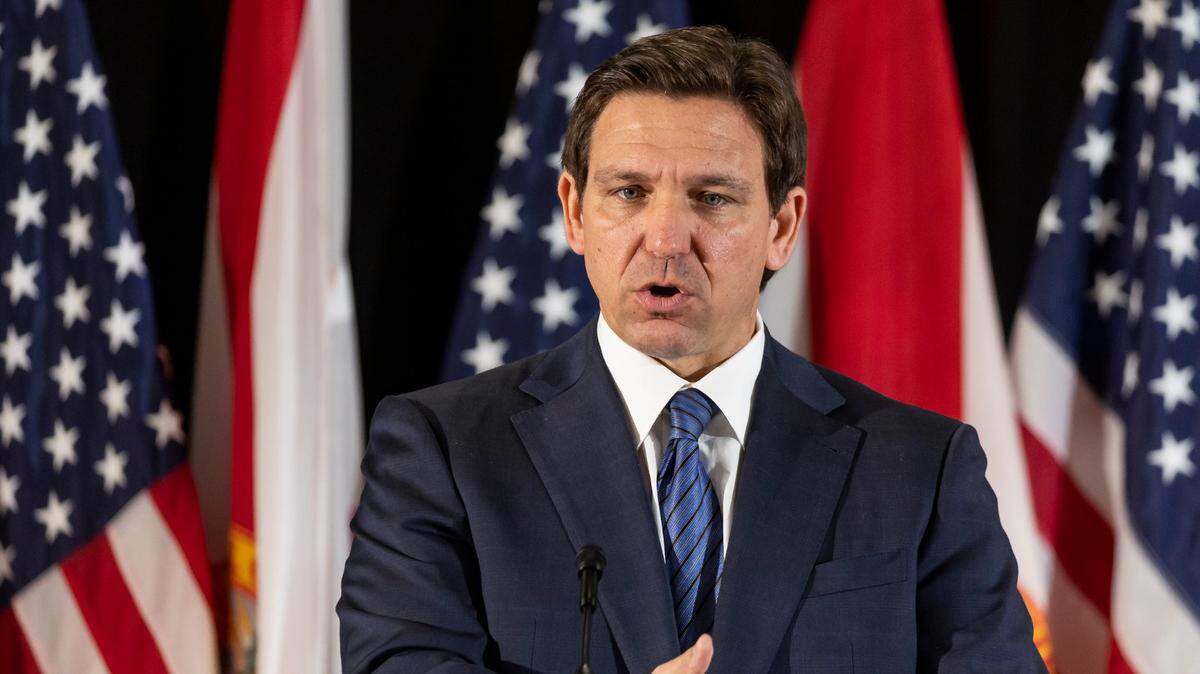
Gov. Ron DeSantis has picked so many fights over “woke,” it’s hard to to keep them all straight, from schools and books to diversity training and Disney.
But his recent assault on companies that use environmentally and socially conscious factors, or ESG, to make investments is exceptionally nonsensical. This one stands to harm Florida pensioners and taxpayers across the board. Lawmakers know that. And yet the idea is gaining traction in Tallahassee.
Under consideration right now in the Legislature: a proposal, in HB 3 and SB 302, to ban local governments and government entities from investing in funds or purchasing bonds based on social, political or ideological interests. It’s an expansion of last year’s ban, pushed by the governor, on the state’s pension fund considering “social, political or ideological interests” when making investment decisions.
Winning strategy
Republicans are attracted to the idea of publicly smacking down “activist companies.” It’s a proven winner for them, virtually a victimless crime from their perspective — who will cry for a multi-national? — that will bear fruit in the ballot box, as they wave their woke-warrior credentials.
The ESG fight has become a national theme for the GOP, but no one has embraced it more than DeSantis, who wrote about the idea in his latest book and seems determined to take the whole thing on the road when (we assume) he officially hits the campaign trail for the Republican nomination for the presidency.
His take, as reported by Fox Business: “ESG provides a pretext for CEOs to use shareholder assets to target issues like reducing the use of fossil fuels and restricting Second Amendment rights. It is, in effect, a way for the political left to achieve through corporate power what they cannot achieve at the ballot box.”
As usual, DeSantis is taking a nugget of suspicion or unfocused anger and turning it into a battle he can capitalize on. You feel victimized and upset? Big business is the problem. Don’t for a second think that DeSantis and his ilk — including Congress — should be the focus of voter fury.
This is, of course, another distraction, like so many of the culture-war issues that DeSantis has targeted along with the Legislature. It’s much easier to take potshots at big companies than it is to tackle the truly hard stuff closer to home — like making sure people can actually afford to live in this state.
Property insurance rates are still sky high. A whole bunch of people are likely to be pushed off the Medicaid rolls. The seas are rising, hurricanes are stronger and there’s a huge blob of seaweed menacing the coastline. But, by all means, let’s have the governor of Florida focusing his attention on “activist companies.”
Like his mentor, Donald Trump, DeSantis is gaslighting the people. Under the pretense of taking politics out of investments, this move would actually do the opposite. Under the guise of preserving capitalism, it would restrict capitalism. It’s a political stance that, if we look at other states that have taken similar steps, is self-defeating.
Other states
As the Miami Herald reported, other states that have put in place similar restrictions to the ones under consideration in Florida have seen negative effects on state finances. In Texas, the state banned municipalities from doing business with banks that have ESG policies against fossil fuels and firearms only to see an increase of $303 million to $532 million in interest payments.
In Indiana, the pension system estimated that its anti-ESG policy will cost pensioners $6.7 billion over the next decade. In Kansas, the ESG ban will cost the pension system an estimated $3.6 billion.
The Kentucky pension system refused to impose an anti-ESG policy because pensioners would lose money. The Kentucky Bankers Association sued the state attorney general over the policy.
Dwight Mattingly, of Hobe Sound, a pension trustee with the Florida AFL-CIO, has warned that Florida’s bill seems to fly in the face of what those entrusted with investments are supposed to do: Make money.
“When this bill prohibits an ESG bond, then it seems to be saying to us that we can’t purchase that even though that bond may have a greater return,” he said.
Does that sound anti-free market to anyone else?
It’s a stunning turnaround for Republicans, who have long said the cure for pretty much everything was to let the free market do its thing. Maybe DeSantis should ask the people who are invested in the state pension system if they are anti-ESG. We’re betting they’d say they want the government to butt out and let the companies give them highest return on their investment, ESG or no ESG.
What is value?
Mark McNees, a professor at Florida State University’s Jim Moran College of Entrepreneurship, wrote in an opinion column in the Miami Herald in February that assessing which companies to invest in isn’t just a matter of profits, especially in the immediate term. It’s about looking at the whole company and any factors that might affect it in the future.
Assessing risks is part of the equation — things like supply-chain vulnerability, competition, scandals, environmental factors and cultural shifts. They can “dramatically impact a company’s bottom line. Just ask the investors who lost billions of dollars because the leadership of Blockbuster, Sears, BP, VW and Blackberry did not identify the risks these companies were facing,” he wrote.
Well, yes. So why again do we think we should stop investing in companies that look at social and environmental and governance factors, if doing that can avoid disasters like those? That’s like saying we should stop them from looking at the world they operate in. It makes zero sense. And it’s likely to cost Floridians.
This issue, like so many that the GOP has brought to fore recently, is about nurturing resentment. It takes general discontent about the outsize role that big companies have in the world today, which many people share, and turns it into a crusade in which “woke” is the enemy. Trump, with his “you’re-fired” reality show background, exploited people’s fears with great cunning.
If that’s the measure, DeSantis is his worthy successor.
BEHIND THE STORY
MOREWhat's an editorial?
Editorials are opinion pieces that reflect the views of the Miami Herald Editorial Board, a group of opinion journalists that operates separately from the Miami Herald newsroom. Miami Herald Editorial Board members are: opinion editor Amy Driscoll and editorial writers Isadora Rangel and Mary Anna Mancuso. Read more by clicking the arrow in the upper right.
What's the difference between an op-ed and a column?
How does the Miami Herald Editorial Board decide what to write about?
The Editorial Board, made up of experienced opinion journalists, primarily addresses local and state issues that affect South Florida residents. Each board member has an area of focus, such as education, COVID or local government policy. Board members meet daily and bring up an array of topics for discussion. Once a topic is fully discussed, board members will further report the issue, interviewing stakeholders and others involved and affected, so that the board can present the most informed opinion possible. We strive to provide our community with thought leadership that advocates for policies and priorities that strengthen our communities. Our editorials promote social justice, fairness in economic, educational and social opportunities and an end to systemic racism and inequality. The Editorial Board is separate from the reporters and editors of the Miami Herald newsroom.
How can I contribute to the Miami Herald Opinion section?
The Editorial Board accepts op-ed submissions of 650-700 words from community members who want to argue a specific viewpoint or idea that is relevant to our area. You can email an op-ed submission to oped@miamiherald.com. We also accept 150-word letters to the editor from readers who want to offer their points of view on current issues. For more information on how to submit a letter, go here.
This story was originally published April 7, 2023 at 7:44 PM.