
Democracy in peril
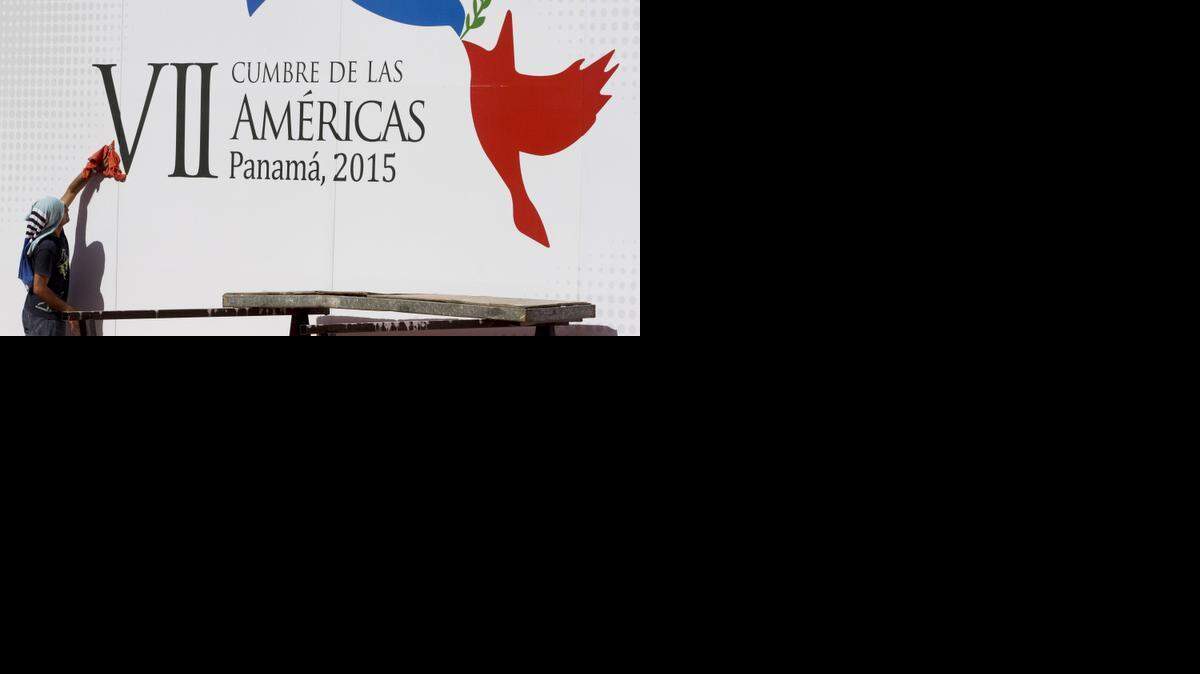
Twenty years after the first Summit of the Americas was held in Miami amid bright hopes that a new era of prosperity and democracy was about to emerge, it has become depressingly evident that the dream has been thwarted. Look no further than this week’s seventh gathering of 35 regional heads of state in Panama for proof.
After the last gathering in Cartagena in 2012, the summit process seemed to be on its last legs, much like the Organization of American States, under whose aegis the summits are held. Three presidents spurned the meeting, and two others left before it was over. Those who remained couldn’t agree on a final declaration. The summit was deemed a failure.
This year, President Obama dared to hope that the United States could keep the meeting from turning into the usual gripe session over U.S. foreign policy in the Western Hemisphere by making a dramatic change in policy toward Cuba.
Cuba’s advocates had long championed its inclusion in what was supposed to be a club of democracies as a way of displaying their independence from the United States, ignoring the total absence of political freedom in Cuba. This year, they will get their way: Raúl Castro will be in attendance as Cuba makes its first appearance at the summit. Chalk up one victory for regional “solidarity” and one setback for democracy.
Still, it was hoped that the agreement to establish full diplomatic relations between the United States and its long-standing adversary would lance the boil that had long been an irritant in U.S.-Latin American relations so that participants could address the region’s real common problems. These include poor education systems, stagnant growth, weak judiciaries, horrible crime rates in some countries, drug trafficking and the strangling of democracy in countries such as Nicaragua, Bolivia and, especially, Venezuela.
Instead, some countries are falling back into their anti-American comfort zone, bemoaning the recent U.S. decision to sanction seven Venezuelan officials and, along the way, adopting statutory language that requires declaring a country a threat to U.S. security in order to take such action. The focus on President Obama’s interaction with Castro and Venezuelan President Nicolás Maduro threatens to take the spotlight away from a common search for regional solutions to its many challenges.
As Herald columnist Andres Oppenheimer reports today, Venezuela is prepared to ask for a formal, region-wide condemnation of the United States. The gambit may well fail, as it should, but it shows that Venezuela recognizes the enduring appeal of anti-American rhetoric at these summits.
Even some who should know better, such as Colombian President Juan Manuel Santos, are eager to show their “solidarity” with Venezuela at the expense of democracy. Mr. Santos told Herald correspondent Jim Wyss in response to written queries that the U.S. sanctions were “counter-productive,” conveniently ignoring that they represent an appropriate and narrowly tailored response to abusive practices by the Maduro regime against political opponents.
Mr. Obama should deliver a robust defense of democracy at the summit and appeal for support from those nations that want to move forward, rather than backward to the days when democracy in the region was a distant dream. The member countries of the OAS need to decide once and for all whether they value freedom more than they value solidarity and knee-jerk anti-American rhetoric.
This story was originally published April 8, 2015 at 6:50 PM with the headline "Democracy in peril."