
Public Service Commission to decide whether FPL can charge more for fracking
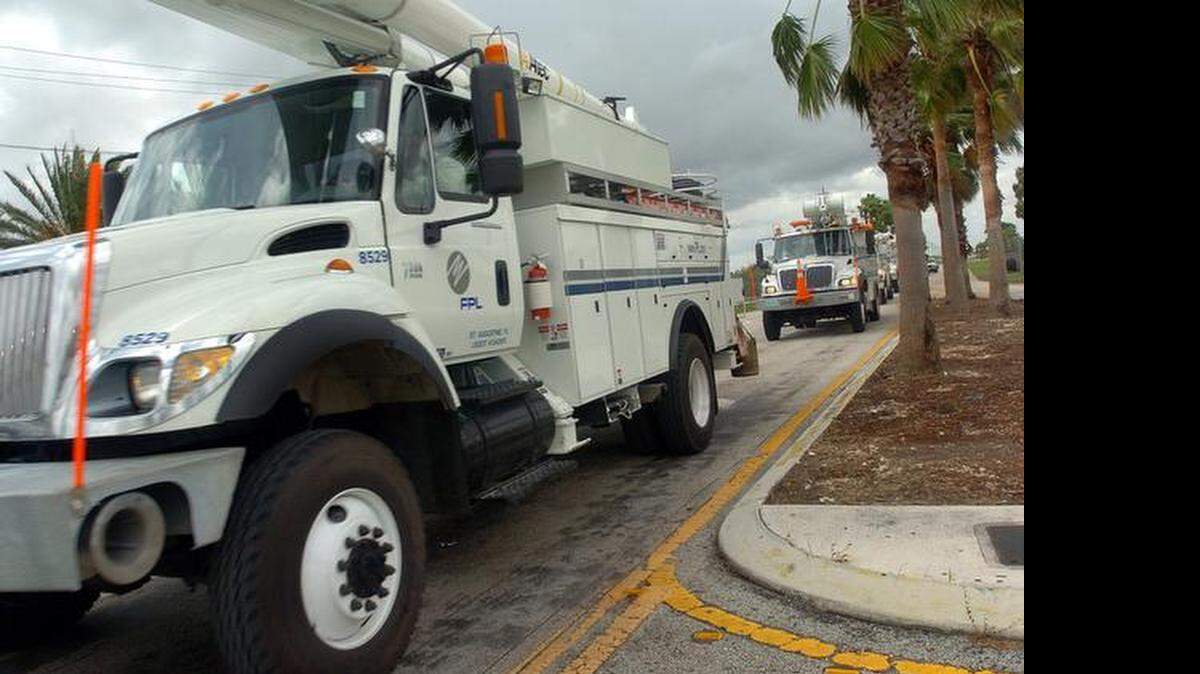
State utility regulators will decide Thursday whether Florida Power & Light’s 4 million customers — or its shareholders — will finance the company’s expansion into oil and natural gas reserves.
The Florida Public Service Commission gave the company approval to get into the controversial fracking business in December. It now must decide whether to approve guidelines proposed by FPL that would let the company spend up to $750 million a year more on gas exploration without regulatory approval.
In a rare pushback to the powerful utility, PSC staff members recommended against having customers foot the bill for the untested venture.
Their argument: the success of FPL’s natural gas exploration — including gas fracking and “wildcatting” in untested territories — is risky because it depends on the ability of the state’s largest utility to do something no utility company has ever done at a time when natural gas prices are volatile.
“The distribution of benefits to FPL and its customers is not equitable,” the staff concluded. While customers have to wait decades to see any drop in fuel costs resulting from the investment, there would be an immediate benefit to the company and its shareholders because it would “grow earnings” by expanding the rate base.
FPL counters that the risk is worth the reward.
“The guidelines we proposed are designed to enable us to take advantage of future opportunities to obtain more essential clean natural gas directly from the source, generating additional savings for our customers and helping protect them from the risk of fuel market volatility,’’ said Mark Bubriski, FPL spokesman.
He also argues that the average FPL customer already pays less than the national average and the cost of the oil and gas exploration will be paid back over 30 years.
Opposing the FPL request is the Office of Public Counsel, which represents the public in utility rate cases, as well as the Florida Industrial Power Users Group, the Florida Retail Federation and several environmental groups.
If the PSC agrees with its staff, it would be the first time in recent years that the five-member panel has sided against FPL on an issue that was opposed by the Office of Public Counsel and others groups representing ratepayers. Each of the commission’s five members was appointed by Gov. Rick Scott and, during that time, the panel has consistently sided with the utility giant in high-profile cases.
In December, the PSC gave FPL the green light to enter into a $191 million joint venture with PetroQuest Energy of Oklahoma to conduct gas exploration and fracking on what is known as the Woodford project. Hydraulic fracking is a technology that involves injecting large volumes of water, sand and chemicals at high pressures to release oil and natural gas from rock caverns deep underground.
Utility companies are allowed to pass along all of their fuel costs to customers but are obligated to try to hedge the impact of fluctuating prices. FPL argues that because it purchases more natural gas than any other utility in the nation, it has an economic interest in finding ways to reduce the impact of the volatile natural gas costs.
But the project also benefits the company’s bottom line.
If the PSC approves the guidelines, FPL can increase the size of its rate base by $750 million a year and therefore increase the amount of its profits. As an investor-owned utility, FPL is allowed by the PSC to earn a return on investment of 10.25 percent of its rate base.
Traditionally, the company has had to prove that it needs a new power plant, a refurbished power plant or other high-cost capital items to increase the size of its rate base, but if state regulators allow FPL to pad its rate base with $750 million more a year, FPL and its parent company, NextEra, are guaranteed higher profits.
The PSC staff noted that the request may be “intended more for NextEra’s corporate diversification rather than to produce fuel savings for customers or reduce fuel price volatility.”
Opponents say this is another example of FPL placing the risk for new ventures on customers while shielding its bottom line.
“If FPL’s corporate parent, NextEra Energy, wants to get into the volatile, competitive oil and natural gas business with shareholder funds, so be it; FPL should not use ratepayer funds to do so,” said Jon Moyle, lawyer for the Florida Industrial Power Users Group.
In March, the Woodford project began producing natural gas for the company’s power plants, Bubriski said, and projections are that FPL customers will save $50 million to $100 million over the next 30 years — one to two cents a month for the average 1,000-kilowatt-hour bill.
But FPL can’t yet show that there has been a savings from the investment.
According to FPL experts, customers would break even on the Woodford project if the price of natural gas was higher than $3.50 per million BTU, but since January, natural gas prices have been 50 cents to 65 cents lower. If natural gas prices are lower than projected, ratepayers lose money on the venture.
Mary Ellen Klas can be reached at meklas@MiamiHerald.com. Follow her on Twitter @MaryEllenKlas.
This story was originally published June 17, 2015 at 5:54 PM.