
Guantánamo ‘experiment’ didn’t break hunger strike but gets judge’s attention
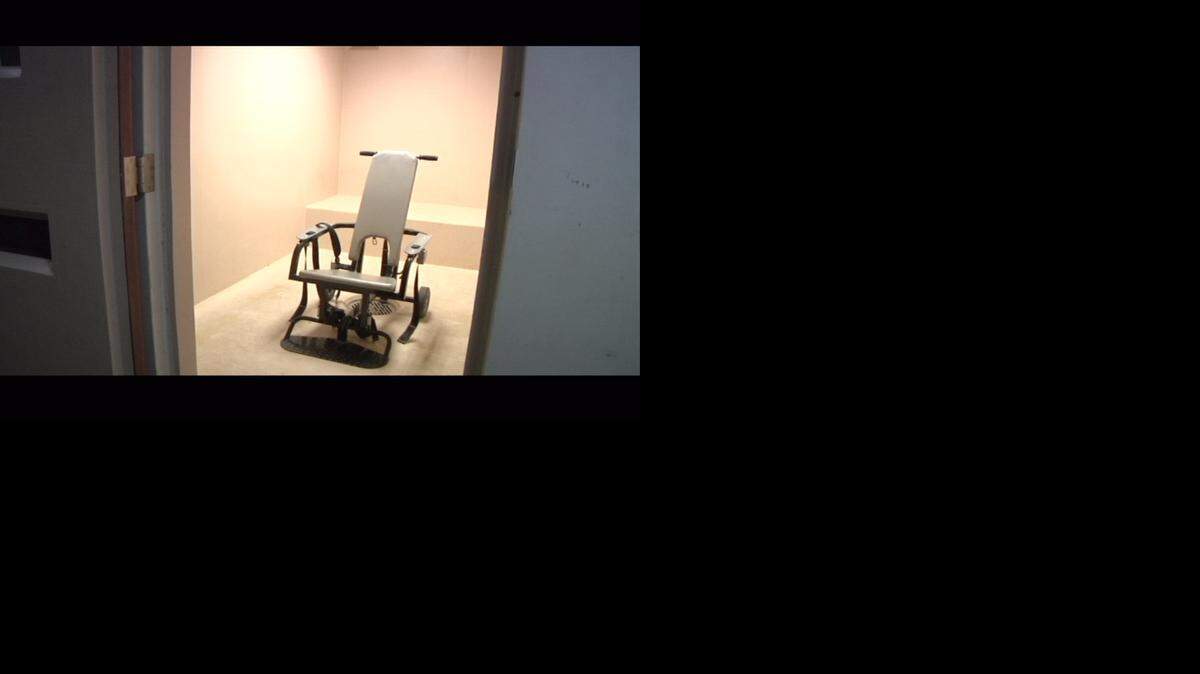
Six Guantánamo captives who have been on hunger strike since 2007 got comfy seats this year, communal forced-feedings and television distraction as a way to get them to stop their food protest at the Pentagon prison, it was revealed in federal court Wednesday.
The men, who were not named, did not abandon their hunger strike. So, while those six captives continued to get preferential treatment, the prison guard force commander decided not to release other strikers from Guantánamo’s iconic padded, metal, five-point restraint chair.
The description of the “experiment,” as attorney Eric Lewis for Syrian detainee Abu Wa’el Dhiab called it, was offered in court by Justice Department lawyers defending the prison’s medical treatment and hunger strike management as non-punitive. Yet it captured the attention of U.S. District Judge Gladys Kessler, who is considering Dhiab’s claim that the military is using painful tackle-and-shackle practices to punish him for being on hunger strike.
“Was a similar deal, if you will, offered to Mr. Dhiab?” the judge inquired.
No, replied Justice Department attorney Andrew Warden.
Warden and other Obama administration attorneys defending Guantánamo prison camp practices spent much of the day reading aloud from sworn statements and medical records to rebut testimony by doctors called by Dhiab’s lawyers that prison procedures don’t allow the captive to receive ethical, individualized medical care.
They read from records showing that when the 43-year-old captive, who awaits release to Uruguay, refused medical appointments, he was permitted to use a wheelchair because of complaints of chronic back pain and sometimes chose to chug a nutritional supplement in his prison cell — rather than be tackled and shackled by guards and taken to restraint-chair forced-feedings.
Kessler closed the court for more than three hours Wednesday to watch prison videos of Dhiab being tackled, shackled and force-fed. She finished the three-day hearing without closing arguments or a ruling. She told lawyers for both sides to submit their written closing arguments by Oct. 17.
Lawyers for the detainee want the judge to, among other things, order the medical staff to leave in Dhiab’s feeding tube for long stretches of time rather than insert the 30- to 36-inch tube up his nose and into his stomach twice a day.
Government lawyers pointed to written testimony from an anonymous Navy commander who ran Guantánamo detainee care that Dhiab could pull the tube out, use it to strangle himself or other detainees “or to fashion into a whip-like weapon.”
A prison doctor said by affidavit that leaving a tube in could increase the possibility that a captive gets an infection and would require more attention by the 139 Navy doctors, nurses and corpsmen who care for the prison’s 149 prisoners — an undisclosed number of whom are currently on hunger strike.
Doctors who consulted in Dhiab’s case testified that leaving in a tube provides a better standard of care than putting it in and pulling it out up to twice daily. Risks mentioned included mistakenly inserting the tube into a lung, rather than the stomach, or taking a wrong turn and going into the brain.
Government lawyers also cast Dhiab, who was cleared for release years ago, as a violent captive. He was brought to Guantánamo in 2002 and has never been charged with a crime.
He was written up 12 times since April 1 for having contraband in his cell, they said, citing prison records. In two instances it was for “hoarding” containers of vomit. He had three times struck a guard with his head or arm, twice threw feces or vomit at prison staffers and eight times threatened to splash his guards or murder them, government lawyers said.
The Justice Department lawyers also devoted part of the day to describing the origins of the decision to use the restraint chair: An earlier widespread Guantánamo prisoner hunger strike that reached its peak with 131 protesters on Sept. 11, 2005.
They read from a 2006 federal court declaration by the last Army officer to run the prison, Maj. Gen. Jay Hood, and Navy Capt. Stephen Hooker, the doctor in charge of medical care then. They described a climate of loss of control at the detention center hospital, and of a steadily malnourishing detainee population despite U.S. Navy medical staff efforts to break the hunger strike through individualized care and rapport building.
When medical staff left in tubes for more than a single feeding, according to Hooker, some captives gagged themselves intentionally, or used it to purge, or developed ear, nose and throat problems. Hood said Hooker’s forces let detainees choose from different colored feeding tubes to mollify them, and offered butter pecan, chocolate, vanilla and strawberry nutritional supplements.
And still some detainees taunted them. Hood quoted one unnamed hunger striking captive as proclaiming: “I am the king and you are my servant.”
They even tried to improvise restraint systems in hospital beds using plywood and pads, but found them “ineffective with a violent detainee,” according to Hood.
So the prison turned to the restraint-chair system, which continues for any hunger-striker requiring a forced-feeding — except possibly for the six long-term hunger strikers described by the chief of the guard force, Army Col. John Bogdan, in a Sept. 5 declaration. When he finished up at Guantánamo and left the base in June, Bogdan said, they were still getting preferential treatment — and still on hunger strike.
Follow @CarolRosenberg on Twitter.
Sworn statement on special treatment for hunger strikers
“The only time I considered granting an exception to using the restraint chair concerned six long-term non-religious fasters, detainees who had consistently refused to eat meals since approximately 2007. The senior medical officer approached me with the plan in approximately late 2012 are early 2013 to incentivize these detainees to stop their fast, which because of its length was seriously affecting their health despite enteral intervention. Under the proposal, so long as these detainees remain compliant by proceeding voluntarily to the enteral feeding, cooperating with the feeding, and not attacking the guards or the medical staff, then they would be allowed to be fed in a standard soft chair 47-CHARACTER-SPACE REDACTION. In addition, they would be permitted to watch television or videos during the feeding. The hope was that this would encourage continued compliance by the small group of detainees and build a better rapport between the medical staff and these detainees. This improved rapport, it was hoped, would lead to these detainees ultimately deciding to follow medical advice to at least eat some solid food, if not end there fasts entirely. This plan was implemented, limited to this handful of long-term fasters, but the hoped for results did not materialize. Although there was some progress toward increased eating, improved medical rapport and compliance, there was no significant enduring improvements. Nevertheless, at the time of my departure from command of the Joint Detention Group, these long-term fasters were still being fed in this manner. I did not consider further extending this exception to any other detainees.”
From Sept. 4, 2004 sworn statement by Army Col. John Bogdan, Guantánamo prison guard force commander June 2012-June 2014
This story was originally published October 8, 2014 at 3:46 PM.