
2 held at base prison fed by force; They refused food 30 days
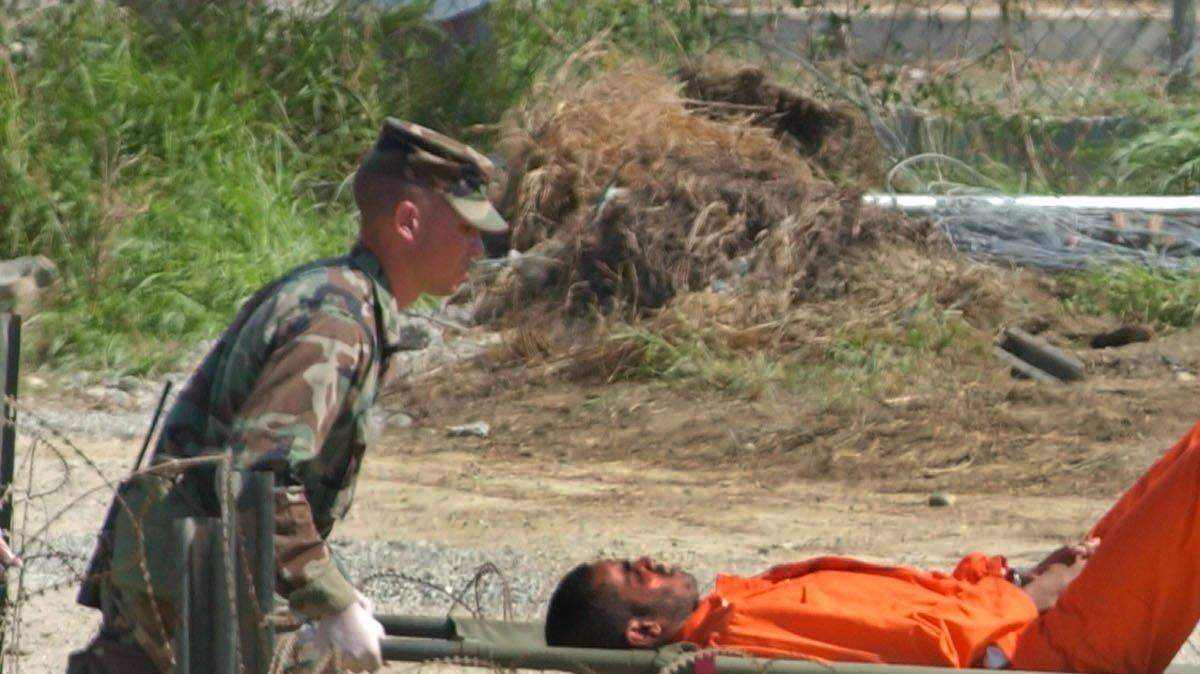
U.S. Navy medical workers on Sunday began force-feeding two terror suspects at Guantánamo Bay, Cuba, because the prisoners had refused food and drink for a month to protest their confinement, commanders said.
"It went very smoothly and without incident," reported Navy Capt. Al Shimkus, commander of the medical team that treats the 300 suspected Taliban and al Qaeda fighters imprisoned at the U.S. military base on southeastern Cuba.
Commanders say they will not permit the prisoners to starve because they want them fit, and cooperating with interrogators seeking intelligence. Moreover, the world is watching their treatment at the base concerned over the human rights of the captives.
The two detainees told officers "they were refusing to eat because they wanted to go home," said Marine Maj. James Bell, a prison project spokesman. "And not eating provided a means for them to protest their detention."
IV DRIPS
The U.S. military has used intravenous drips several times to rehydrate shackled prisoners on hunger strikes since the first arrived at Camp X-Ray on Jan 11.
But Sunday marked the first forced feeding. Medical staff inserted feeding tubes through the prisoners' noses, down their throats and into their stomachs to provide nutrition in the form of a "milkshake like substance."They chose Sunday because the detainees had gone 30 days without food.
Medical staff at the tent hospital where prisoners are treated had earlier likened the treatment to that given to coma patients. In this instance, the prisoners were to be shackled and conscious, with the tubes expected to stay in the prisoners for at least a week.
Commanders said they had the Urdu- and Bengali-speaking Muslim cleric from the U.S. Navy act as a translator to explain to the men, in advance, about the force-feeding procedure in a bid to get them to eat voluntarily. While officials will not identify the names, ages or nationalities of the prisoners on the hunger strike, use of the cleric to translate suggests they are either Pakistani, Afghani or Bangladeshi.
'HARD-CORE'
Marine Brig. Gen. Michael Lehnert, before turning over control of the project to an Army brigadier general last week, described the two men as "hard-core" hunger strikers, who officers moved to the tent hospital to isolate them from the rest of the prisoners at Camp X-Ray.
Once there, they were given IV drips against dehydration.
About 30 other prisoners have been shunning many, if not all, meals since the fast holiday of Ashura last weekend.
An earlier hunger strike swept through the camp to protest a guard stripping a turban off the head of a prisoner who was praying.
Most resumed eating after Lehnert reversed camp rules to permit them to turn their towels into turbans.
This story was originally published April 1, 2002 at 11:15 AM.