
Venezuelan ties to drug busts at Miami airport discovered
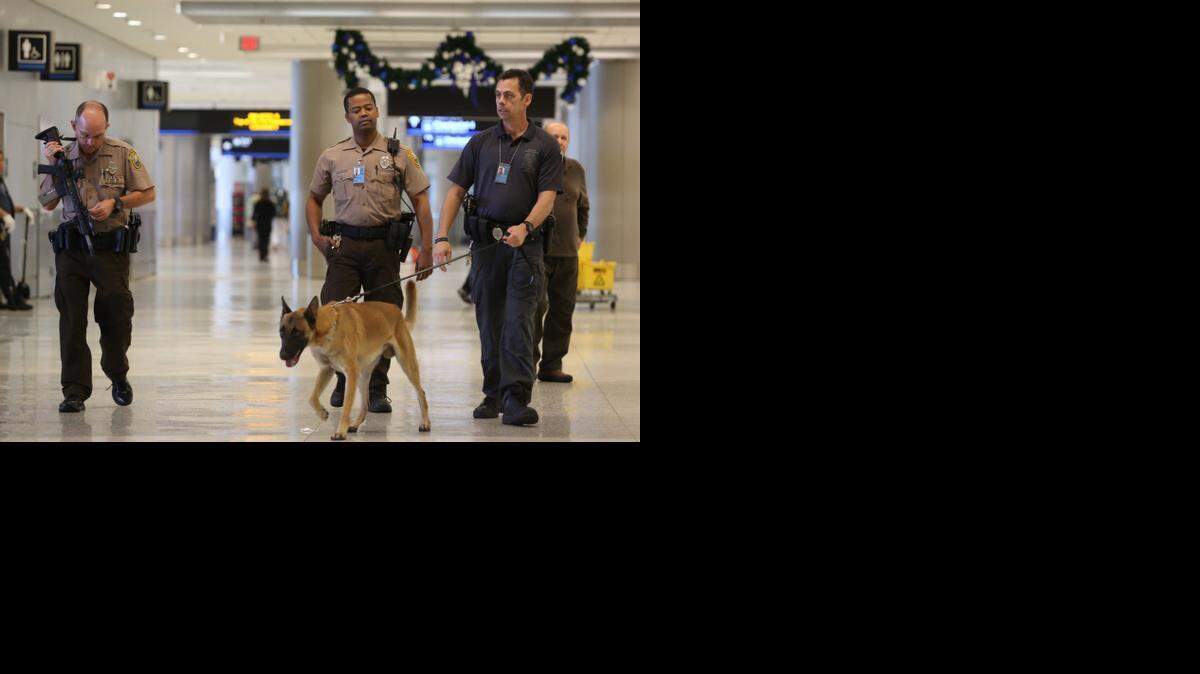
Federal investigators have discovered Venezuelan connections in the shipment of cocaine and Ecstasy to Miami.
Investigators learned of the link to a cocaine pipeline during monitored telephone calls between a confidential source in Miami and a man in Venezuela described as the drug supplier.
The Ecstasy connection was discovered when immigration officers arrested a traveler who had just arrived from Venezuela carrying a packet filled with the drug concealed in his groin.
It is not the first time a Venezuelan cocaine link has been found in South Florida.
In 2012, several Venezuelans were implicated in a cocaine trafficking ring that brought loads of the drug from Velencia, an industrial city west of Caracas, to Fort Lauderdale.
In 2013, federal prosecutors filed papers in Miami federal court outlining the activities of a drug-trafficking gang that smuggled cocaine from Apure state in Venezuela to Central America and the Caribbean.
The latest Venezuela cocaine case was detailed in a criminal complaint filed in Miami federal court by an Immigration and Customs Enforcement special agent.
It was on Dec. 13 that federal agents heard a call an ICE confidential source received from a suspect named Merlín Manzo García, 39, who said he was calling from Orlando on behalf of someone he only identified as Andrés.
Manzo asked the ICE confidential source if they could meet. Five days later, Manzo drove from Orlando to an Office Depot parking lot near Miami International Airport.
Once there, the confidential source directed Manzo to the parking lot of a nearby Pollo Tropical restaurant.
Manzo then entered the restaurant and met the ICE confidential source who was accompanied by an undercover agent of Homeland Security Investigations, a unit of ICE.
Then the three men walked out of Pollo Tropical and approached a vehicle described in the criminal complaint as part of the undercover operation. It was equipped with an audio and video recording device.
Manzo was shown 21 kilograms of cocaine inside the vehicle, according to the HSI criminal complaint.
It was then that federal investigators confirmed the Venezuelan connection to the cocaine smuggling when the confidential source, identified in the criminal complaint as CS, made a call.
“The CS called a man in Venezuela believed to be the source of supply for the cocaine,” the complaint said. “In that recorded, monitored call, the source of supply directed the CS to give Manzo García all twenty one (21) kilograms of cocaine.”
Manzo then got out of the vehicle with suitcases containing the cocaine.
As he loaded the suitcases into the trunk of his vehicle, federal agents arrested him.
During subsequent interrogations, Manzo told investigators he had been promised $1,000 for each kilogram of cocaine he picked up and that he was then to await instructions on what to do with the cocaine.
The complaint does not say if Manzo later received the instructions and followed them under surveillance.
Manzo pleaded not guilty Jan. 13 and is now awaiting trial.
Neither ICE nor Manzo’s attorney wanted to comment on the case because it’s an ongoing investigation.
The second case involving ecstasy is detailed in a criminal complaint filed in Miami federal court by another ICE special agent.
It said that on Jan. 7, a traveler later identified as Daniel Borrero Vasquez, 29, arrived at MIA aboard a Santa Barbara flight from Venezuela and immediately raised the suspicions of passport control officers.
“Duiring the inspection,” the complaint said, “Borrero Vasquez began exhibiting signs of nervousness and was unable to answer various questions as per the purpose of his trip to the United States.”
A subsequent search of Borrero revealed an object concealed in his groin area, the complaint said. The object was a package containing a powdery substance which turned out to be the drug known as ecstasy.
Under interrogation, Borrero told investigators that a man in Venezuela he identified as José Alejandro gave him the package of Ecstasy and told him to deliver it to Miami as soon as he arrived.
According to the criminal complaint, a man would be waiting for him outside MIA’s passport control and retrieve the Ecstasy package. Upon delivery, Borrero would receive payment in an amount not specified in the complaint.
Throughout the interrogation, the complaint said, Alejandro in Venezuela sent text messages to Borrero that investigators monitored. One of the messages said the man who was to retrieve the Ecstasy package outside passport control was already there and growing impatient.
As a result, federal agents watched as Borrero walked out to the waiting area where he met with a man later identified as Jesús Linares Andrade. During the encounter, Linares was overheard by agents instructing Borrero that he would retrieve the drug package once they boarded his car in the airport parking garage.
When the two men left the airport, federal agents arrested them, the criminal complaint said.
Linares told agents later that his role was to pick up the Ecstasy from couriers, sell it and then wire the proceeds to Colombia.
Borrero and Linares pleaded not guilty in Miami federal court last week and are now awaiting trial.
Borrero’s attorney wouldn’t comment and Linares’ lawyer could not be reached.
This story was originally published January 28, 2015 at 8:12 PM with the headline "Venezuelan ties to drug busts at Miami airport discovered."