
Key Biscayne to sue Miami over Marine Stadium plans
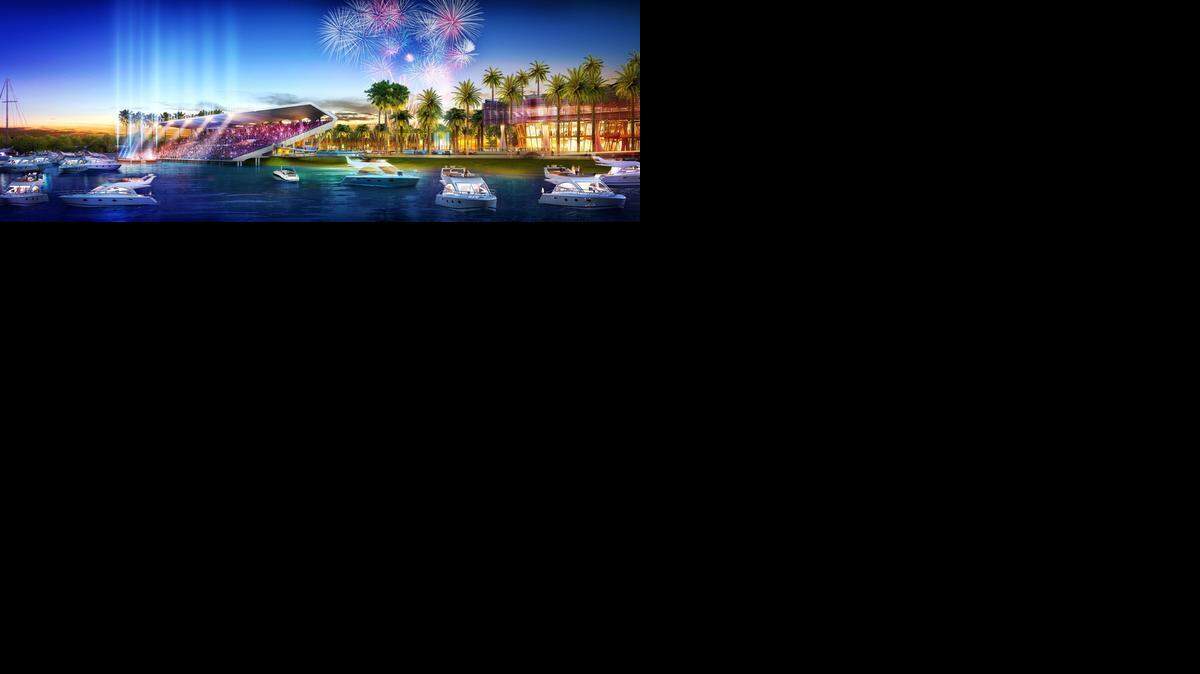
For the second time in as many weeks, one of Miami’s neighboring municipalities is threatening to sue the city over plans to develop its valuable waterfront properties that lie along crucial county causeways.
The Key Biscayne Village Council voted late Tuesday to file a lawsuit against the city of Miami over a project in the works to rehabilitate the historic Miami Marine Stadium and redevelop the surrounding area. Village officials worry that a planned $16 million outdoor event space on the stadium grounds will be used to host dozens of Rickenbacker Causeway-clogging events, like the Miami International Boat Show, which is moving to the site in 2016.
The village will file a suit next week and then immediately stay the proceedings and enter into mediation, according to Village Attorney Stephen Helfman. Village officials say they’ve tried to explain their position during informal face-to-face meetings, but have been ignored.
“You didn’t even listen to us,” Councilman Luis Felipe de la Cruz told Deputy Miami City Manager Alice Bravo. “You told us that phrase that I love, that we would be ‘at the table.’ At the table for what? To be spoon-fed whatever you wanted to tell us?”
The unusual vote in Key Biscayne is the latest sign of dissent, or even distrust, between Miami and its neighbors. On Jan. 14, Miami Beach officials agreed to spend up to $200,000 to study the traffic effects of a planned mega-yacht marina, hotel and retail project on Miami’s Watson Island even though Miami’s deputy planning director told them a traffic study commissioned by the developer showed the project would have a negligible impact on the MacArthur Causeway.
Miami Beach Mayor Philip Levine said Wednesday that the two cities still have a good relationship, but Beach officials made it clear after voting to fund the study that they were leaving open all legal options in their fight against Flagstone Island Gardens.
For a municipality to be sued by a neighbor — perhaps even two — is unusual, said former County Attorney Murray Greenberg.
“It’s not common that cities sue cities, even here in crazy Miami-Dade County,” he said.
Whether it’s common, or even couth, the barbs from across the bay have been somewhat frustrating for Miami officials. Miami Commissioner Marc Sarnoff, whose district includes both Virginia Key and Watson Island, agrees with Key Biscayne officials that the stadium’s $16 million “flex park” should be used as a park, not an event space, but groused Tuesday that “everybody wants to control our land.”
He suggested municipalities trying to control what Miami does with its properties might be opening themselves up for similar scrutiny.
“It may be a bell they don’t want to ring and it may be very difficult to un-ring,” Sarnoff said. “You may open up Pandora’s Box.”
Still, the city of Miami says Key Biscayne residents have nothing to fear when it comes to the Marine Stadium property. Bravo, Miami’s chief of infrastructure, told village officials Tuesday that their concerns were unfounded.
“I know there are folks concerned about the level of investment the city is putting in here, and it’s because we plan to run this as an event venue, and that’s not the case,” Bravo said.
But it doesn’t appear the city has decided one way or the other how to redevelop and operate the site. In November, the city rejected a plan presented by the not-for-profit Friends of Miami Marine Stadium to conduct a $30 million rehab of the historic waterfront stadium — shuttered since Hurricane Andrew in 1992 — and invest another $90 million into the surrounding area to build the flex park as well as dry boat storage and a marine exhibition center, another concern for village officials.
Miami commissioners agreed they were better off pursuing a redevelopment plan themselves. So far, the only commitment they have made is to spend the millions to line the area east of the stadium with utilities and pave it in order to host the boat show.
On Tuesday afternoon, just hours before Key Biscayne officials ripped into Miami and Boat Show officials, several Miami commissioners met with the city’s administration to discuss the city’s plans for redeveloping Miami Marine Stadium.
They couldn’t agree Tuesday how to operate the stadium site, how to fund improvements, or how to solicit partners.
“We cannot commit to Key Biscayne that there’s only going to be one boat show a year and the rest is going to be a passive park for the Key Biscayners to play,” Mayor Tomás Regalado said.
When an aide to County Commissioner Xavier Suarez suggested to Regalado that the Key’s fear is that “they know something is going to happen, they don’t know what exactly,” Miami’s mayor responded: “We can tell them we don’t know either.”
But Key Biscayne’s council views the money the city is already spending as evidence of wanting a return on its investment. The plan that was rejected by Miami commissioners in November considered 80 events a year.
“We don’t trust this,” Key Biscayne’s vice mayor Franklin Caplan said. “I’m skeptical about investing $16 million on a flex park when it’s not going to be used for events.”
Whatever the city does with the Marine Stadium, it might need to move swiftly. The city has until April 16 to come up with the money for a stadium rehab and a plan for the project, or risk losing a $3 million county grant.
Helfman noted that Key Biscayne residents thwarted a Miami Seaquarium expansion in the 1990s, but said he doubts litigation will be necessary with the city of Miami. He said the lawsuit is a way to force meaningful conversations.
Still, Village Councilman Michael Kelly predicted it will be “a difficult road” for the city to redevelop the Marine Stadium.
“A significant number of people in this community will fight this in every way we can,” he said.
This story was originally published January 28, 2015 at 6:58 PM with the headline "Key Biscayne to sue Miami over Marine Stadium plans."