
Fighting the war on homelessness in Miami-Dade
A week before Christmas, Tomas Gonzalez and Maria Guillen were evicted from their Miami apartment. They spent a few nights at a budget hotel before settling into their new home: a spot under the bridge spanning the Miami River.
In an instant, the couple had become part of Miami-Dade’s homeless population. “We are upset. We are living outside,” said Gonzalez, 55, as he packed his belongings in a metal cart. The couple has since moved into transitional housing.
They are far from alone. An overnight “point in time” count, led by the Miami-Dade County Homeless Trust on Jan. 22, shows the overall number of homeless people in Miami-Dade County has remained steady since last year — but more are living on the streets. Including people in shelters and on the streets, the total number of homeless in the county is 4,152, slightly down from 4,156 in January of 2014.
But the number of people who moved from shelters back to the streets increased by 167, from 840 to 1,007. The count recorded 3,145 people in shelters in 2015 compared with 3,316 in 2014.
“The day of the count this year, it was a really pretty day. Last year it was cold, so we had probably 125 or so cold weather [shelter] placements. Those people were on the inside,’’ said Ronald L. Book, chairman of the Homeless Trust. “So our sheltered count [last year] was artificially high.’’
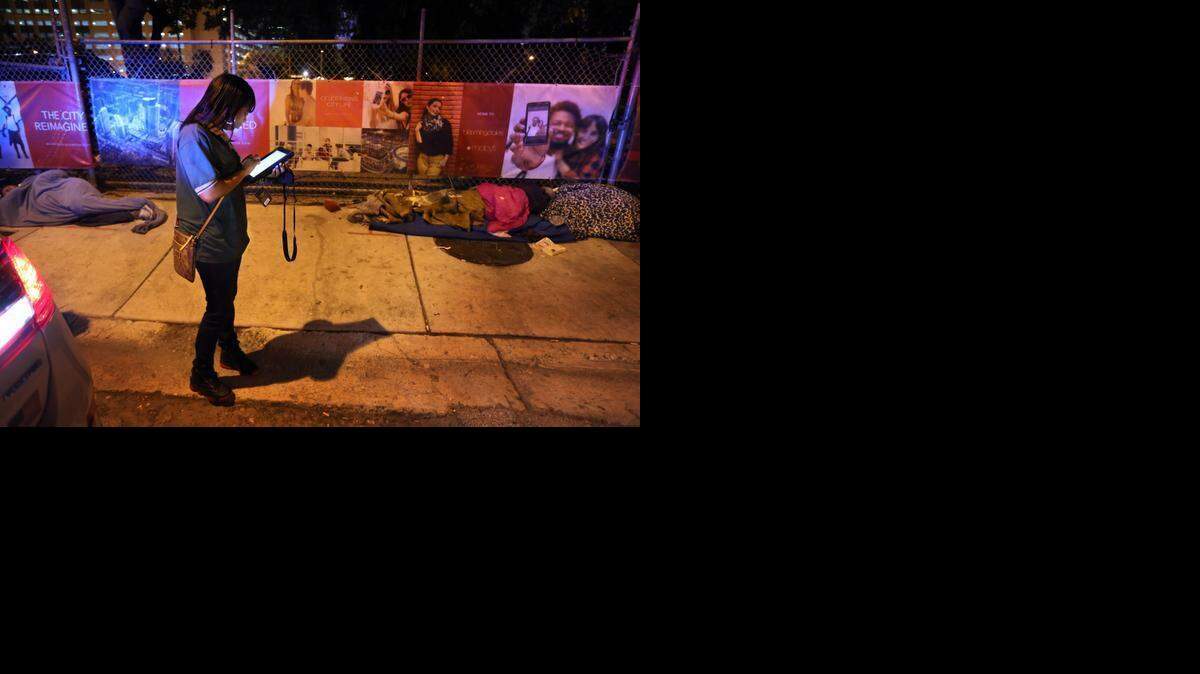
From Homestead to the county line, more than 100 professionals and volunteers scoured the streets to identify and account for every person living on the streets and in shelters. That count, held during the last week of January every year, helps to draw homeless organizations a literal map of where that population lives, from alleys to sidewalks to hidden tents. Along with the census done by the Homeless Trust, nearly 400 unaccompanied youth under 25 years old in Miami-Dade were also tallied in iCount, a weeklong survey. Those numbers must still be verified.
“We use the numbers to determine whether or not we need to reallocate or redeploy our resources to those segments of the community where there might have been a spike in the homeless population,” Book said. “The count allows us to better understand our community.”
Last week, the U.S. Department of Housing and Urban Development, which mandates counts in all states, awarded Miami-Dade more than $32 million in grants to support homeless services and housing facilities. In total, Florida received $84.3 million total; HUD gave $1.8 billion to states nationwide.
The grants support local programs offering transitional and permanent housing, rapid re-housing and street outreach. In Miami-Dade, the funds will go to support Continuum of Care, a network of social services provided as homeless people transition from the streets. Continuum of Care provides more than 6,200 year-round beds to serve homeless individuals and families in the county each year.
“It’s a national shame that anyone would call the streets their home,” HUD Secretary Julián Castro said in a statement.“Working with our local partners, we’re redoubling our efforts to support permanent housing solutions for our veterans and those experiencing long-term chronic homelessness. We’re also focused on providing targeted assistance to families and young people who are falling between the cracks.”
U.S. Housing and Urban Development (HUD) awarded $1.8 billion in grants to help nearly 8,400 local homeless housing and service programs across the U.S., Puerto Rico, Guam and the U.S. Virgin Islands. The funds are to be used toward efforts to end homelessness by providing critically needed housing and support services. Among the counties in Florida receiving grants: Miami-Dade ($32,258,225); Broward ($10,256,442); Palm Beach ($5,461,193) and Monroe ($528,073).
This story was originally published February 5, 2015 at 6:15 PM with the headline "Fighting the war on homelessness in Miami-Dade."