
Lolita, Miami Seaquarium killer whale, is declared endangered
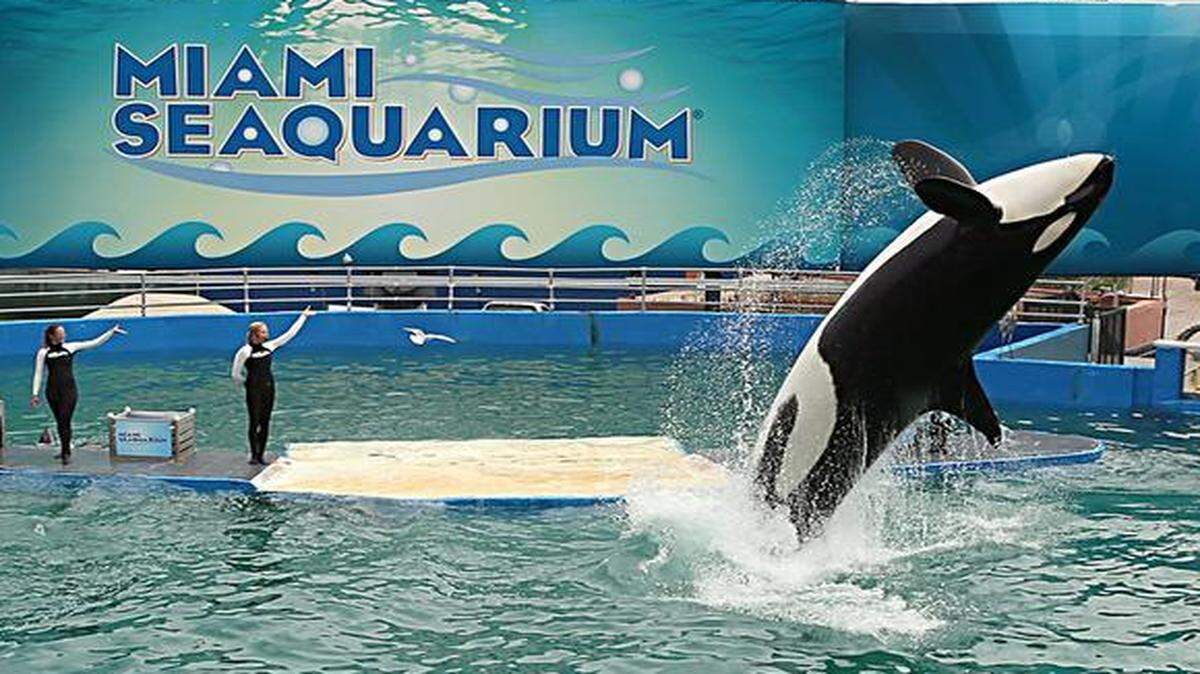
Lolita, the killer whale featured in acrobatic acts at the Miami Seaquarium for nearly half a century, will be added to the endangered species list, a protection given her wild family nearly a decade ago, federal wildlife officials announced Wednesday.
The decision means little will change for the aging whale for the time being, but it will likely set off a new round of legal battles.
“This is a listing decision. It is not a decision to free Lolita,” said Will Stelle, the National Oceanic and Atmospheric Administration’s West Coast chief, who explained that the agency has not taken any action on the whale’s living conditions, which activists have long criticized as being harsh.
“It doesn’t have anything directly to do with those decisions that command so much public attention,” he said.
But animal rights activists, who asked NOAA in 2013 to include Lolita in the listing, say the move provides the legal toehold needed to retire the whale believed to be the oldest in captivity at about 50 years old.
“We are going to do everything we possibly can to ensure that her newly granted protections from harm and harassment are enforced,” said Jared Goodman, a lawyer with the People for the Ethical Treatment of Animals (PETA).
What that will be remains unclear. The designation usually applies to wild animals facing extinction and includes rules to keep them from harm, like imposing fishing restrictions or halting construction on their habitat. Initially, Lolita was excluded from the population of Southern resident killer whales off Puget Sound, which now numbers just 78. But NOAA decided to include her after receiving 17,000 public comments supporting the listing. Genetic testing and other evidence also indicated she belonged to the group.
NOAA officials say they will not weigh in on her living conditions because another agency — the U.S. Department of Agriculture — keeps watch on the welfare of captive animals. NOAA would only act if the Seaquarium planned to do something that threatened to harm Lolita, which would require a take permit. And Seaquarium officials say they have no need to apply for a permit because Lolita is not being harmed.
“I’ve been saying for 20 years we’re not going to release her, and now [NOAA] has made it pretty clear that she’s not a releasable animal,” said Robert Rose, the attraction’s curator of animals.
In fact, the last time a captive killer whale was freed, the release failed miserably. Keiko, a whale captured off Iceland in 1979 that starred in the movie Free Willy, died about three years after he was returned home, unable to bond with surrounding killer whales.
But activists say they have a viable retirement plan: An anonymous donor has provided a protected cove near the San Juan Islands where they say Lolita’s mother still lives. They had hoped that the attraction’s new owners, Spain-based Parques Reunidos — which is also in talks with Miami-Dade County to operate the Miami Wilds amusement park near Zoo Miami — might be willing to sell Lolita. But Wednesday, Naomi Rose, marine mammal scientist for the Animal Welfare Institute and part of a team trying to negotiate a deal, said they have so far failed.
Activists have long argued that at 20 feet deep, Lolita’s tank is far too small — smaller than any other tank for about 22 captive killer whales around the country — and lacks shade. They also argue that USDA rules call for a companion of the same species. The Seaquarium’s only other killer whale died in 1980, 10 years after she arrived. PETA sued, but lost when a Miami federal judge ruled that Lolita’s tank could be grandfathered in. PETA appealed. Goodman said the appeal is set to be heard in late March.
This story was originally published February 4, 2015 at 7:01 PM with the headline "Lolita, Miami Seaquarium killer whale, is declared endangered."