
High-profile Miami police shooting still under investigation, five years later
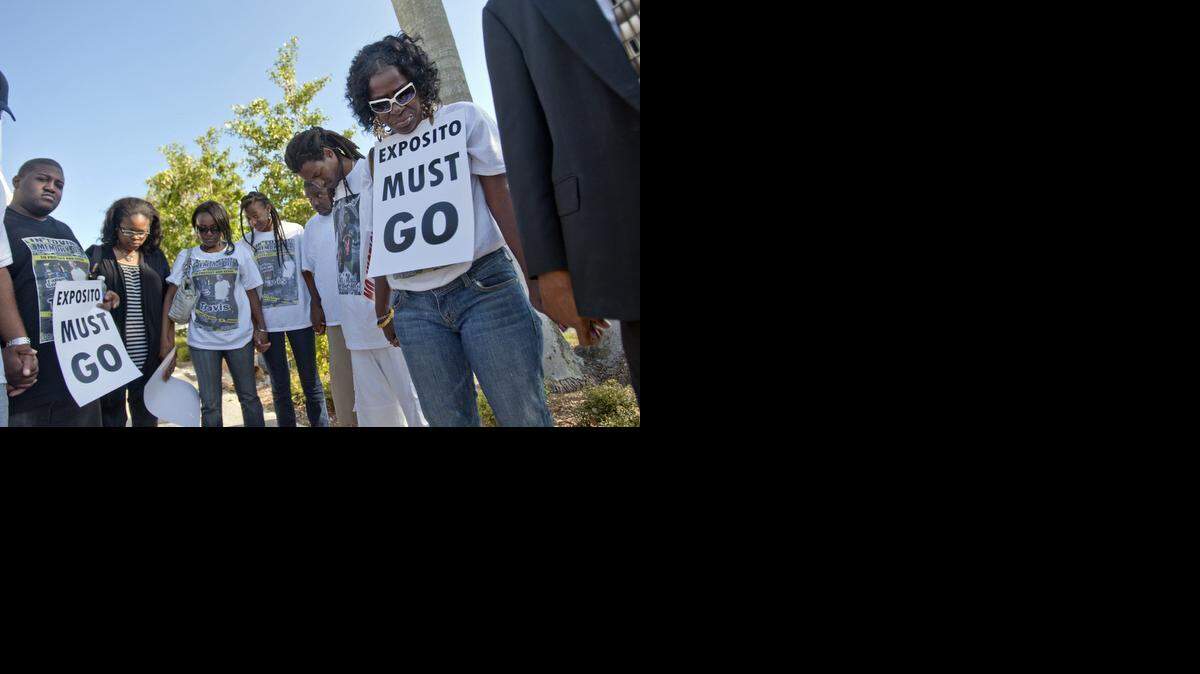
Nearly five years after a controversial string of inner city shootings by Miami police, one case remains glaringly unresolved: The August 2010 killing of 16-year-old armed robbery suspect Joeell Johnson .
The Miami-Dade State Attorney’s office, tasked with reviewing all police shootings to see if officers broke any laws, insists answers are coming, although it set no timetable. It’s the last of seven controversial police killings that ultimately doomed the tenure of former Miami police chief Miguel Exposito.
“We’re hoping to finish our investigation soon,” said State Attorney’s spokesman Ed Griffith.
The upcoming end of the case comes as newly released records show that Miami-Dade prosecutors have so far this year cleared police officers in four fatal shootings dating back to 2011. There are dozens of still-open investigations into police shootings, some from incidents that have only recently occurred.
Johnson’s case would conclude the criminal investigations into a tumultuous recent chapter in Miami history. In 2010 and 2011, city police shot and killed seven black men over the course of seven months, episodes that drew heavy criticism of the chief’s aggressive tactics.
All but two of the men, including Johnson, were believed to be armed.
“I don’t know why it’s taking five years to clear a case that is so cut and dry when it comes to the justifiable use of force,” said Javier Ortiz, Miami’s police union president.
The rash of shootings led to a U.S. Department of Justice investigation into the Miami police department. The probe in July 2013 found an unconstitutional “pattern or practice” of excessive use of force, spurring reforms and federal oversight.
The federal oversight continues as scrutiny on police use of force has heightened nationally, with high-profile officer-involved shootings spurring protests from Missouri to New York City to South Carolina. This week, relatives of a mentally ill man shot to death by Miami Gardens police released dash-cam video they insist show officers did not have to use deadly force.
The State Attorney’s Office reviews all police shootings and in-custody deaths to see if officers broke the law. Prosecutors here issue detailed memos detailing the evidence and how the incidents unfolded.
Florida law gives officers wide latitude to use deadly force – and no officer has been charged for an on-duty shooting since Miami Officer William Lozano killed two people in 1989, a case that ultimately ended in an acquittal for manslaughter.
Back in 2010, then-Chief Exposito criticized the State Attorney’s office for long delays in finishing investigations into officer-involved shootings.
Earlier this year, Miami city commissioners agreed to pay nearly $1 million to the estate of one man, Travis McNeil, who was shot and killed during a traffic stop. The shooting officer, Reynaldo Goyo, was not charged but was fired, later earning his job back through an appeal.
In the 2010 incident, Johnson was shot to death by then-Miami Police Officer Ricardo Martinez, who was part of a now-disbanded tactical unit created to crack down on violent criminals.
At the time, Miami police said Johnson pointed a gun at Martinez, who was posing as a Chinese food deliveryman to try and nab the teen suspected of earlier robberies. Eight days later, Martinez — having returned to duty — shot and killed a shotgun-wielding man during a gang sweep; prosecutor cleared him in that case.
Martinez was later kicked off the police force after federal authorities arrested him for fencing stolen Bluetooth headgear sets.
The most highly publicized case cleared this year involved the death of motorist Raymond Herisse, who dangerously barreled his car down Collins Avenue, hitting several cars and nearly hitting officers and pedestrians. Miami Beach and Hialeah police officers fired over 100 rounds, killing Herisse and wounding four bystanders.
The State Attorney’s Office ruled that under Florida law, the officers were justified in using deadly force to try and stop Herisse.
Three others cases cleared this year got considerably less media attention and sparked no outrage from the public. Final reports on the cases, released this week, detail how prosecutors believe the cases unfolded:
▪ Prosecutors cleared Miami-Dade Police Officer Luis Marin of the December 2011 killing of Fernando Benavides, who plowed his pickup truck into another motorist and took off.
Police chased Benavides, who stopped because of heavy traffic, then reversed and crashed into the vehicle of Officer Carlos Labrada – “striking it hard enough to cause the hood to bend upwards and render the police car inoperable.”
Police finally boxed in Benavides in Miami’s Brownsville neighborhood; he revved the engine “up and down,” refusing commands to exit the car from officers surrounding the truck, according to prosecutors.
Marin fired after “Benavides made a furtive move inside the truck that put” the cop in fear for his life, according to the final memo.
Family members told detectives Benavides had once been diagnosed with schizophrenia and had acted “psychologically unstable in his actions and thoughts recently.”
▪ Miami-Dade Officer Fernando Sacasas was ruled justified in fatally shooting federal robbery suspect Sergio Azcuy during an attempted arrest in May 2012.
Investigators said Azcuy and Heriberto Ortiz were on their way to rip off a cocaine stash – a plan put into motion by an informant secretly working with federal agents.
Miami-Dade’ Robbery Intervention Detail detectives were enlisted to stage an accident scene in West Kendall to slow traffic and capture the men. When Azcuy’s car stopped, detectives ordered them to raise their hands, according to prosecutors.
While Ortiz did, Azcuy reached forward, then wielded a “dark colored object” in his hand. Sacasas fired two times, killing Azcuy.
Detectives, however, found no weapon in Azcuy’s hand. The prosecutor’s memo does not specify if anything was found in his hand, only that Sacasas believed “it to be a weapon” and fired because he was in “fear for his life.”
As for Ortiz, he pleaded guilty to federal conspiracy charges and was sentenced to 20 years in prison.
The shooting came at a sensitive time for Miami-Dade police. A year earlier, the department’s Special Response Team killed four armed robbers, including an informant, in another staged drug heist designed to capture the dangerous group.
Miami-Dade prosecutors last year declined to press charges against the officers, but called the killing of the informant – who was laying on the ground in apparent surrender – “greatly disturbing.”
▪ Miami-Dade Officers John Thomas Jr., and Concepcion Somoano were justified in killing gun-wielding security guard Alexis Suarez-Reyes in November 2012, prosecutors said.
At the time, officers had gone to arrest Suarez-Reyes at his West Miami-Dade home for knocking out his boss with a punch to the nose. They found Suarez-Reyes inside his pickup truck. After commands to show his hands, he “raised his firearm in the direction” of Thomas, who responded with five gunshots, killing the man, according to a final report.
This story was originally published April 10, 2015 at 5:28 PM with the headline "High-profile Miami police shooting still under investigation, five years later."