
Preservationists ring up victories in Coconut Grove, East Little Havana
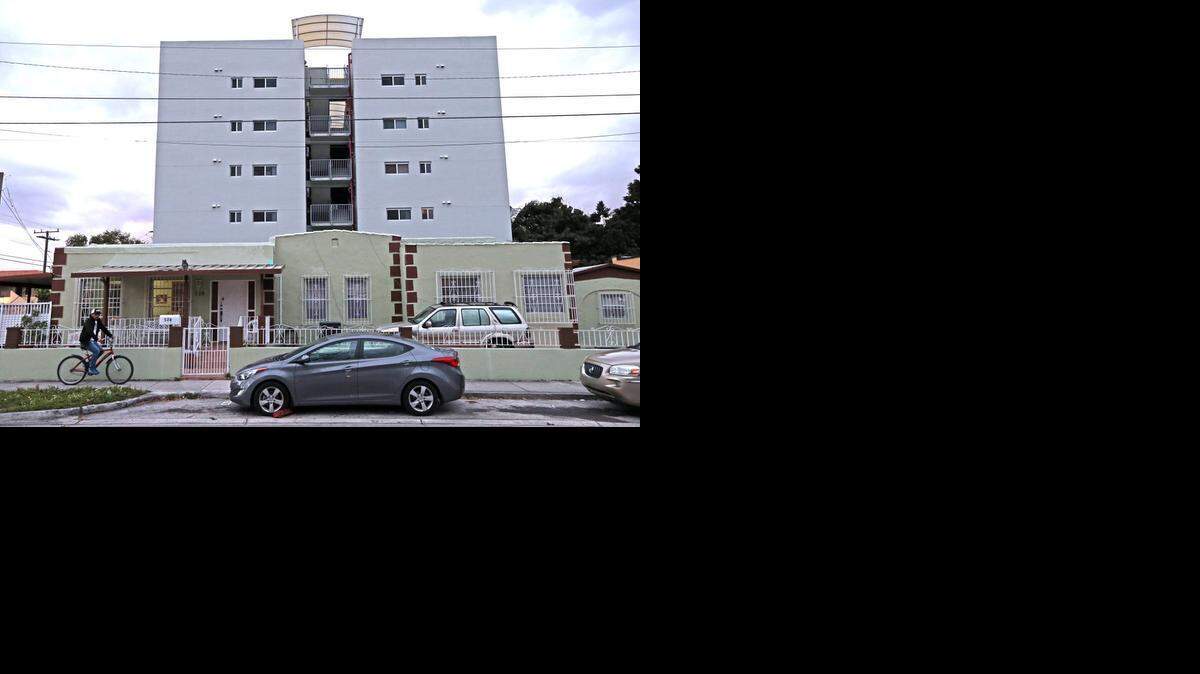
Miami preservationists rang up two big victories Tuesday when a city board unanimously enacted legal protection for a distinctive Mediterranean manse in Coconut Grove under threat of demolition as well as a small historic district in an area of East Little Havana slated for a possible and controversial upzoning.
The final designations by the city historic preservation board, which protect the homes and buildings from demolition, may also set the table for a broader effort by preservationists to save additional pieces of both neighborhoods, which are under varying degrees of development pressure.
The board also gave unanimous preliminary approval to a proposal by the city’s preservation office — prompted by preservationists who complained the new Riverview Historic District boundary was far too limited — to expand the new district by adding 14 other properties to it.
But activists and representative of preservation groups, including the city’s former preservation officer, Alex Adams, said even the expanded district misses scores of potentially significant homes and buildings that make up the fabric and heritage of one of Miami’s most important neighborhoods.
That East Little Havana neighborhood, they said, is now under threat from a city-led effort that would significantly up the zoning capacity in hope of spurring redevelopment. They urged the board and city preservation office to expand the scope of designations across Little Havana.
“If we don’t protect them now we risk losing them,” said Daniel Ciraldo, preservation officer for the Miami Design Preservation League.
The Riverview Historic District, roughly bounded by Southwest Third to Fifth streets and Southwest Ninth and Tenth avenues, comprises mostly homes and apartment buildings from the 1910s through the 1960s, a broad cross-section of Miami’s first half-century of development. Architectural styles range from early bungalows through Art Deco and Miami Modern.
Some owners of property in the district vehemently objected, saying their buildings were run down, not worth saving and historically insignificant.
“It’s an eyesore,” said Oscar Garcia of his family’s property, a pair of wood-frame homes which they have been waiting for a chance to redevelop. “If you do this you are condemning the area to be forever a slum.”
But proponents of the district, including some property owners and people who grew up in the neighborhood, pleaded for the board to act, noting a history that reaches from the earliest days of Miami’s development to the Cuban and Central American refugees who settled there starting in 1959.
“It’s probably the most significant place in Miami to be saved,” said Nancy Liebman, a preservationist who helped save South Beach’s Art Deco District and Biscayne Boulevard’s Miami Modern District..
Backers of the district also pointed to examples of historic districts from South Beach to Miami’s Morningside and Palm Grove that have improved dramatically after designation. But they also called for public meetings to explain the impact and potential benefits of designation to Little Havana residents and property owners.
In the south Grove, meanwhile, residents who pushed for the preservation of an elegant Mediterranean villa on St. Gaudens Road said they hope the city will consider designating additional homes on the street, one of the most distinctive in the village. The residents, led by the St. Gaudens neighborhood association, say they were fed up with the demolition of historic Grove homes by developers who replace them with characterless McMansions.
City preservation officer Megan Schmitt said her office has been conducting research on homes on the street and expects to propose a historic district or individual designations if merited.
The home, designated Tuesday over the objections of its new owner, developer Eduardo Goudie, who contended it was attractive but not historically or architecturally significant, was designed by perhaps the greatest Miami architect of the era, Richard Kiehnel, and built for Albert Frantz, a key Grove developer.
Architect Richard Heisenbottle, a prominent preservation specialist, called the Frantz house a “unique opportunity” because it’s virtually unaltered, save for an unsympathetic rear addition.
“It’s an amazing house that more than meets the criteria for designation,” historian Arva Moore Parks, who considers Kiehnel to be a major American architect who played a key role in defining early Miami, told the board. “We’re a young place. We’re not Chicago. But can you imagine anyone in Chicago tearing down a Frank Lloyd Wright house?”
The St. Gaudens residents’ association requested designation after Goudie bought the house and filed to demolish it and split the lot in preparation for erecting two new homes on it.
Though the designation represents significant advance for Grove residents eager to preserve the neighborhood’s heritage, that approach may get blocked by the city in the future.
A measure up for final approval by the city commission on Thursday would block residents from requesting designations, something they have been able to do under city ordinance for years. The measure would limit requests not generated by city officials or preservation board members to recognized preservation groups such as MDPL or Dade Heritage Trust.
This story was originally published April 7, 2015 at 7:55 PM.