Suisse Secrets: The role Miami real estate, Swiss banks played in plundering Venezuela
READ MORE
Suisse Secrets
A cache of leaked data from a cornerstone of the global banking industry reveals how the rich, the powerful and the corrupt use secret Swiss accounts to move millions — and funnel some of it into Florida real estate.
Expand All
From his small motorboat, Roberto has watched the rise and fall of Venezuela’s oil industry. For a decade he has ferried workers across Lake Maracaibo to the vast production facilities that line its shores, which were once the jewel in the crown of the country’s national oil company.
But as the industry collapsed, so too has Roberto’s livelihood.
“Everything has changed … it’s over,” he told the Organized Crime and Corruption Reporting Project, requesting reporters refer to him using a pseudonym for fear of retribution.
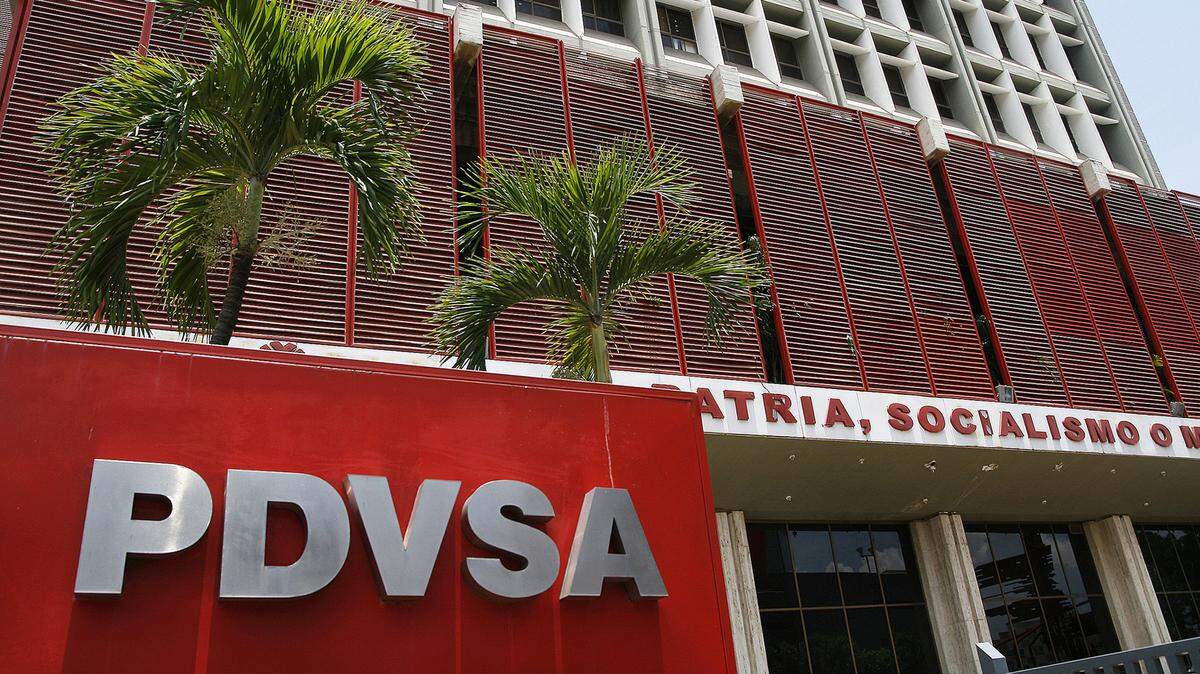
Once the driver of one of South America’s strongest economies, the state oil company Petróleos de Venezuela, S.A. (PDVSA) has been hollowed out by mismanagement and corruption. Oil executives and their cronies have looted more than $1 billion from the company in a slew of scandals involving fraud, bribery, and currency scams.
It has long been known that money plundered from PDVSA has found its way into the South Florida economy, often through real estate investments and bank accounts that double as money-laundering vehicles. Several expats, including a former Venezuelan national treasurer with an equestrian estate in Palm Beach County, have been indicted and convicted in South Florida’s federal courts.
It also has long been known that Swiss banks were an important conduit for this illegal washing of tainted money, as reflected in court and other public records. But a new leak of data from the financial institution Credit Suisse, part of a collaborative investigation called Suisse Leaks, gives a much fuller picture of how Venezuelan bankers, bureaucrats and business people, some of whom have decamped to South Florida, stashed money in these secret accounts. They are the financial tools of choice for the rich, the famous and the corrupt, including kleptocrats accused of stealing billions from such countries as Venezuela.
Suisse Leaks is the result of a leak of records on more than 18,000 Credit Suisse accounts to the German newspaper Süddeutsche Zeitung. Through OCCRP, the records were shared with news organizations around the globe, including the Miami Herald and New York Times.
The banking records reveal that more than 20 Venezuelans linked to four PDVSA corruption schemes amassed assets worth at least $273 million in 25 accounts at Credit Suisse over the years — and likely much more. In some cases, the accounts contained significantly more money than authorities have made public.
Using court documents from Spain, the United States and Andorra, OCCRP mapped the key players in these bribery and kickback schemes. Reporters then combed through thousands of banking records to find where they had stashed their money, discovering at least a dozen Credit Suisse accounts that have never been named in court documents. These included bank accounts involving 12 associates and family members of people implicated in one of the scams.
Nearly all of the accounts were opened between 2004 and 2015, which covers the period when these PDVSA corruption schemes were taking place. Some accounts remained open even after their holders were arrested, charged, extradited, pleaded guilty to serious financial crimes, or were named in the media as giving or taking bribes.
Critics say Credit Suisse’s role in enabling corruption schemes in Venezuela and other countries is not just an internal problem; it’s also related to Swiss laws that encourage stringent banking secrecy and punish whistle-blowers.
“The Swiss banking system remains a favorite destination not only for the proceeds of massive bribery schemes like the ones involving PDVSA, but for the use of companies like PDVSA as vehicles for laundering criminal proceeds,” said Alexandra Wrage, president of the anti-corruption nonprofit TRACE.
But as corrupt elites have filled their pockets, it is ordinary Venezuelans who have paid the price. The country’s economy has cratered since 2013, with high levels of poverty, unemployment, and hunger, while hyperinflation has eaten into both the savings and the salaries of those lucky to still have them.
Six million Venezuelans have fled the country, with many arriving in South Florida, becoming a cultural and economic force, especially in Doral and Weston.
Many of PDVSA’s gigantic facilities along the coast now lie abandoned and overgrown with weeds.
Roberto, who once earned enough for a stable middle-class lifestyle, said that now he can barely afford to feed his family. He’s thinking of joining the exodus out of Venezuela.
What’s the use of having a fatherland if people are in need?” he said, using a term frequently invoked by Chavistas, supporters of the late Hugo Chávez, to encourage patriotism. “What’s the use of having my family here together if I don’t have a way to feed them?”
Credit Suisse said its staff did not knowingly facilitate corrupt activities by its clients, and noted that, along with other institutions, it has implemented stricter policies to combat financial crime.
“In line with financial reforms across the sector and in Switzerland, Credit Suisse has taken a series of significant additional measures over the past decade, including considerable further investments in combating financial crime,” the bank said in a statement to OCCRP and other media partners.
“Across the bank, Credit Suisse continues to strengthen its compliance and control framework, and as we have made clear, our strategy puts risk management at the very core of our business.”
Luxury on the lam
More than 4,500 miles across the Atlantic Ocean from Lake Maracaibo, a former Venezuelan oil ministry official accused of looting PDVSA lives in luxury. Nervis Villalobos resides in a $2.25 million mansion on the outskirts of Madrid.
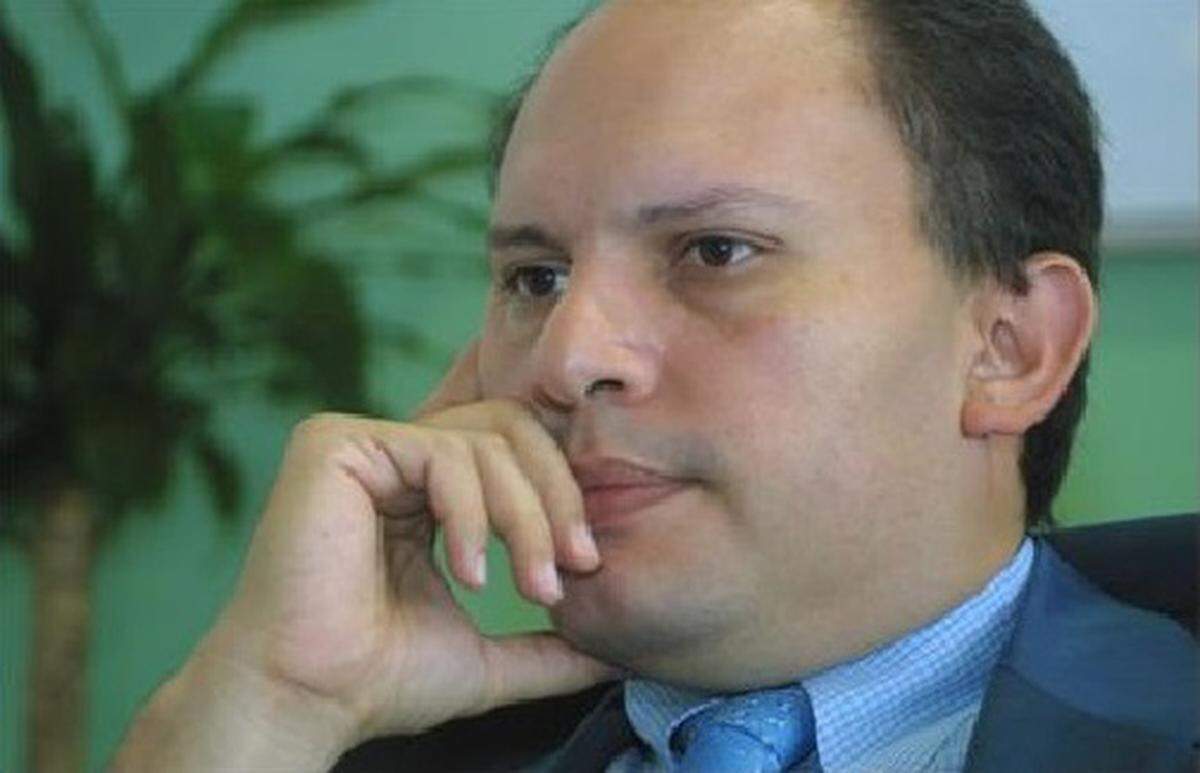
It’s been years since Villalobos has felt the sweltering heat of his hometown, close to the lake’s shore, but he can’t go back. He is facing charges of corruption and money laundering in neighboring Andorra, as well as in the United States and Venezuela, which have both filed extradition requests.
As a key middleman in Venezuela’s oil industry, Villalobos allegedly received bribes from U.S. companies to help them secure lucrative energy contracts with the national oil company. Spanish prosecutors say Villalobos acted as a frontman for Rafael Ramírez, the previous PDVSA president, a former energy minister, and an ally of Chávez.
Spanish court documents say Villalobos’ position made him effectively the second-most powerful person in Venezuela’s Ministry of Energy, where he worked in various senior roles from 2001 until 2006.
“He would drown your business if you did not pay him. To survive, you had to ally yourself with Nervis [Villalobos],” Mathias Krull, a Swiss banker convicted in Miami of laundering PDVSA money, told Spanish prosecutors in a document obtained by OCCRP.
An 11-page due diligence report commissioned by Credit Suisse’s compliance department in 2008 outlined multiple allegations of corruption against him, including an alleged $3 million bribe linked to a hydroelectricity project that he allegedly split with Ramírez.
But the compliance department’s own report did not stop Credit Suisse from banking him.
In 2009, Spanish prosecutors say Credit Suisse’s Monaco branch opened an account for Villalobos after another Swiss bank dropped him over corruption concerns. Prosecutors say the Venezuelan funneled almost $25 million and 11.5 million euros through the account until it was closed over four years later. Some of the money allegedly came from bribes paid by Spanish companies for energy contracts that the bank’s own compliance department had flagged as suspicious.
Then, in 2011, Credit Suisse’s Switzerland operation opened another bank account for him. A text message sent that September shows Venezuelan oil contractor Abraham Shiera Bastidas, a Coral Gables resident, intervened on his behalf after the bank had questions about the source of the money Villalobos wanted to move to Switzerland. Bastidas would later plead guilty to bribing Venezuelan officials, including Villalobos, for PDVSA contracts.
“The institution has not accepted the stick,” Shiera wrote to Villalobos on Blackberry Messenger, according to the court documents, using Venezuelan slang for large amounts of money. “They are asking me for invoices and purchase orders. I already submitted them. I hope it is resolved tomorrow.”
The message did not name the Swiss bank Shiera was referring to. But the leaked Suisse Secrets banking data show that Credit Suisse opened an account for Villalobos five days later.
A U.S. indictment describes how Shiera and his accomplice, Roberto Rincón, whose family owned a unit in Trump Towers Sunny Isles Beach, paid $27 million into a Swiss account owned by Venezuelan Luis Carlos de León, who in 2018 admitted to being part of the PDVSA kickback scheme. This money, the indictment says, was then funneled into accounts belonging to Villalobos and de León held in another Swiss bank, this one unnamed.
The leaked banking records show Villalobos and de León both opened accounts with Credit Suisse on the same day in September, as mentioned in the indictment. Within two years, Villalobos’ account was worth at least 9.5 million Swiss francs (U.S. $10.3 million present day), while de León’s was worth at least 22.6 million Swiss francs (U.S. $24.5 million).
Lawyers for Villalobos and de León did not respond to requests for comment, while Credit Suisse would not answer questions on specific customers.
Credit Suisse did not respond to questions about Villalobos or other individual Venezuelans, but the bank’s lawyers rejected the assertion that the institution had inadequate due diligence procedures, or facilitated financial crimes.
“CS does not tolerate or support tax evasion, money laundering or other illegal activities, has stringent control mechanisms in place and reviews and develops its policies on an ongoing basis,” the bank’s law firm, Latham & Watkins LLP, said in a letter.
Newly Discovered Accounts
In total, reporters identified 16 Credit Suisse accounts containing at least 162.9 million Swiss francs (U.S. $176.7 million) belonging to seven people who were accused or convicted of being involved in this PDVSA kickback scheme. In one case, the data appears to shed fresh light on an ongoing investigation.
José Roberto Rincón Bravo is the son of Roberto Rincón, who admitted bribing PDVSA officials alongside Shiera in a U.S. court in 2016. Spanish police arrested Rincón Bravo in 2018 on charges he laundered PDVSA money, confiscating jewelry, watches and sports cars from him and his family, and seizing a 988-acre estate near Madrid with several houses and its own private bullfighting ring.
Rincón Bravo has not yet been charged in the case, however, and he has publicly denied being involved in his father’s corrupt affairs. In 2019 he told El Confidencial, a Spanish newspaper, that his expensive accessories came “from work, from years of savings.”
But the Credit Suisse data shows Rincón Bravo and his father held four joint accounts worth at least 93 million Swiss francs (U.S. $101 million) that have not been named in any court documents before now. Three of the accounts reached their maximum holdings barely two weeks before Rincón Bravo’s father was arrested in December 2015.
Many of the Credit Suisse accounts were jointly owned between people involved in the scheme and their family members. Another two belonged to people who worked closely with Rincón and Shiera as PDVSA contractors. In total, reporters found seven people associated with suspects had accounts, which at their maximum held a total worth at least 20.1 million Swiss francs (U.S. $21.8 million).
And those weren’t the only accounts linked to PDVSA corruption schemes that OCCRP found in the data.
While scouring the leaked banking records for details on Villalobos, reporters discovered people related to another massive fraud scheme in which he was involved. This scheme used fake invoices to siphon off an estimated $2 billion of Venezuelan oil wealth, which was allegedly laundered through Banca Privada d’Andorra, in the tiny mountain principality of Andorra between Spain and France.
Again, Villalobos is accused of using his position to extract kickbacks from foreign companies in return for PDVSA contracts. This time he allegedly worked with Diego Salazar, a cousin of the former oil minister, Ramírez. Salazar is now in prison in Venezuela over the fraud, while Villalobos has been charged over the Andorra scam. He has so far evaded extradition.
Two of Salazar’s alleged accomplices were also Credit Suisse clients, the leaked banking data shows. One, Venezuelan insurance mogul Omar Farías, had an account worth at least four million Swiss francs (U.S. $4.3 million). Another, middleman Jose Luis Zabala, had three that at one point were worth at least 19 million francs (U.S. $20.6 million).
They did not respond to requests for comment.
A more recent case relates to Naman Wakil, who was arrested in Miami in 2021 over charges of corrupt dealings with Venezuela. Between 2010 and 2017, U.S. prosecutors say he bribed his way into at least $30 million of contracts with PDVSA and some $250 million with Venezuela’s state food company.
Authorities say Wakil then moved some of his ill-gotten wealth into Miami real estate, including apartments on the beach as well as downtown high-rise apartments. Millions more were allegedly spent on a yacht and plane.
The court files say the stolen funds were laundered through accounts in the U.S., Cayman Islands, Panama, and Switzerland. OCCRP found Wakil opened an account with Credit Suisse in September 2011, which three months later was worth 3.7 million Swiss francs (U.S. $4 million).
“The Swiss banks were the most prevalent” in the Venezuela corruption schemes, said lawyer and former U.S. prosecutor Michael Nadler, who worked on some of the cases. “Whether they were complicit or not, they, I would tell you, allowed a lot of this to happen.”
“Traditionally, Swiss banks have been the banks who keep secrets the most and the best.”
Graham Barrow, an independent expert on financial crime, said it encourages corruption when banks allow stolen funds to enter the global financial system.
“If the banks will not stop conspiring with these people to legitimize funds that should never be legitimately put into the system, we are never going to change,” he said. “People in Venezuela, Kazakhstan, and elsewhere will remain poor.”
This story was originally published February 24, 2022 at 11:30 AM.