
Tony Robbins larger than life
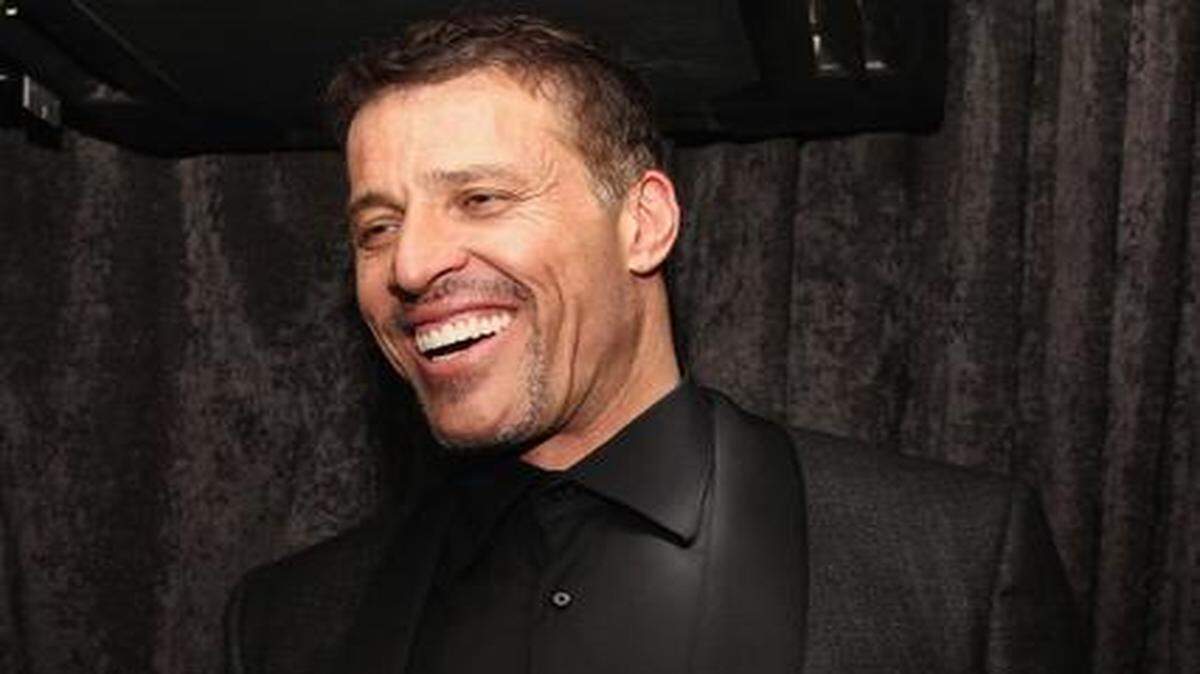
Tony Robbins, America’s most famous and successful nonathletic coach, does not do small.
Everything about him is massive. His hands, perpetually in motion, are the size of skillets. The Oxfords? Sixteens. During an interview, his muscles seem primed to rip, Hulklike, out of his suit. His 6-foot-7 frame dwarfs the hotel chair. Sitting seems like punishment for a man who claims to clock 26.5 miles in a day (granted, a 16-hour day), a motivational marathon, pacing an amphitheater stage.
In Robbins’ world, there’s never too much. A man with his own Mastery University, he ended his formal studies at high school, but says, “I read 700 books in the area of human development, psychology, physiology, things that I thought could make a difference.”
He loves numbers, preferably in the thousands (sizes of paid audiences), millions (money made, lost — $42 million on his divorce alone — then made again, current worth about $480 million) and billions (wealth of friends and clients).
Money: Master the Game: 7 Simple Steps to Financial Freedom is his first “major” book in 20 years. Spend some time with Robbins — say, five minutes — and you get why he hasn’t written a book in so long. He’s no good at rest.
Please don’t call Robbins, 54, a motivator. “If all you do is motivate, without a strategy, it’s like a warm bath,” he says. “It’s nice. It’s not enough.”
So what does he do? “I am able to inspire people.” This is what keeps him going. “You have to keep growing, keep expanding, keep adding your skills. You got to be fit,” he says. “It’s about impact, and it’s all about love for me. Quite frankly, I’m a love bug.”
Robbins is used to being center stage in stadiums of believers who pay dearly and surround the love bug with love. He rarely makes one point when he can make a rhetorical peregrination of five or six.
Here’s what he says about money: “I think money makes people more of who they are. If you’re mean, you’ve got more to be mean with. If you’re giving, you’ve got more to give. It’s a magnifying device. In today’s world, it’s nothing. It’s ones and zeros.”
Last year, to escape the punitive taxes of his native California, Robbins and his second wife, Sage, looked at 88 properties in three states before moving to a $25million home in Palm Beach, because Florida is one of seven states without an income tax. It was in a large, mostly empty room at his new spread that Robbins wrote his book in an unorthodox fashion: He created a chapel of Post-it Notes placed all over the room, insights from interviewing 50 “of the most brilliant minds in the world, people who started with nothing and became self-made billionaires, top hedge fund guys as well as Nobel laureates.”
The 656-page book, No. 1 on the Publishers Weekly nonfiction and Amazon self-help lists, takes awhile to impart meaning, offering such advice as: Save more, compound your savings, hire a fiduciary instead of a stockbroker. The reader gets a ton of Tony — the legend of his hard-luck childhood, abandonment by four fathers, no money, no food, no college, a janitor at 17, the grace of generosity.
Book sales may be brisk, but initial reviews have been brutal. Robbins is all about banishing the negative, so it’s unlikely that such comments affect him.
He says that his company “does $5 billion annually in sales.” Charity motivates him; “contribution” is the last of his “six human needs.” And he says he won’t see a dime from the new book. “I’m giving away all the profits. I’ve provided 50 million meals. I hope to give away 100 million with matching funds.”
Karen Heller
The Washington Post
This story was originally published December 15, 2014 at 7:00 AM with the headline "Tony Robbins larger than life."