
Author calls latest novel his valentine to Miami Beach
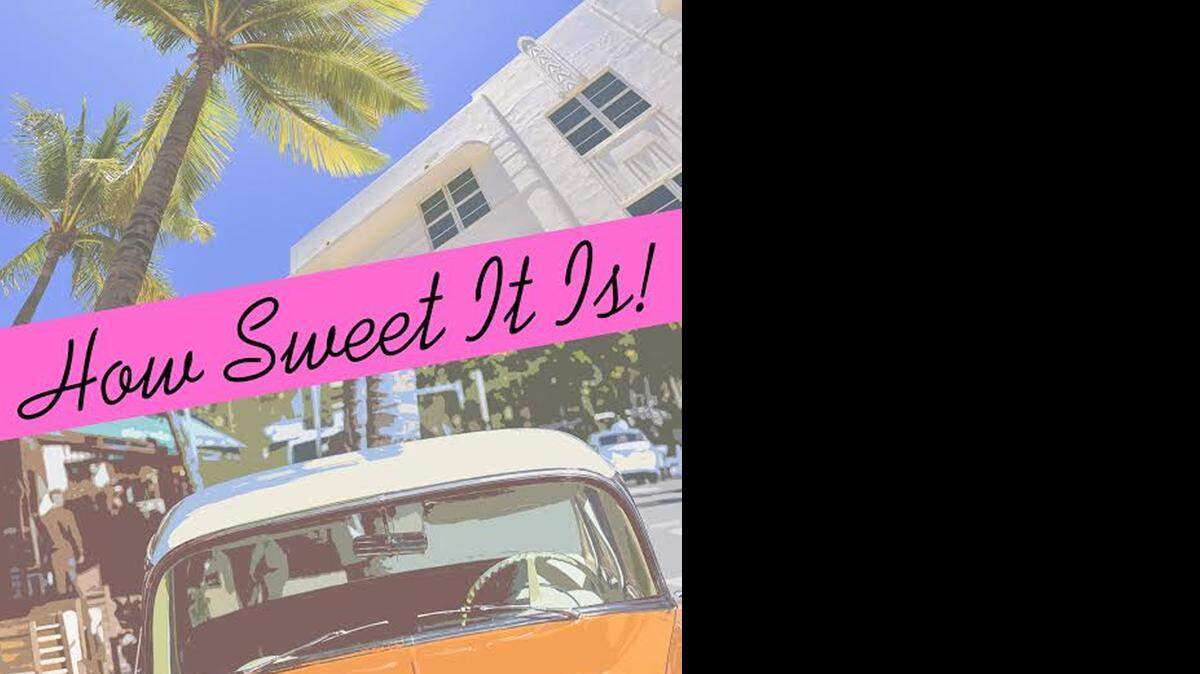
Thane Rosenbaum lives in New York now, but he remembers vividly the Miami Beach in which he grew up. Not the blingy SoBe of celebrity food festivals, gay pride parades and Art Basel. What Rosenbaum recalls is the once-glitzy, slowly crumbling Beach of Jackie Gleason, Meyer Lansky and Wolfie’s.
“I remember seeing Muhammad Ali running laps at Miami Beach High,” said Rosenbaum, who appears Saturday at Books & Books in Coral Gables. “People were always saying, ‘I saw Muhammad Ali running on Collins Avenue.’ Everybody had a Meyer Lansky story, a story where they had lunch with him or something. Everybody was casual about the Jewish Mafia.”
In his latest novel, How Sweet It Is! (Mandel Vilar, $24.95), Rosenbaum revisits his old stomping grounds circa 1972 (he was born in 1960 and moved to the Beach in 1969). The year was tumultuous. Paradise had lost some of its luster, with hotels crumbling, Gleason off the air and gangsters fighting for legalized gambling. The Republican and Democratic political conventions arrived in town that year, bringing in their wake counterculture protestors and big-time Rat Packers like Frank Sinatra and Sammy Davis Jr.
Into this mix Rosenbaum drops the Posner family — Holocaust survivors Sophie and Jacob and their son Adam — to rub shoulders with the historical figures (there’s even a cameo by Fidel Castro).
“I was way too young to appreciate all these dynamic forces at the time, taking place in a tourist-based, sleepy town,” said Rosenbaum, who’s also author of four other novels and two works of nonfiction and is Senior Fellow and Director of the Forum on Law, Culture & Society at New York University School of Law. “But if you were looking at the epochal moments of the early 1970s, if you took a snapshot of Miami Beach, you’d get a good picture of all the cross currents.”
Q. How did the idea for How Sweet It Is! come about?
A. The idea was this was a novel about a city in which the Posner family are secondary characters. It’s very different from anything else I’ve done. It’s a valentine to a city and an era. ... E.L. Doctorow’s Ragtime was a model for this. Ragtime was set in the early 20th century with all of these historical characters — Henry Ford, Harry Houdini, J.P. Morgan — popping up.
Q. The Posners made an appearance in your book Elijah Visible. What took you so long to get back to them?
A. Some of the reviews of the first book said the Posner sections were the strongest part, with Adam as a boy in Miami Beach observing what’s going on around him. That was 20 years ago! I thought, “Let’s return to take another look at them, but look at them obliquely in the background.” It’s only as the decades passed that I realized what an amazing year 1972 was. The Jewish Mafia was in decline, but The Godfather was the big movie that year. Watergate took place a few weeks before the Democratic convention. The Cubans of Miami and Miami Beach started to become more politically organized, resigned to the fact that Castro wasn’t going anywhere. ... In the ’60s Gleason was the highest paid television performer, but CBS canceled the show. In 1972, he’s in a career crisis; he doesn’t know what he is anymore. Even Isaac Bashevis Singer, the foremost Jewish novelist, was years away from winning the Nobel Prize, living in Surfside.
Q: What’s your favorite convention story?
A: The hippies, the yippies and the Age of Aquarius came to Miami Beach and camped out in Flamingo Park. The police chief, Rocky Pomerance, had learned something after the ’68 convention in Chicago, where protesters had been beaten up. He came up with this brilliant idea: I’ll let all the hippies camp out at Flamingo Park, they can even smoke dope — they just can’t hassle the delegates. He even opened the pool for them. And it worked. There were very few arrests.
Q: Who was your favorite character to write about?
A: I loved the moments in which Muhammad Ali shows up. He lost his championship belt because he refused to fight in Vietnam. The boxing world had passed him by, even though as Cassius Clay he won a heavyweight title in Miami Beach in 1964. And here he comes back to train at Angelo Dundee’s gym to try and reclaim his belt. Everyone in the book is trying to figure out how to make a comeback. The only character who’s on a roll in 1972 is Don Shula!
Q: What are your memories of growing up on the Beach?
A: It was very much a paradise growing up there, predominantly middle class. The Fontainebleau and the Eden Roc were for people who came from out of town. There was a kind of modesty and a tremendous lack of pretense. It’s ironic, the way people think of Miami Beach today, a place of fashion models and Art Basel, but it wasn’t that. It was incredibly safe, with a true community of neighbors. I don’t know if that’s still true. ... We had the sense we were cut off from big cities like New York and Chicago, even cut off from Miami! It was a bunch of castaways living a middle-class life and feeling distant from urban upheavals.
Meet the author
When: 7 p.m. Saturday.
Where: Books & Books, 265 Aragon Ave., Coral Gables.
Info: 305-442-4408 or booksandbooks.com.
This story was originally published April 16, 2015 at 12:20 PM with the headline "Author calls latest novel his valentine to Miami Beach."