

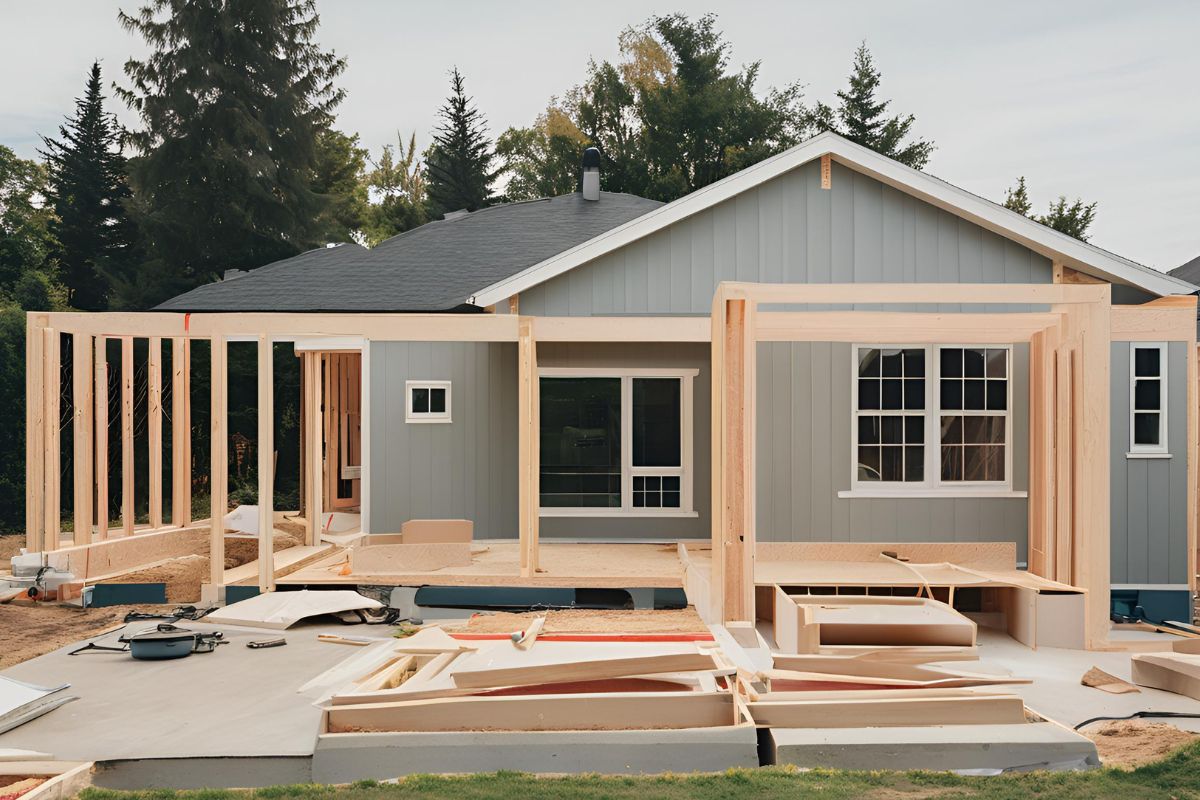
You can use a VA loan to build and finance a property you’ll use as your primary residence. However, you cannot use this type of loan to fund the construction of a vacation home or investment property. Here’s what you need to know about these mortgages to decide if they’re a good fit for you.
What is a VA Construction Loan?
As the name suggests, a VA construction loan is a type of mortgage that provides the funding needed to build a home from the ground up. It is reserved for active-duty service members, veterans and qualifying spouses.
How Does a VA Construction Loan Work?
Several steps are involved in the process when using a VA construction loan to build your home. It starts with the search for the perfect lender, followed by document preparation so you’re ready to go when the lender requests it from you. You’ll also need to do some legwork to find a VA-approved lender, get pre-qualified and find the right builder for your project.
Once you’re pre-qualified, the next step is to formally apply for a loan and enter the construction phase if approved. Finally, you’ll transition from a construction to a permanent VA loan once your home is complete. More on the specifics of each phase will be provided shortly.
VA Construction Loan vs. Other Types of Construction Loans
VA construction loans are only accessible to active-duty service members, veterans and qualifying spouses. However, traditional construction loans are available to anyone who qualifies. A few key differences to be aware of:
- Interest rates: Although the rate you’ll pay on construction loans depends on your credit score and lender, VA-backed products tend to have more attractive rates.
- Down payment: VA construction loans do not require a down payment, but you’ll need up to 20% down with a traditional construction loan.
- Private mortgage insurance (PMI): It’s required if you put less than 20% down on traditional construction loans, but VA construction loans do not require PMI, even without a down payment.
- Lending process: You’ll get a one-time-close loan with the VA that covers both the construction and permanent mortgage, but traditional construction loans require two closings. The first closing is for the loan you take out to fund construction, and the second is for the permanent mortgage.
What are the Advantages of Using a VA Construction Loan?
Here are some key benefits of using a VA loan to build your home from scratch.
No Down Payment
You can finance 100% of the home’s cost with a VA construction loan. This is a significant benefit, as you won’t have to spend several months or years saving up for a down payment. Instead, you can use disposable income to build your reserves and move forward with building your home sooner rather than later.
Limited Closing Costs
The VA limits the amount of closing costs lenders can charge borrowers. Doing so helps reduce the out-of-pocket costs for borrowers while making homeownership more accessible. Even better, seller concessions of up to 4% are allowed, which could reduce your closing costs substantially.
Competitive Interest Rates
As previously mentioned, VA-backed mortgage products are known for their competitive interest rates. This is made possible by the backing from the VA, which minimizes the level of risk lenders assume. A lower rate also means more affordable monthly mortgage payments and lower borrowing costs over the life of the loan.
Are There Potential Drawbacks?
There are also downsides to keep in mind when you’re considering VA construction loans.
Strict Builder Requirements
You must use a VA-approved builder, which could limit your choices. Keep in mind that the approval process for builders can be lengthy. The construction of your home will likely be delayed if you have a non-VA-approved builder in mind and convince them to go through the certification process.
Complex Approval Process
VA construction loans also come with extensive paperwork requirements. You’ll need to provide income and employment documentation to prove you have a steady source of earnings and can afford monthly mortgage payments. Lenders also require you to submit detailed construction plans and cost estimates before giving you the green light.
Who is Eligible to Apply for a VA Construction Loan?
Qualified applicants meet military service requirements, which are as follows:
- Active-duty service members: 90 consecutive days of service during wartime or 181 days during peacetime
- Veterans: 90 days of service during wartime or 181 days during peacetime
- National Guard: 6 years of service or 90 days under Title 32 orders (with at least 30 served consecutively)
- Reserves: 6 years of service or 90 days under Title 32 orders (with at least 30 served consecutively)
- Surviving spouses: your spouse died in the line of duty or from a service-related disability
You must also have a valid Certificate of Eligibility (COE) to prove you meet the service requirements needed to access VA benefits. COEs are accessible via the eBenefits portal and by mail, or you can ask the lender for assistance to retrieve your copy.
Key Requirements for VA Construction Loans
Beyond the service requirements, you must also meet these guidelines to qualify for a VA construction loan.
Credit Score and Financial History
Creditworthiness is paramount to lenders, as it demonstrates how you handle debt obligations and the likelihood of repaying the loan on time. A score of at least 640 is preferred for VA construction loans, although some lenders go down to 620 or lower since the VA does not have a minimum credit score requirement.
You’ll also need to provide proof of income to demonstrate you have the means to make loan payments. And lenders will assess your debt-to-income (DTI) to gauge the affordability of the new loan. It should be below 41%, although some lenders will accept a higher DTI with other compensating factors.
Down Payment Requirements
VA loans do not require a down payment. That said, you’ll pay a funding fee between 1.25% and 3.3%, depending on your down payment amount (if you make one) and how many times you’ve used a VA loan.
There are also closing costs, typically ranging from 3% to 5% of the total loan amount, for which you’ll be responsible. They must be paid at closing unless covered by seller concessions, but the VA funding fee can be rolled into the principal balance and repaid over the loan term.
Builder and Property Requirements
Again, you can only use a VA-approved builder to construct your home. The home must also be used as your primary residence. This means you cannot take out a VA construction loan to build a second home, vacation home or investment property.
Steps to Obtain a VA Construction Loan
When you’re ready to apply for a VA construction loan, here’s how to move forward.
Preparing Your Documentation
Gather the financial and income documents your employer will need to process your loan application. Have your recent pay stubs, bank statements, W2 forms and tax returns handy, as you must submit them when you apply. You’ll also need your COE to move forward with the application process.
Finding a VA-Approved Lender
You must use a VA-approved lender to get a VA construction loan. Refer to the website or ask around to identify reputable options. The lender you choose should be well-versed in the VA lending space and have extensive experience originating these loans.
Pre-Qualifying for a VA Loan
Before formally applying for a VA construction loan, you can get pre-qualified to know how much you can potentially borrow. It’s a relatively quick process that involves the lender reviewing your credit, income and debts.
Choosing Your Project and Builder
If you pre-qualify, the next step is to select a VA-approved builder to construct your loan. Be sure to get a copy of the project details and a written construction plan that includes timelines, costs and materials.
Submitting Your Loan Application
Formally apply with the lender and submit the required documents. Before submitting the application, be sure it is complete and accurate. If additional information is needed, provide it promptly to avoid processing delays.
Loan Approval and Construction Phase
Upon receiving approval, you will close on the loan. The lender will set up an escrow account to hold the construction funds and provide disbursements to the builder as milestones are complete. Work closely with your builder and lender throughout the construction phase. Regular inspections may be conducted to ensure the home is built to the agreed specifications.
Transitioning to a Permanent VA Loan
Once construction is complete, you must transition the construction loan to a permanent VA mortgage. This involves a final inspection and a new appraisal to confirm the home’s value. The lender will then convert the loan to a standard VA mortgage.
Frequently Asked Questions (FAQs) About VA Construction Loans
Yes, you can use a VA loan for home improvements. Consider using a VA rehab loan, Energy Efficient Mortgage or Cash-Out Refinance to fund your projects.
Getting approved for a VA construction loan could take a few weeks. The construction process depends on the scope of your project.