Historic preservation illuminates Miami’s Black experience — past and present | Opinion
As Dade Heritage Trust celebrates its 50th anniversary in Miami-Dade County, the organization has made strides in positioning historic preservation as part of the solution to many of the issues that negatively affect Miami.
From an affordable-housing initiative in Little Havana to producing historic architectural, environmental and cultural research in Overtown and other neighborhoods, to offering bike and walking tours, Dade Heritage Trust is helping residents learn about where they live and encouraging tourists to dive a little deeper into the real Miami.
Our survey and research work in Miami’s traditionally African-American communities makes clear that the historic architectural, cultural and environmental venues that symbolize the city’s African-American stories are largely overlooked. However, DHT is committed to ensuring that the compelling stories of these venues and what they represent are told for generations to come. To accomplish this, we’ve launched the African-American Heritage Education Initiative.
This program grew out of our research in Miami’s neighborhoods of color and the presentation of DHT’s Historic Places, Green Spaces educational program, which provided an opportunity for K-12 students to learn about and engage with their community by presenting impactful and multi-dimensional field experiences at historic venues.
Initially, in 2017, DHT hosted 1,200 students, but by 2021, our Florida standards-based education program expanded to serving more than 4,000 of them. Ultimately, it became a designated Miami-Dade County Public Schools STEAM partner. As interest in Historic Places, Green Spaces grew, it became clear that the program was hitting a nerve with educators and students wanting to learn more about the history of their diverse community and symbols of that history.
Beginning this year, Dade Heritage Trust is offering an African-American Heritage Education track to students in grades 4-12 that provides field trips to the Black Police Precinct and Courthouse Museum in Overtown, the historic Hampton House and Virginia Key Beach. There has been a lot of interest in this program, and we expect more than 1,000 students to participate in the program this school year.
Miami is the only city in the United States that had a segregated police force, jail and courthouse. Now known as the Black Police Precinct Courthouse and Museum, the building in Overtown was constructed in 1950 to provide a separate and segregated headquarters for Black officers. Closed in the 1960s, it has been restored, featuring curated exhibits detailing the history of the building and the police force, jail and courthouse it housed.
The Hampton House was an official Green Book hotel. Many celebrities stayed here; it was where Martin Luther King Jr. stayed when he was in Miami. The Hampton House has been restored and serves as a museum, gallery and community center.
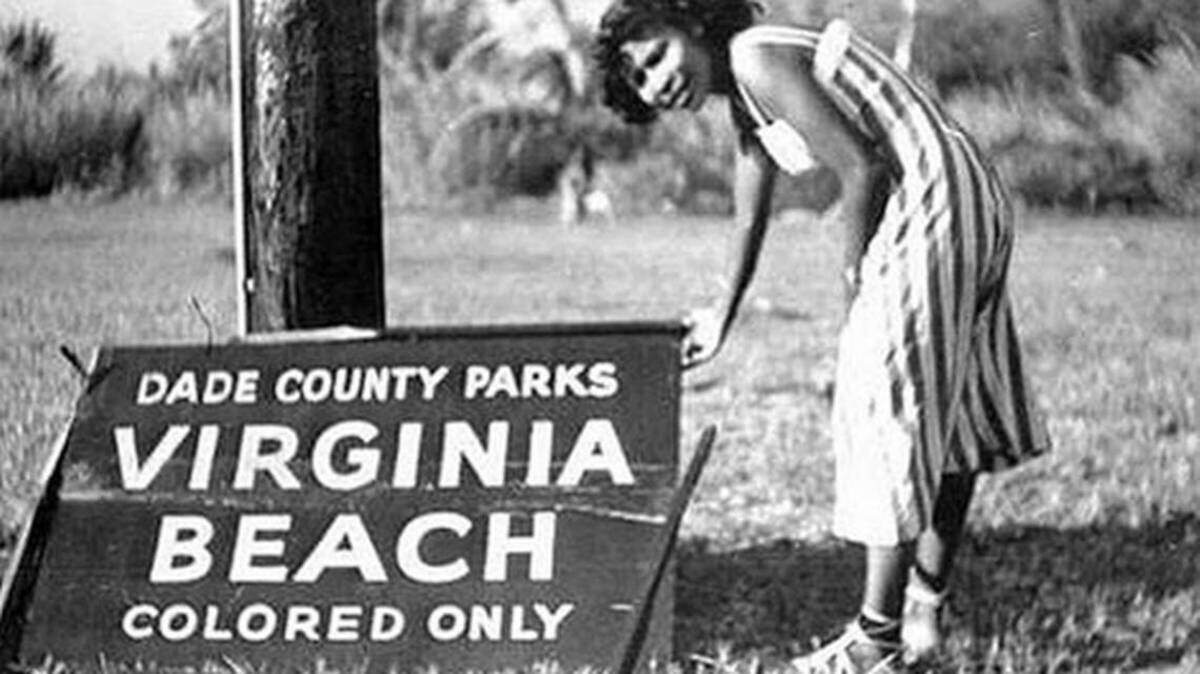
Virginia Key Beach was the only beach where African Americans could swim and play near the water in Miami, and it has an amazing story to tell, both culturally and environmentally.
It is imperative that the stories these places hold be shared with students to help educate our community about the Black experience in Miami. It is key to understanding why Miami looks like it does today.
And when DHT brought this idea to education funders, they agreed. The program is supported by the Kislak Foundation, Batchelor Foundation, Peacock Foundation, Kirk Foundation, Dunspaugh Dalton Foundation, Miami DDA, Admire Family Foundation and the Society of Architectural Historians, based in Chicago. This funding lets us to offer the program at no cost to schools, and for Title 1 schools, transportation is included, thanks to the generosity of Trish and Dan Bell.
The program offers this multi-site approach to engage students and educators in a meaningful, ongoing manner on a topic that is not traditionally taught in the classroom. The visual and language-arts activities encourage freedom of expression and engage students in creative and critical thinking as to the meaning of these venues and the effect of segregation on our community.
DHT believes this program represents the best of historic preservation — using historic venues to educate, inform and ultimately build an understanding of Miami’s racial divide and how we all must do better together to build a better Miami for everyone.
Christine Rupp is executive director of Dade Heritage Trust.